Mike Brooks

Audio By Carbonatix
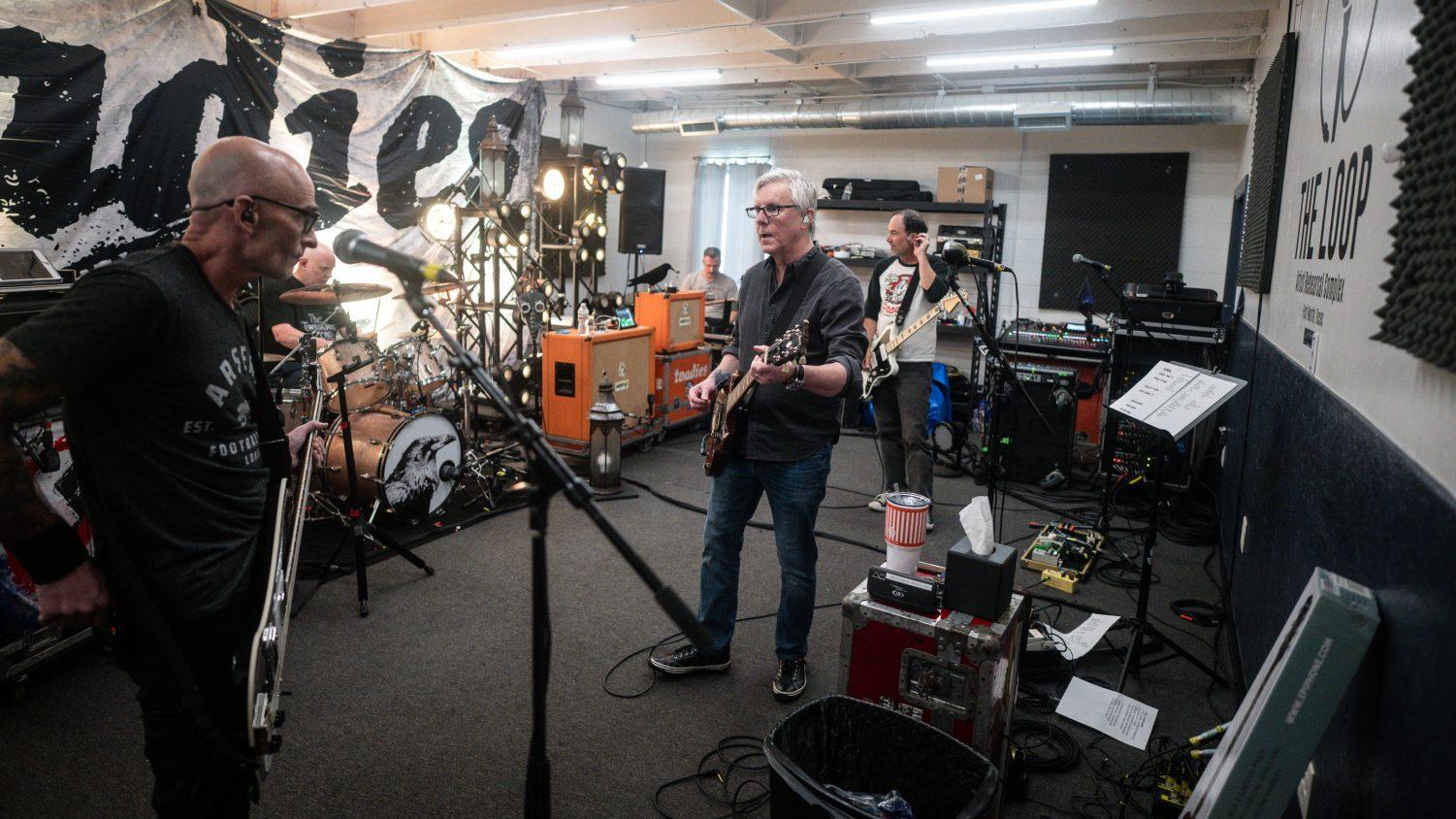
On a recent, sunny March afternoon in Fort Worth’s Near Southside neighborhood, it wasn’t tough to recall March 2020 when COVID-19 basically stopped the world. Bright and temperate outside, there weren’t many cars driving by or people walking near The Loop Artist Rehearsal Complex, just like six years ago when shelter-in-place, work-from-home and curbside pickup all became parts of everyday vocabulary forever.
But inside The Loop, there were a couple of telling signs that the world kept spinning and society regrouped. For starters, a band was kicking out some wall-rattling jams, audible from the parking lot. Also, The Loop is now bigger than it was at the start of 2020.
“There used to be an exterior wall over here, and we busted it down and started construction right around this time in 2020,” The Loop’s owner, Toadies lead singer and songwriter Vaden Todd Lewis, says in one of space’s many rehearsal rooms.
“That was right when the shit hit the fan, and I thought, ‘Well, there goes all that money,’ but our construction workers didn’t have anywhere else to go, and they got the job done super quick. … I stayed away from the job but would drive up and keep tabs sometimes and go up and down Magnolia Avenue. It had always had people walking dogs or just other people driving around, but it was like a ghost town instead, and it was really creepy.”
Like many longtime touring musicians, Lewis and his band of more than 30 years had to slow down and stay in one place during the pandemic. That stasis eventually led to more than just a new era for the rehearsal space he runs with his wife, Rachel. In the months following the worst of the lockdown, he took an unprecedented step in dealing with his mental health, resulting in a diagnosis that changed everything.
At that point, Lewis began making sense of song snippets he had been sketching out since those unstable days of spring 2020. The resulting work makes up the Toadies’ searing, urgent eighth studio album, The Charmer, a record that could not have existed anytime before in the band’s or Lewis’ life.
Grunge-Era Gold (And Platinum)
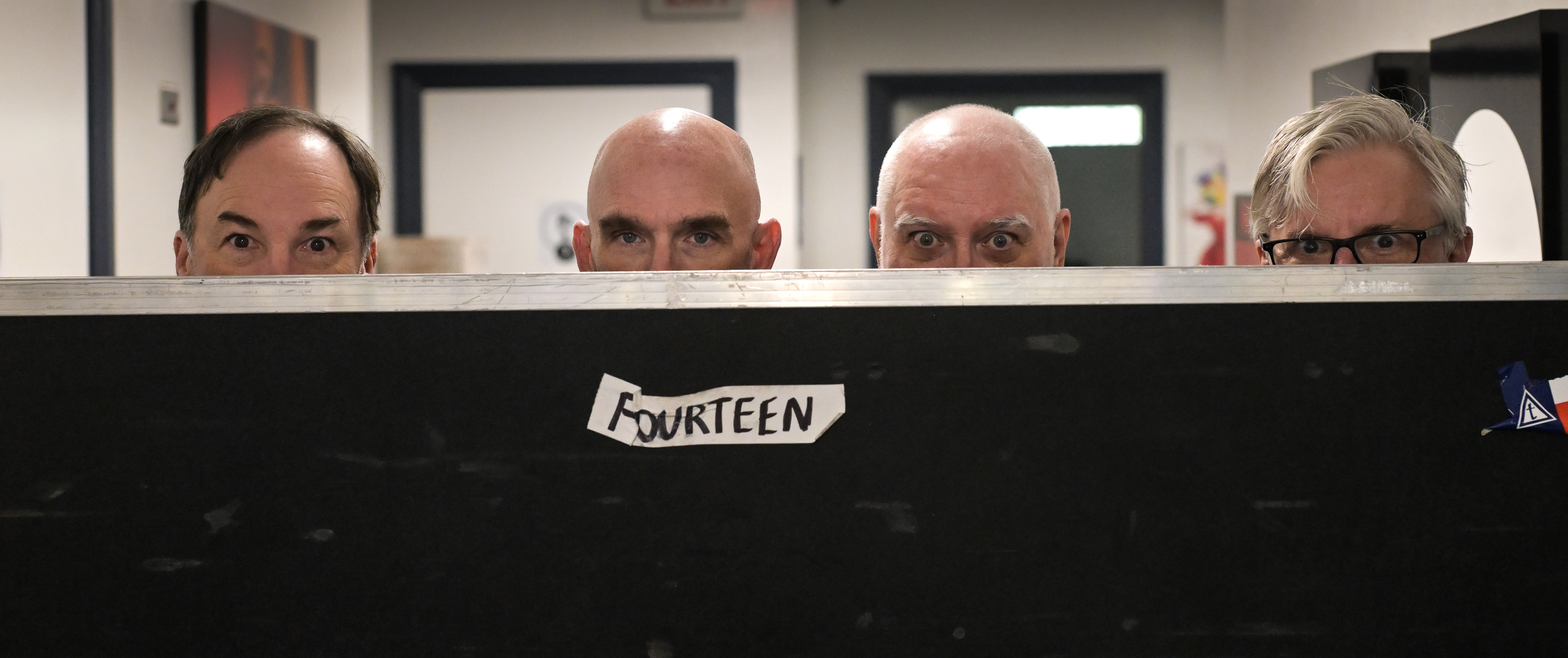
Of the many formidable bands to break out of North Texas during the mid-to-late 1990s, the Toadies, along with metal titans Pantera, arguably made the biggest splash. Other groups, including Tripping Daisy, Old 97’s, Deep Blue Something and Reverend Horton Heat, among others, were also making waves nationally after starting in the Dallas area. All those bands and more, along with Lewis, drummer Mark Reznicek and the guitarist and bassist at the time, Derek Herbert and Lisa Umbarger, represented what many still call the golden age of the Dallas-Fort Worth rock scene. The Toadies’ current lead guitarist, Clark Vogeler, joined in 1996, with bassist Doni Blair joining the group in 2008.
After signing to Interscope Records in 1993, the band found “Possum Kingdom” on a near-constant loop on MTV and alternative rock radio for an extended period before 1995 ended. The album that song is on, Rubberneck, was certified gold for selling more than 500,000 copies that year, and certified platinum for exceeding 1 million in sales in 1996.
Over that three-year span, Vaden says the band played “every show” they could. Though there were some major homecoming shows and enthusiastic out-of-state crowds during that time, Lewis says he never had any sort of epiphany or so-called “ah-ha moment” when he stopped to soak in everything that had transpired. Thanks in large part to the feelings of inadequacy that had long enveloped him, his view on Rubberneck’s success as it was happening wasn’t the stuff of your average rock star fantasy.
“I remember thinking it was more of an ‘ah-ha, we tricked them [the record label] into giving us money,” Lewis says. “I had such weird, low self-esteem back then, and I just thought ‘I can’t believe they’re letting this half-ass Pixies knockoff happen.’ So seriously, when we got the record deal, I thought, ‘You fucking idiots.’ I really didn’t take it that seriously, which didn’t exactly help us get a good contract.”
Lewis figured there’d be a record and a tour where he got to see the country, and that he would return to his role as a Fort Worth record store manager when that was done. Although that initial major-label hype phase lasted years, the massive breakout success of “Possum Kingdom” led some to think Lewis and company had come out of nowhere.
“It was weird in those days, because we toured for two years straight, like 200-plus days each year, which was insane,” he says. “After around a year-and-a-half of that, we were sleep deprived, our livers were pickled, and I started having people sticking a microphone in my face asking me what it felt like to be an ‘overnight success,’ and I was just like, ‘Fuck you, buddy.’”
— Vaden Todd Lewis, Toadies lead singer and songwriter
Lewis swears he thought the Toadies’ glory days would be short-lived, and by the time 1998 rolled around, it started to look like that would be true.
Interscope, which that same year released a Tupac Shakur greatest hits album and Deep Blue Something’s Byzantium, the follow-up to their gold-certified album featuring “Breakfast at Tiffany’s,” rejected the Toadies’ Rubberneck follow-up, Feeler. It took three more years before the official follow-up album, Hell Below/Stars Above, was released, and when it was, the label did not promote the record, reportedly prompting Umbarger to quit the band, which led to Lewis dissolving the group in 2001.
Ask now if Lewis intended for that 2001 decision to be the end of the Toadies forever, and he’s quick to say yes.
But five years later, the bandleader wasn’t so sure anymore. In the time away from the Toadies, he had a highly successful run with a new group, the Burden Brothers, a more collaborative project with an all-star list of local musicians, but he found that when writing songs, he wasn’t hearing songs for that newer group.
“I’m sure in the back of my mind somewhere I thought, ‘Goddamnit, it’s hard to reinvent yourself,’” he says. “But when I was writing, the things I kept writing kept sounding like Toadies songs to me, and I thought, ‘I wonder if the guys want to kick it around a little bit.’”
In March 2006, the band performed a reunion show to a massive crowd at the annual Greenville Avenue St. Patrick’s Parade in Dallas, followed by another concert at the same event in 2007 and a short tour.
The band was back together.
Toadies Traditions
Mike Brooks
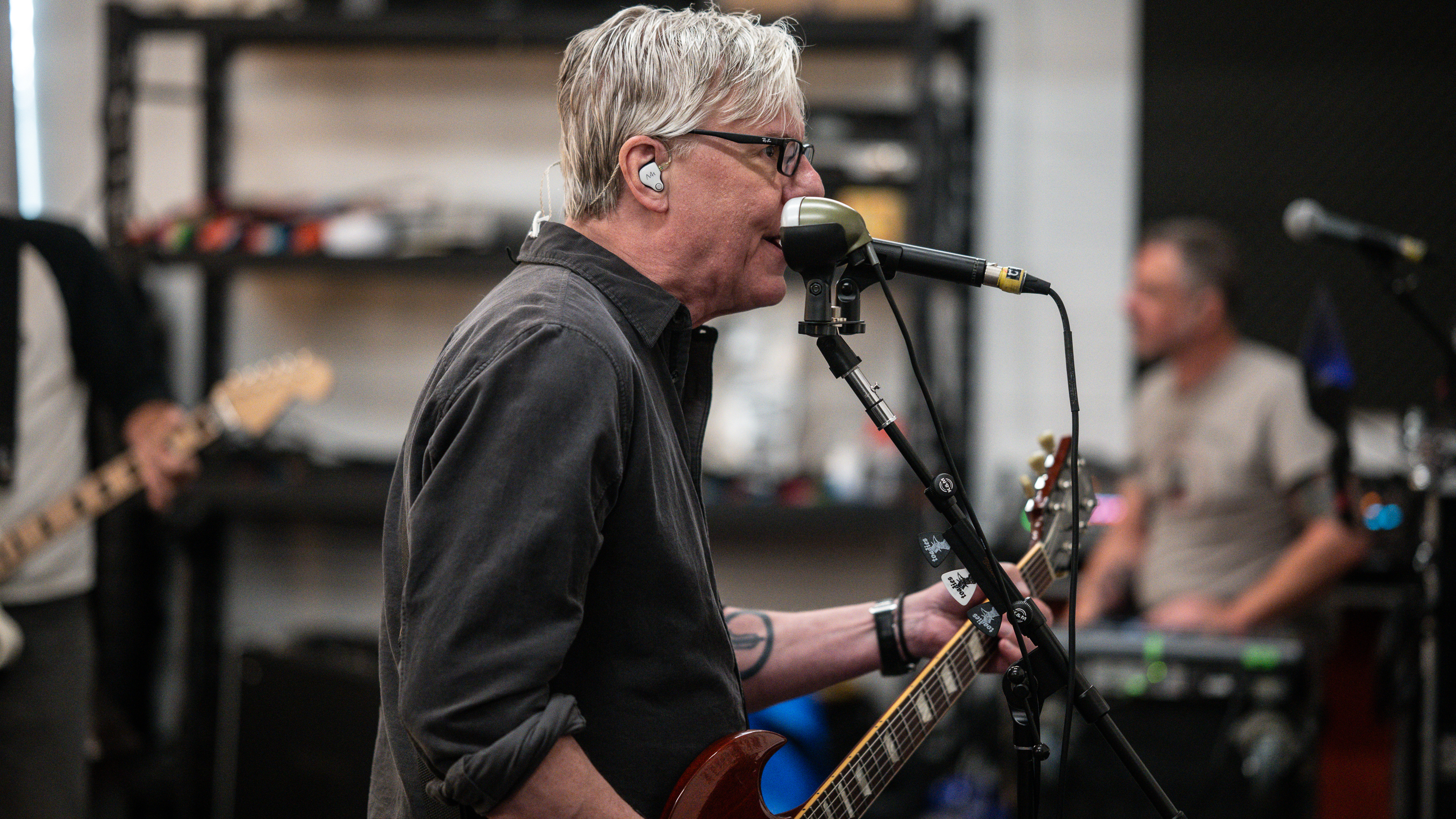
Recognizing what is and is not a Toadies song isn’t something only Lewis can do. Unlike many other bands that cashed sizable checks and had big hits in the post-grunge era of ’90s rock radio, the Toadies’ sound is distinctive. There’s a definite signature, legible to anyone who has at least heard “Possum Kingdom” or one of the group’s other fan favorites, such as “Tyler” or “Away.”
Similar to the Pixies or hard-rock pioneers Led Zeppelin, Lewis’ band skillfully deploys the quiet-loud-quiet dynamic, shifting from melodic and almost serene to ferocious and downright spine-chilling in a flash of swampy tones and churning riffs. Lewis’ immediately identifiable voice can do the whisper-to-wail thing too, and does so with the best of them still. The band’s affinity for bare-bones production, which lets the rough edges of the instruments and arrangements shine, has kept their songs from sounding like outdated, oily slick Clinton-era relics; instead, they sound new and real no matter when they’re played.
Scroll through TikTok, and you’ll see a range of Toadies-related clips that help prove the group’s formula has been an indelible one. Some videos express shock and awe at how the powerful voice behind such violent anthems now has gray hair and glasses, or you might see silly, dramatic reenactments of “Tyler,” in which the video’s star acts out the song’s menacing, break-and-enter narrative. Even more than three decades later, the Toadies’ trademarks are strong.
“I’ve never wanted to be a one-trick pony, writing ‘Possum Kingdom’ over and over again. But by the same token, when I write, I just have a certain thing I want to hear. I want just a few effects pedals. I want six strings in normal tuning, and I want to see what I can do with only that. That’s what I’ve always done, and I want to see how far I can run with those very few ingredients.”
— Vaden Todd Lewis, Toadies lead singer and songwriter
Sinister storylines or themes in Lewis’ lyrics are also a part of the band’s repertoire. So too is politically motivated stage banter, not that the twain shall ever meet. If the Toadies were to ever release songs with overt political messaging, it would be new, and somehow, probably shock even some long-time fans, not that it should. Speaking out against Republican politicians or encouraging fans to vote is something Lewis has never shied away from.
While Lewis says writing political songs is of at least some interest to him, it’s just not a muscle he’s ever worked enough to know how effective it is. But as he gets older, he has even fewer problems speaking his mind, regardless of the reception his remarks might receive.
“In Amarillo one night, we had one song left at this big outdoor festival type show,” Lewis says. “So I took the moment to say ‘I believe in women’s rights, I believe in trans rights, and I believe you should be able to love who you love, so that’s why I vote Democrat,’ and the whole crowd just turned on a dime, thousands of people just hating my guts as we played that last song.”
Lewis may not soon morph into a politically-minded protest singer, but as evidenced by some of the standout songs on the new record, it’s clear he isn’t opposed to taking his songwriting into new directions.
The Charmer, recorded in Chicago with legendary producer and engineer Steve Albini (Nirvana, Pixies), shortly before he died on May 7, 2024, is the first Toadies studio album since 2017’s excellent The Lower Side of Uptown. One doesn’t have to wait long on the new effort to see at least some symmetry with the past, as the opening number, “Ashe’s Theme,” a riff-heavy instrumental track, might just remind some of “Mexican Hairless,” the surf-punk-inspired instrumental opening track from Rubberneck.
Like many of The Charmer’s songs, the instrumental took shape during the pandemic. As business was slow at The Loop and the thought of touring was still a long way off in 2020, Lewis kept himself occupied by watching movies, with Evil Dead 2 and the Ash vs. Evil Dead TV series being his personal favorites. He was also working on riffs that would end up on his band’s next record, too.
“Ashe’s Theme” is probably influenced more by Bruce Campbell’s cult-favorite horror hero than it is by the band’s most famous album. Powered by an afternoon gummy, Lewis challenged himself to write a theme for the series. The Toadies have had several songs end up on movie soundtracks, such as The Cable Guy (1996) and The Crow: City of Angels (1996), but Lewis had never tried writing television theme music, so he gave it a shot. It worked like a devilish charm.
Elsewhere on the new album, “Come to Life” rips with a frenzied energy taken from the rock gods of the ’70s. “I Wanted To Be Everywhere” brings to mind the melodic yet troubling combination of “Tyler” without xeroxing it. “Walk a Line” bursts out of the speakers with a sweaty, bluesy, groove-driven bombast. The album’s closer, “In Bandages,” perhaps surprisingly, winds things down at a lower volume and slower tempo without losing any of the punch of the previous dozen songs.
Similar to standout selections from the 2017 record – “Polly Jean” is an all-time Toadies treasure – or from 2012’s Play.Rock.Music or even 2008’s comeback album, No Deliverance, which have made their way onto the band’s concert setlists and into fans’ hearts, it’s not difficult to see that many of the new songs will find their way into the Toadies’ lexicon for many years.
A New Normal
For as much as Lewis likes to stay in his six-string sonic lane, the new record offers some fresh takes on the time-tested Toadies formula. There’s a pair of songs that diverge drastically enough from the rest of the band’s catalog that it would be reasonable to wonder if it were a different band, except for the unmistakable presence of Lewis’ voice.
Just as Lewis says that political songwriting isn’t a skill he’s ever developed, the same can be said for writing lyrics that explicitly dig into his own mental health and self-esteem struggles — before now, that is. Although Lewis had given therapy a shot at various points over the years, talking too much about himself or his problems or his mental state in song had never been a mountain he was willing to climb. Taking medication to address his mental illness, let alone having it properly diagnosed, was another thing he had never tried.
All that changed as The Charmer began to take shape. In his younger days, Lewis was of the mind that people just wanted to rock and rage, not necessarily to feel and share when it came to music, a view he admits isn’t true now. But for many years, he combined that limiting view with his own emotional struggles to steer clear of getting too deep, instead expressing himself in song through a distinct “fictional separation,” as he calls it.
The weirdest, most trying days of 2020 were rough enough on their own, regardless of anything a psychiatrist might’ve diagnosed Lewis with at that point, but he’s quick to admit it could’ve been a lot worse. He thinks the difficulties he had been experiencing pre-2020 were somewhat waylaid by the pandemic’s extreme oddities. And unlike many married couples he had heard of during that year’s lengthy work-from-home period, he and Rachel grew even closer, something that strengthened him emotionally and perhaps helped cover up some pain that lived just under the surface.
But as the world began to reopen and life for many crept back towards a more recognizable reality, an inexplicable, gloomy despair returned, and nothing could shake it.
“I would walk around and have just really super dark thoughts. At least once a day, like scary dark thoughts that sometimes would last a brief time or sometimes last all day. I started noticing that I would just go into this pit for a while, just kind of a lethargic pit, and then all of a sudden, I’m Mr. Fucking Comedian, and I’m cracking jokes and being the life of the party, and eventually I was like ‘this is really weird.’”
— Vaden Todd Lewis, Toadies lead singer and songwriter
He started seeing a psychiatrist who could make a diagnosis and prescribe medicine. During one of his first visits, Lewis explained that although he wasn’t seriously considering suicide, he had thought enough about it to both imagine how he might do it and also to think of some rather practical reasons why he wouldn’t. It would be too messy, he said, and he wouldn’t want to be found by a loved one like that.
Logically, he knew he didn’t have any reason to feel or think like that. He would often list the things he was most thankful for: his wife, his daughter, his home, his successful career — things he calls “all the kick-ass trappings of making it as a person.” All too often, that wasn’t enough.
“I had felt this way and felt all these things going back to when I was a kid,” he says recently over a Zoom call. “All that and a lot of imposter syndrome too.”
Merriam-Webster defines imposter syndrome as “a psychological condition that is characterized by persistent doubt concerning one’s abilities or accomplishments accompanied by the fear of being exposed as a fraud despite evidence of one’s ongoing success.”
It was impossible not to notice that such “evidence” was hanging just above Lewis’ left shoulder on the Zoom call in the form of several gold and platinum record plaques for various Toadies and Burden Brothers efforts. They were visible as he explained, “I’ve had it my whole life, really. I’ll have days of ‘man, I kick ass at this. I’m a really good songwriter, and I’m a pretty good singer,’ and all this other stuff, but the next day or even later that day, I’m like ‘man, why do people pay money to see me? What a ripoff.’”
As the patient listed these thoughts to his doctor, soon adding accounts of those whiplash-inducing cuts from lethargy to productivity and back again, the doctor narrowed in on a diagnosis: bipolar disorder.
Lewis doubts it was something new; it’s just that he had never seen a professional about it. Once the singer began taking advantage of “modern chemistry,” he sensed its impact.
“It wasn’t like I woke up chipper and shit, because that’s never going to happen. But I did realize that the dark cloud had dissipated.”
— Vaden Todd Lewis, Toadies lead singer and songwriter
That clarity led to a new creative freedom and direction. For years, he had worried that prescriptions might take away the doom that he had tricked himself into believing he needed to be a successful artist. He didn’t want the edge of his creativity dulled or any sort of fountain to be switched off, something he now says “is total bullshit.”
The lyrics to The Charmer’s title track should quickly remind listeners of the unsettling, hair-raising stories from the band’s most-streamed songs. When you hear Lewis sing “Do you leave me, when you’re dreaming?/ Do you feel me pressed to your side?/ I’m the liar, and feet to fire/ It’s only you that keeps me alive,” it’s nearly impossible not to think of the assailant in “Possum Kingdom” or the intruder in “Tyler.”
But this song isn’t just another tale in which Lewis inserts a “fictional separation” between his psyche and the listener. “The Charmer” track is a true-to-life account, ripped from Lewis’ everyday thoughts and placed on record for all to hear.
“It’s specifically about how the darkness I had been feeling was following me, and I was trying to still be creative and trying to live with those two things together,” Lewis says. “It’s the darkness that is asking, ‘When you go to sleep, do you think about me,’ or when I have nice thoughts, that darkness says, ‘You’d be nothing if it weren’t for me.’”
Perhaps the most shocking song on the record, “Normal,” is also its least rocking. The shock comes not from the arrangement or some horror-style narrative, but from the way the lyrics detail rather ordinary things in a straightforward manner. On top of a Tom Petty-inspired, sing-along-ready arrangement. Lewis begins by casually singing, without any primal wailing, “I don’t wanna be angry/ I don’t wanna be sad/ I don’t wanna be sorry/ I just wanna be fucking normal.”
It’s straight to the point, and straight from his own life, living with mental illness. It’s clear as a bell and something he says he was not even remotely capable of writing even a year or two before he finally did it. “No. Hell no. No way,” were his exact words when asked if he would’ve dared write a song so autobiographically vulnerable as “The Charmer” and “Normal,” before he sought treatment.
“I thought, I’m really on meds because I want to just feel normal,” Lewis explains. “I’m doing all this because I just want to live a normal life. That’s it.”
Doing What the Toadies Do
Another new thing is that the band self-financed the recording and is releasing it through Spaceflight Records, an Austin-based nonprofit label run by some of that city’s best rock musicians. Lewis says that even though some radio stations have added “The Charmer” to their playlists, he’s under no illusions of the new effort earning him more platinum plaques for his wall. That’s probably not a realistic goal for his band in 2026.
What is realistic, however, and what he and his band can do now and do again soon, as the money for another record is already set aside, is to make more Toadies records because Lewis likes records. He loves music and wants to keep making it. The haze he once felt, whether it be from unchecked bipolar disorder or from the surreal weirdness of the pandemic, has lifted, and Lewis is doing what he can to keep it so.
At this point in his life, and in the long, winding life of his band, simply making something because he can and wants to is as profound and triumphant as anything can be in 2026.
“I want to put an album out, I want to have it out on vinyl,” Lewis says. “I want to say these things, and I want them recorded, and for me, that has always been the most fulfilling part. Hearing this stuff turn into a real thing. From the very start, even with Rubberneck, I was like, ‘even if we get dropped tomorrow, I’ll still have the record I wanted to make.’”
If you or someone you know is struggling with suicidal thoughts, help is available. You can call or text 988 to reach the Suicide & Crisis Lifeline, or chat via 988lifeline.org for free, confidential support 24/7.