Disney/Hulu

Audio By Carbonatix
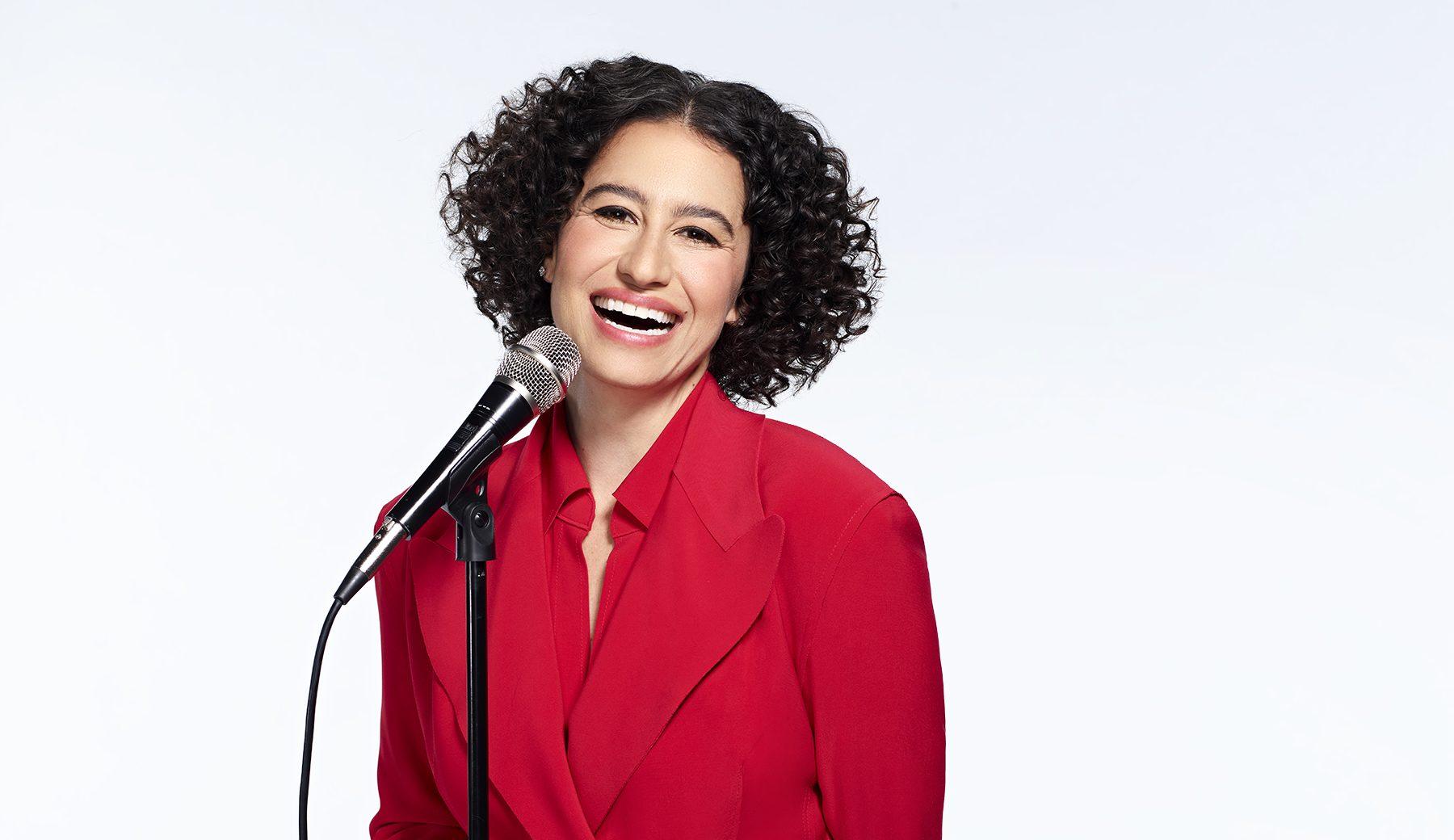
A lot has changed since Ilana Glazer last performed in Dallas.
When she came through the Granada Theater back in 2019, she had just ended a five-season run of her hit Comedy Central sitcom “Broad City,“ on which she starred alongside friend and longtime collaborator Abbi Jacobson. This was the beginning of a new creative chapter in Glazer’s career, as she delivered her chaotic brand of stoner queer jew comedy to a packed Dallas house.
In the years since, Glazer has experienced several shifts in her personal life. She and her husband, David Rooklin, welcomed a baby girl in 2021. In 2024, Glazer came out as non-binary (revealing she uses she/they pronouns), noting that pregnancy helped lead her to this realization. This new chapter has informed her professional life, too. She’s delved into the complexities of pregnancy and parenthood in various media, like the psychological horror film “False Positive” and the buddy comedy “Babes.”
But as Glazer has changed, so has the world, as we’ve seen a pandemic and two presidential administrations over the past seven years. But Glazer has never been afraid to touch on politics through her art. Fans might remember notable episodes of Broad City when Glazer’s character, Ilana Wexler, briefly campaigned for Hillary Clinton; or when she and her bestie Abbi Abrams (Jacobson) ordered a year’s supply of Plan B to give away; or when they protected women seeking abortions as they walked up to a clinic.
But even if you’ve never seen an episode of “Broad City,” you might recognize some of Glazer’s famous sound bites, like “Yas Queen” and “In da clerb, we all fam,” the latter of which went viral on TikTok last year.
These days, Glazer is focused on delivering laughs in person, growing more comfortable performing live shows in packed venues around the world. She’s also exploring more serious conversations via her sociopolitical-centered podcast, “It’s Open With Ilana Glazer,” which has featured Rania Batrice, Chase Strangio and Texas’ current Democratic candidate for Senate, James Talarico.
Ahead of her show at the Majestic Theatre on Wednesday, May 13, we caught up with Glazer via Zoom in the middle of her day full of podcast tapings, press appearances, and most importantly, therapy.
The last time we saw you in Dallas was in 2019 for your The World is Burning Tour. How would you say your comedic craft has evolved over the past seven years?
My craft has evolved enormously. In 2024, my last tour for my [TV] special “Human Magic,” that was when stand-up — as a craft and a business — clicked for me. I’ve been a comedian for 20 years. I’ve done stand-up, sketch, improv, television and film. But stand-up is the thing that in the past 10 years, I’ve really focused on honing, and I feel more comfortable. I’m having so much fun.
Speaking of the Human Magic Tour, how has motherhood inspired your writing?
Motherhood has inspired my everything. I talk a lot about being a mom. I feel more like a mother figure as a stand-up [comic], caring for my audience. I’m gentler toward myself for my own things that used to be a joke. Like being horny or being high, I hold now with more grace. Like, ‘Duh, girl, of course you’re horny and high, you’re a human being.’ I think before, I was othering myself in my comedy, being like, ‘Isn’t she a freak?’ And now I’m like, ‘wait, this is natural.’ I think I have a gentler approach toward myself these days, and stand-up and motherhood completely gave that to me.
Something you mentioned in previous shows was that Hollywood is not as progressive as people make it out to be, citing that, at the time, Mel Gibson had eight movies in production. Do you think things have gotten better or worse in the landscape since 2019?
The landscape and the structure of TV and film has gotten worse. I was just talking to someone who’s in the Writers Guild union, who was just at the negotiating table a few weeks ago with all the studios. Since 2019, workers had to strike in Hollywood, and I’m really glad they did, because we protected ourselves and each other’s basic human rights to the best of our ability. I think different sectors [of various industries] have taken a hard right turn in hopes of holding on to profit or increasing profit. But I don’t think that’s really where the people are at. I think the people are starting to come together now, separate from industry, and we’re seeing much more independent media. Stand-up is rising in general as an art form. And people are putting their own stuff out. There’s this direct-to-consumer independence forming out of what has become a hard-right turn that all these industries have taken.
As you’ve been honing your stand-up routine, what do you enjoy most about touring, especially in Texas?
I love touring in Texas. I feel like a fish out of water in Texas. And I find it funny as this little queer New York Jew coming down and trying to blend in with that Texas energy. Years ago, I did Amarillo, but I’ve done Dallas, Houston and Austin reliably over and over in the past seven years.
Texas has a big appetite, and I’m always like, ‘Oh, God, I’m going to be so brash and bold.’ But Texas is like, ‘Come at me, we can handle anything.’ There’s such a beautiful, diverse population in Texas, and the people hold its history together. So this little New York Jew coming in and making some funny, ‘horny, high’ jokes is not ruffling anybody’s feathers the way I used to fear it would.
You also use your platform to raise awareness of issues affecting all parts, including Texas. What intrigued you about James Talarico, and what inspired you to invite him on your podcast?
I’ve been focused on grassroots organizing and human rights messaging for 10 years, right when I started really focusing on stand-up, and finding my voice in both these crafts. The deeper I get into this work, and the more people I talk to through the lens of human rights, the more obvious it becomes that everybody, or the majority of people, believes in human rights. This was the second time I interviewed James Talarico. I interviewed him in 2024 at SXSW as well. What has intrigued me about his journey is his strength-building as a leader, and his messaging getting sharper, and his role as a white Christian and the destruction of white Christian nationalism. I’m so proud of him and grateful for him, but I find that his faith, his belief in humanity, met with plain and simple messaging, is undeniably energizing for large groups of people from different walks of life.
What are some issues you feel passionate about this election year?
This election year, I feel passionate about a moratorium on AI and data centers. People say, “’you can’t stop it,’ but you actually can. And if you’re in any proximity to human rights conversation and human rights work, you know that you can stop AI and stop data centers.
Taxing the wealthy fairly is [also] something I’m passionate about. The majority of Americans are working people who deserve their basic needs met affordably. I believe deeply that it’s only fair to tax the wealthy, and wealthy corporations, fairly. And I actually think it’s creepy and cruel that they don’t want to feed back into humanity.
Speaking of AI and data centers, one of the storylines on “Broad City” that aged very well was when your character cashed out a bunch of Bitcoin to later discover protestors outside of the building saying, “Bitcoin is killing the earth.” The Bitcoin bubble has kind of burst, but we’re seeing a lot of similar issues with AI.
I really think this bubble is going to burst. I was just working on a collaboration about AI and data centers. What’s being promised is like chatbots that give dumb answers, and pictures of horses in tutus. If this really was curing cancer, if this really was combating the climate crisis, this would be a different conversation. But the product we’re getting is so stupid, and the destruction it is causing is so violent. It’s just obvious to most people that it needs to be stopped.
Your art has always had a political edge. Famously, the fourth season of “Broad City” had to be rewritten because it was originally written with the idea that Hillary Clinton would win the 2016 election. What is one storyline on “Broad City” that you wish you had gotten the chance to explore?
[Glazer does not get the chance to answer the question, as her 4-year-old daughter briefly walks into the room].
What is your favorite version of the “in da clerb, we all fam,” meme?
Kamala Harris and Usher did an “in da clerb” that was pretty unbelievable. Also, Kerry Washington and Robert DeNiro. Sabrina Carpenter did one with a plant that was really fun. I loved “in da clerb” and seeing everyone’s takes on it. It was such a blast. Also, shout out to the comedians Maggie Winters and Connor Wood, who kind of popped that whole thing off initially.
“Broad City ” was one of the last big sitcoms before streaming started overtaking traditional television. As a creator, what challenges would you say you’ve had to navigate in a new era of film and TV?
I’ve definitely had to navigate television changing so drastically. There’s been a lot of shifting with hirings and firings, and the industry is unstable. And when “Broad City” was being born, and being made, and airing, [television] was at the end of its stability. For me, it’s been about mourning the loss of broadcast television where people watched in community, and embracing a more independent era of art.
I’m really focused on my video podcast, stand-up and touring. What’s exciting is having a more direct-to-consumer relationship with my audience. I’ve developed so many projects, and I’ve made films since “Broad City,” and I continue to write, but honing in on stand-up has been really fun. It’s really gratifying to go out and see my country, see the world, and talk to people, and feel how united we are, despite the divisive narratives we’re so often fed.
Are you still working with Owen Thiele on his new series, “Off-Color?”
I am indeed. We’re still at it. And timelines for development these days are different than they used to be, but we’re just holding his project gently, like it’s the sweetest little newborn. And I’m very excited when this project can finally sit up.
Above all, what are some things that have helped you maintain a sense of hope in this current climate?
When I get into a room, it’s the responsibility I take of bringing people joy. When I can deliver on that and laugh with people, I see in real time how connected we are, and that we’re laughing at the same things, feeling the same things, and sharing reality, and sharing the same experiences. It’s grassroots organizing, it’s community organizing and creativity aimed at progressive messaging that really feeds me, and it feels like I can put my anxiety into action.
Ilana Glazer performs at the Majestic Theatre on Wednesday, May 13. Tickets start at $40.