Jessica Taylor/JTaylor Studios

Audio By Carbonatix
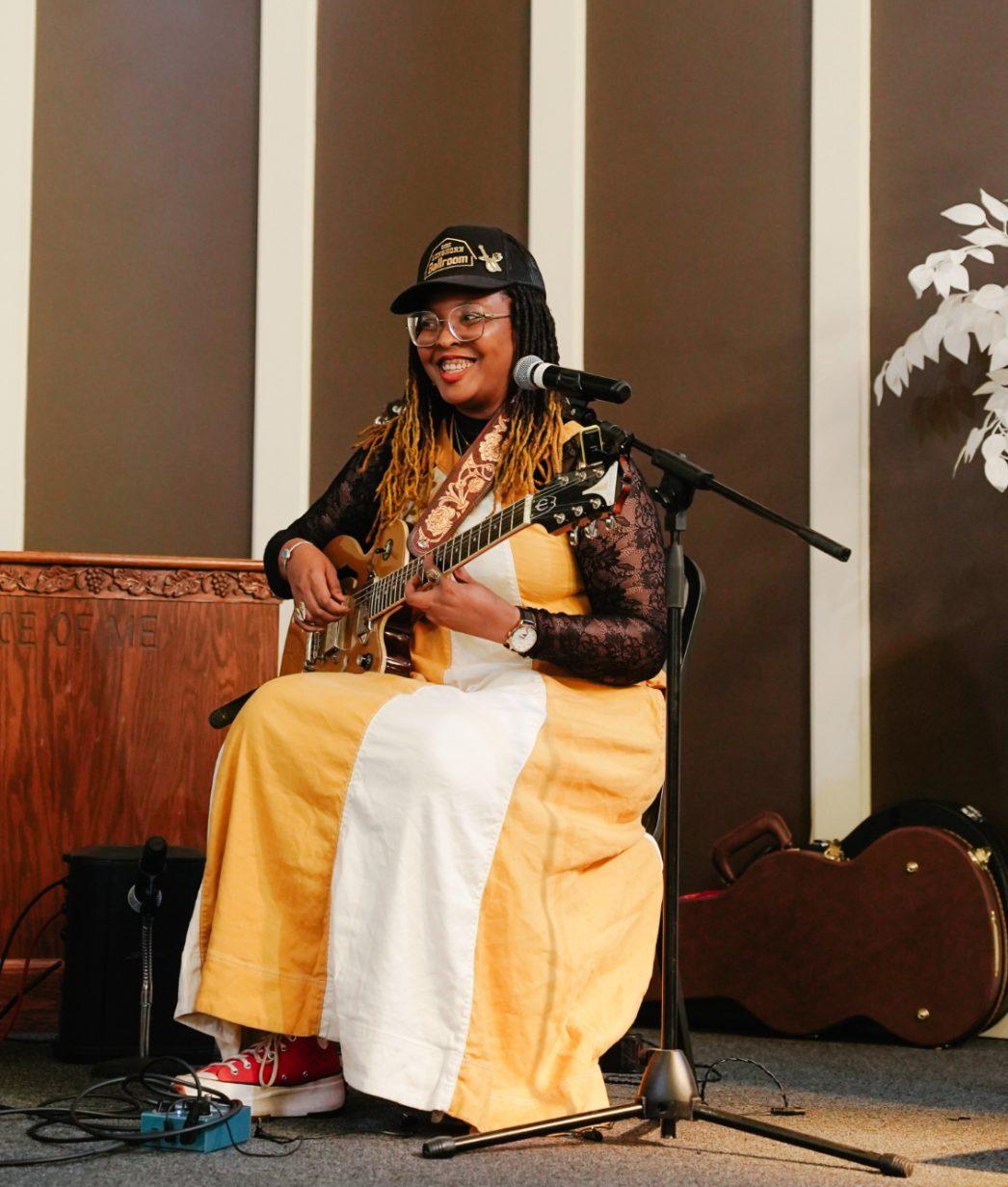
April marked both International Guitar Month and International Black Women’s History Month. For Jess Garland, a Dallas-based singer-songwriter, neither occasion required a calendar reminder. She has been living at that intersection for two decades.
Garland is the founder and director of Swan Strings, a Dallas-based nonprofit providing free music education, community concerts and sound therapy programming built on a foundation of racial and gender equity. But before the nonprofit classification, before the grants, before art installations and symposiums, there was just a Black woman with a guitar going wherever the need was — schools, recreational centers, living rooms — and noticing something that wouldn’t leave her alone.
“I’ve taught all over Dallas,” she tells the Observer. “But even when I started doing nonprofit work, I still wasn’t seeing a lot of Black people. We were there, but it wasn’t the large majority of the demographic I was teaching.”
She noticed something else, too. As a musician working in Dallas’ broader arts ecosystem, she kept running up against the same wall.
“You don’t see a lot of Black women who play instruments,” she says. “It’s not that we don’t exist. It’s not pushed and presented in the media as much. Historically, that’s been by design. If you look at the pipeline, from minstrel shows to the entertainment industry, it’s typically a white man in the forefront.”
Black Artists Shape Black Artists
Garland traces her own formation as a guitarist to a handful of women who carved the path for their successors, including Sheila E., India.Arie and fellow Dallas musician Erykah Badu. But the pivotal moment for Garland was watching Lauryn Hill’s 2001 solo taping for MTV’s Unplugged series. In the session, Hill sat onstage in Times Square alone, with just an acoustic guitar, and performed an entire set of unreleased material. An official album version the recording, MTV Unplugged No. 2.0, was released in May 2002.
“I’ve been playing guitar as long as that [album] was released,” Garland says. “Because that was the very specific moment of, ‘I’m doing this.'”
When Beyoncé held open auditions in 2006 for what became the Suga Mamas, a ten-piece all-women band, with lead guitarist Bibi McGill in the center of it, Garland understood the significance immediately, not as entertainment, but as an intervention.
“I became, instantly, a fan of Bibi McGill,” she says.
Jessica Taylor/JTaylor Studios
But she was also clear-eyed about the limits of visibility without infrastructure. Even now, she says, her students will reach for a male artist’s name before a woman’s.
“A lot of my students will say Leon Thomas before they say H.E.R. And I’m like, ‘Wait a second,'” the musician says.
That pattern of the cultural gravitational pull toward men, and specifically toward white men, even in art forms that Black people built, is what Swan Strings was designed to interrupt. The organization came into sharper focus when Garland participated in the Dallas Truth and Racial Healing and Transformation equity cohort and was asked to develop a formal theory of change. What she landed on was precise: increase the number of young Black girls participating in Swan Strings programming from 40 to 60 annually. By September 2026, she will be a handful of students away from that number.
“I’m a Black woman leading a music institution, and I wasn’t seeing young Black girls,” she says. “How do I change that? I had to be more intentional about reaching the demographic I wanted in our nonprofit.”
Creating More Visibility in Music
Intentionality extends to every dimension of Swan Strings’ work, including where and how it chooses to show up publicly. In March, the organization presented the inaugural Behind the Strings: Music Symposium at St. Paul United Methodist Church in the Arts District. It was a free, six-hour event honoring Sister Rosetta Tharpe and the lineage of Black musicians she represents. The choice of venue was deliberate. The church sits on land tied to one of Dallas’ earliest Freedmen’s Towns, in a corridor Garland has long been vocal about.
“I’m not afraid to talk about how it could be a lot more diverse on that street,” Garland says. “It’s frustrating, because it is a Freedmen’s Town, but you don’t really see a lot of Black institutions or Black art there.”
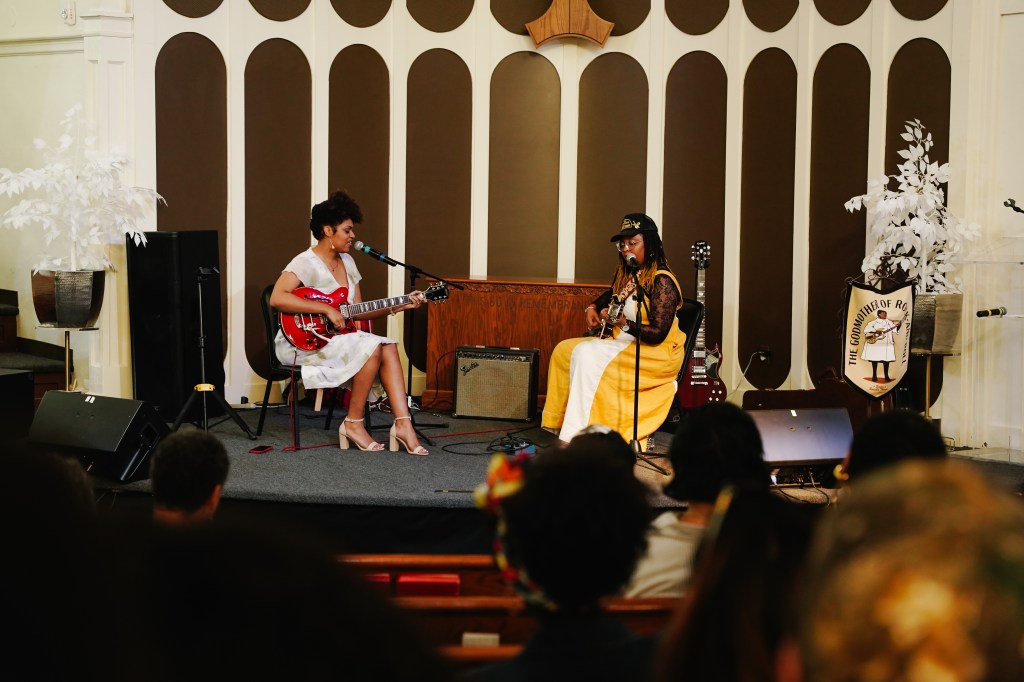
The symposium’s lineup was crafted with the same intention. Garland and Kierra Gray Thomas, a Swan Strings collaborator since the organization’s founding, performed together on electric guitars, weaving rhythm guitar and fingerpicking through Elizabeth Cotten’s “Freight Train” and “Blackbird.” Grammy-winning soul artist Kam Franklin performed solo, moving between electric guitar and lap steel with a soul and skill that doesn’t translate to description. Dallas’ Cookie McGee brought a full band, her signature Gibson SG anchored a blues set alongside Brianne Sargent and Lunar Rae.
“I wanted to show how this sound gets shaped right here in Dallas,” Garland says.
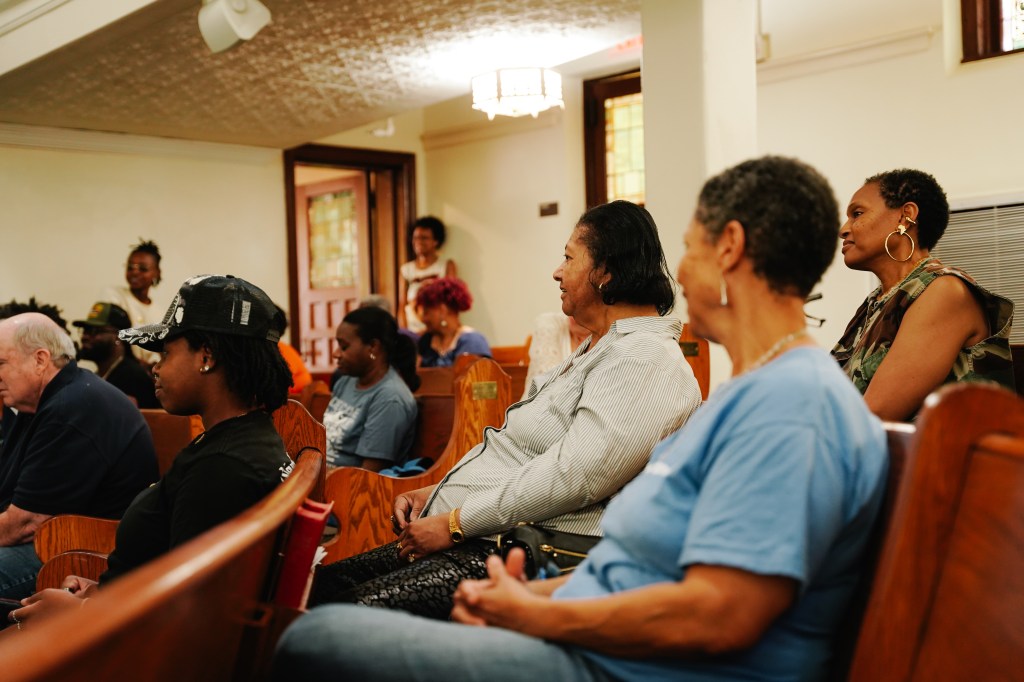
And the crowd was composed of the diversity she envisioned.
“It wasn’t just about racial diversity or gender diversity. It was diverse through age… I saw the most Black people I have seen in one space for the work that I present,” she says. “My audience is typically white. That really meant a lot to me.”
One moment stood out above the rest: Community activists, civil rights organizers, and veterans from Dallas’ broader movement community showed up, not to perform, not to play, just to witness.
“They didn’t even pick up a guitar,” she said. “They just wanted to see us in action… They’re here to be in community and to uplift this moment.”
Another recent performance presented by Swan Strings featured rising Dallas singer-songwriter, Zyah.
Jessica Taylor/JTaylor Studios
But the ecosystem Swan Strings is building is bigger than any single event and more durable than any single grant cycle. The organization now partners with the Black Banjo Reclamation Project, a Bay Area-based initiative working to return the banjo, an instrument with African origins that was stripped from its cultural roots, back to Black communities. Garland’s nonprofit also hosts free monthly banjo lessons at the Oak Cliff Cultural Center. Through it all, Garland is still self-funding when she has to, moving with the direction she brought to the first guitar lessons years before anyone called it a nonprofit.
“We’re not getting the funding people think we are,” she says. “We are getting funded, and we have grown tremendously. But I have to be creative. I’m an artist, and I’ve always had to self-fund a lot of things.”
Teaching classrooms full of young Black students who see themselves at the center of musical history remains the driving force for Garland.
“Representation matters to all groups of people,” she says. “It’s important to see Black people doing things outside of the narratives that have been created for us.”