
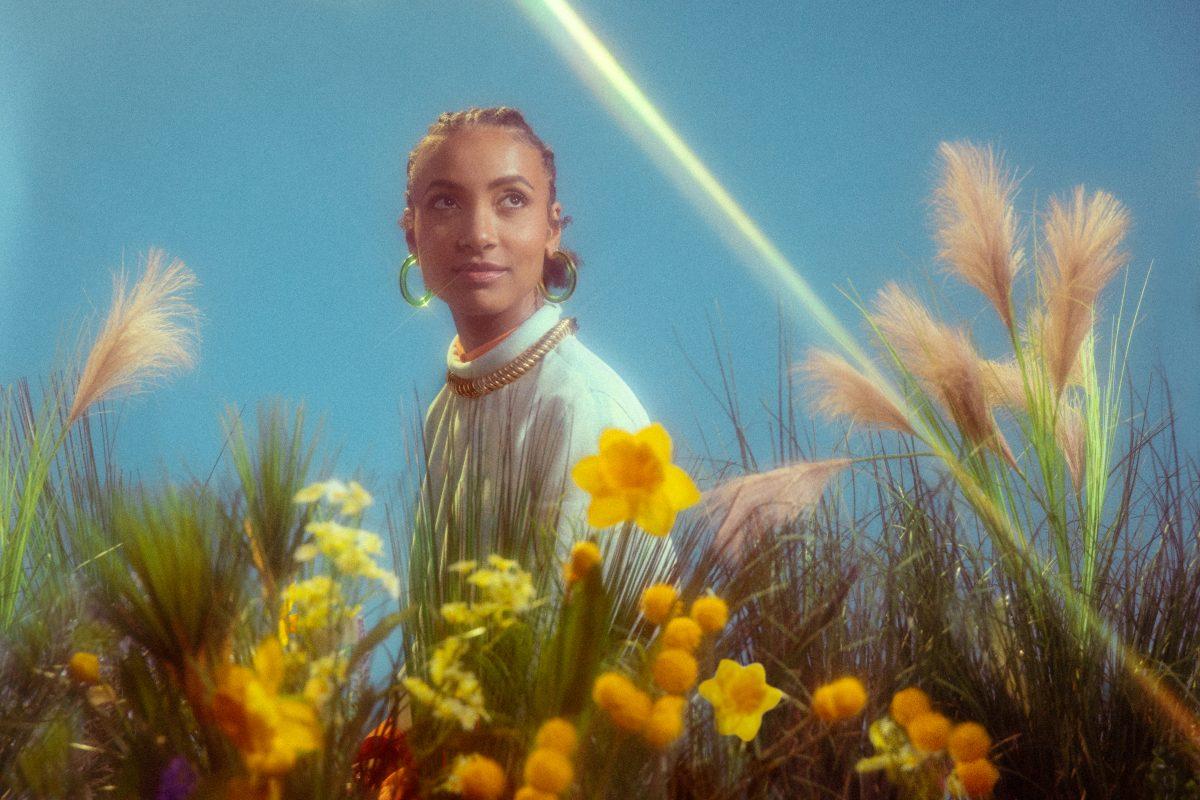
Holly Andres

Audio By Carbonatix
A conversation with Esperanza Spalding can take as many turns as her career has.
The musician, whom NPR has lauded as a “21st-century jazz genius,” is also busy with a dance company, a forthcoming art installation called “I love being Black/Quit saying I’m Black,” and the songwriting through which she first became famous. She touched on all of this when we caught up with her ahead of a May 22 show at The Longhorn Ballroom, but most of all, she veered between heady ruminations on authenticity, individuality and what it means to her to be a part of a long “lineage” of jazz artists.
And above all else, the 41-year-old artist kept coming back to the idea of joy.
She repeatedly referred to music as a “technology,” a medium through which joy can be found and expressed. For spalding (who stylizes her name in lowercase), sharing that joy is never more important than when she — or the whole world — feels overwhelmed.
“What we do with that cacophony, that overwhelm of input, is we make creative sense,” she said. “We make creative logic, we make play, we make joy, we make purpose. That is what the homo sapien does with the information that we’re receiving from our environment.”
Raised by a single mother in a working-class neighborhood in Portland, Oregon, spalding taught herself violin as a child after seeing Yo-Yo Ma perform on Mister Rogers’ Neighborhood. Yo-Yo Ma plays the cello, but the cello was too heavy for spalding, who was then four years old. So violin it was.
At 20, she became one of the youngest instructors in the history of the Berklee College of Music, her alma mater. Since then, her career has evolved in ways that have consistently resisted categorization. In comparing her to Joni Mitchell, Björk and Prince, Rolling Stone called her a “genre-of-one” artist.
Early albums like her debut, Junjo, and her sophomore effort, Esperanza, established her as a virtuosic player and composer steeped in jazz tradition. She was blending jazz improvisation with chamber arrangements and Brazilian influences. (spalding often sings in Portuguese, and she describes herself as a eaabibacliitoti artist: an acronym that stands for “European-African ancestored being influenced by American cultures living in Indigenous Territories of Turtle Island.”)
Then came the moment that changed her public profile forever: the 2011 Grammy Awards, where she unexpectedly defeated Justin Bieber, Drake, Florence and the Machine and Mumford & Sons to win Best New Artist — becoming the first (and so far only) jazz musician to claim the award. After that win, spalding became even more adventurous.
Her album Emily’s D+Evolution embraced art-rock theatricality and alter egos. Next up, her album Exposure was written, arranged and recorded on a 77-hour Facebook livestream. In recent years, her work has expanded even further into opera, dance, teaching and therapeutic arts research. But she’s still a jazz artist at heart.
She collaborated extensively with Wyne Shorter during the later years of the saxophonist’s life, eventually co-producing and writing the libretto for his opera “…(Iphigenia).” In many ways, Shorter embodied the experimental spirit that seems to define much of spalding’s recent work — she speaks about the musicians who came before her with almost devotional awe.
“I’m listening to them, I’m thinking about them, I’m giving thanks to them,” she told us. “I’m just humbled and inspired by what they were able to craft for themselves as life, like a lifestyle and artistic discipline and community and industry under incredibly challenging, intentionally destructive circumstances.”
Further, she described these jazz artists who came before her as architects who left “clarity of mapping and blueprinting” behind for future generations. That same admiration runs through her relationship with Milton Nascimento, an 83-year-old singer, songwriter, guitarist, and pianist from Brazil. Nascimento’s work has long blurred the boundaries between jazz, folk, spiritual music and political expression, and in 2024, he and spalding released the album Milton + Esperanza. Reviews were effusive.
The Guardian, for instance, praised how the pair’s vocals — Nascimento’s baritone, spalding’s “soaring falsetto” — blended seamlessly to create something masterful.
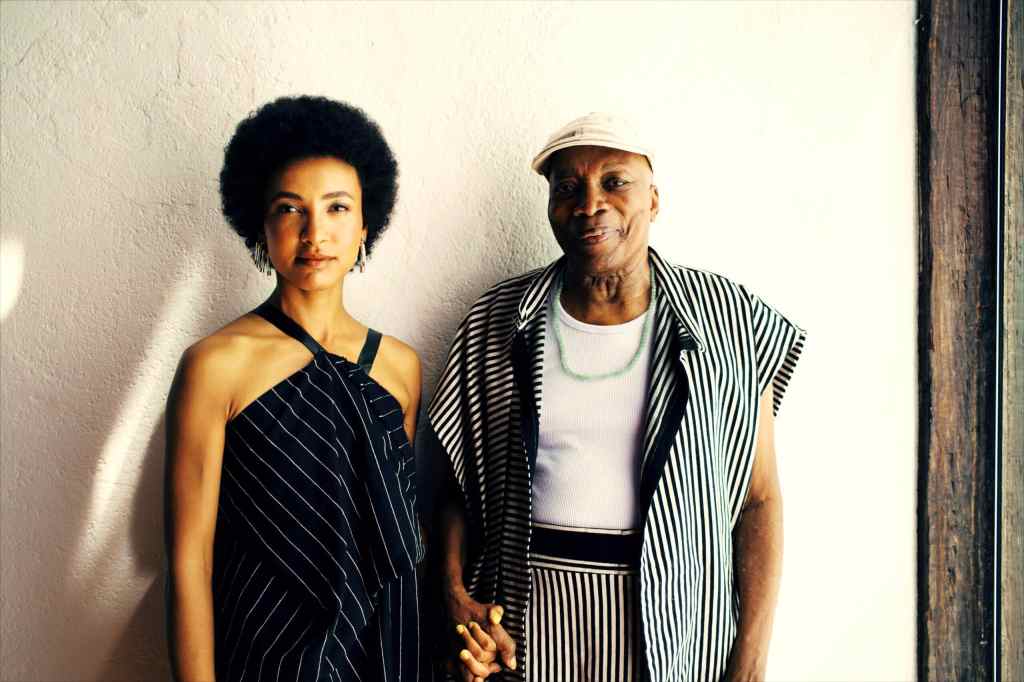
Lucas Nogueira
In talking with the Observer, it’s clear spalding herself is still, years later, enraptured by the experience of working with Nascimento. Yet the lesson she seems to value most from her titanic collaborators is their embrace of individuality.
“I understand that part of what they mapped for all the future generations is the charge to be yourself,” she said. “You have to be yourself. It’s going to come out anyway in this music.”
For spalding, being herself — or at least understanding who that self is — takes consistent focus amid the world’s “cacophony.”
Specifically, she told the Observer that the “accoutrement” surrounding music can begin competing for attention: promotion cycles, industry expectations, image-making. But beneath all of that, her core motivation has remained remarkably consistent.
“I realized, whether I was conscious of it or not, that joy has always been the ‘why,’” she said. “I could feel it from the music when I listened to it. I could feel this force, this power, this medicinal something radiating from it, and it had freedom in it, and it had love in it, and it had honesty in it, and it had a kind of transparency where you feel like you’re just witnessing the soul of the musician exposed in all of its complexity and beauty.”
This is where the idea of music as a “technology” comes into play. She describes her music as a medium that’s constantly toyed with and experimented with, something that can be manipulated however the artist needs to convey honesty, healing and emotional truth.
“I want to advocate for this music and practice this music and represent this music because I recognize that, particularly in these kind of era-turning times, the joy is like a grounded technology and holistic nourishing to all parts of one’s being,” she said.
These sorts of intricate pronouncements roll off spalding’s tongue with a rapid ease that can leave your head spinning. But just as her “why” has always remained consistent, so, too, has her discipline. She works hard on multiple crafts at once because she has a deep reverence for the people who came before her and those who are next up.
“I want to be disciplined in how I prepare myself to use this technology, because it is so powerful,” she said. “And because the lineage of it, it’s something that you want to honor.”
Esperanza Spalding plays The Longhorn Ballroom at 8:00 p.m. on Friday, May 22. Doors open at 6:30 p.m.
