
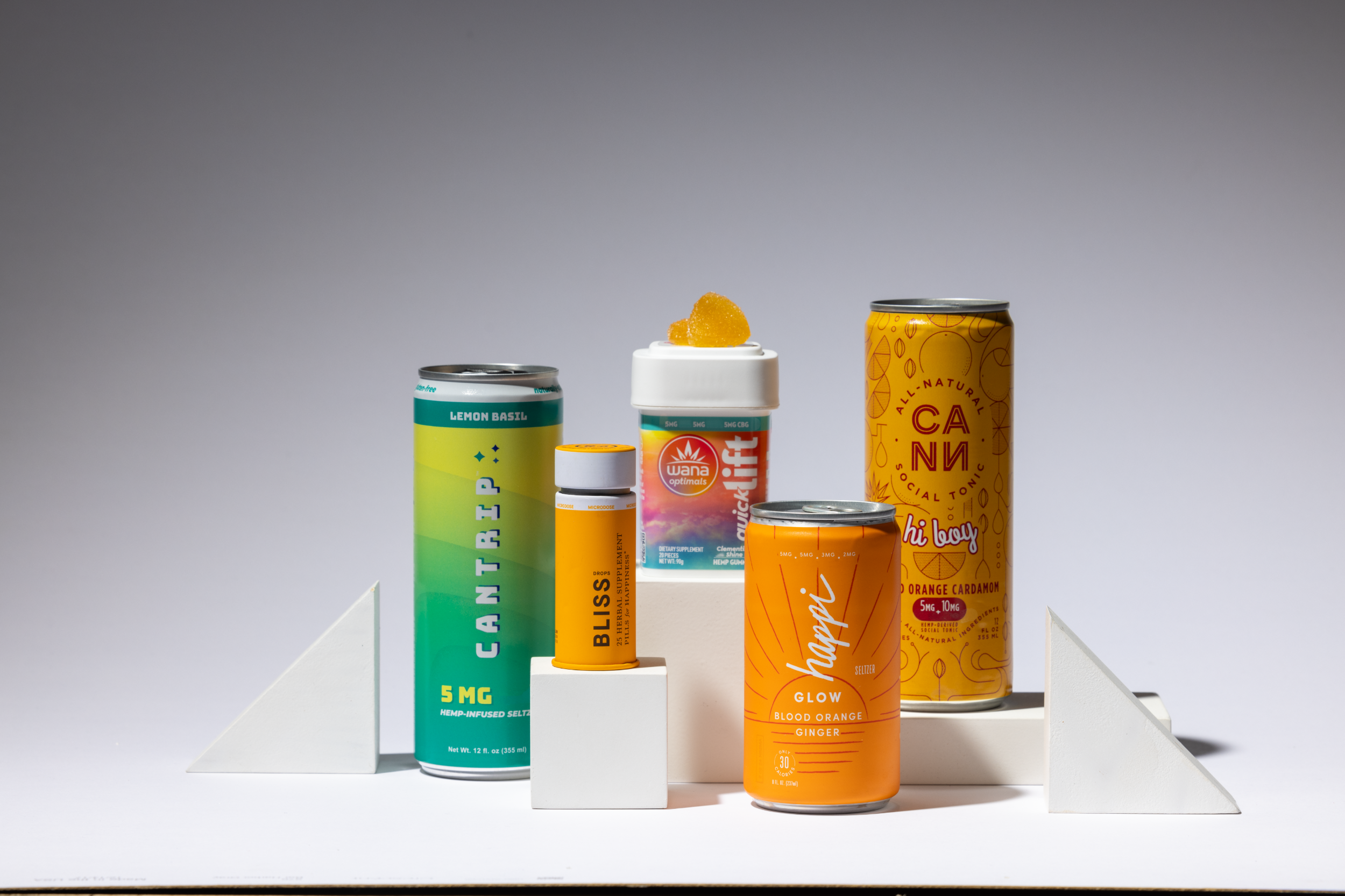
Photo courtesy of Edibles.c

Audio By Carbonatix
Pre-rolled joints and some high-potency edible THC products are now banned in Texas. But where does that leave Dallasites looking to mellow out with a beverage?
It’s been a wild ride since Texas legalized hemp in 2019. State lawmakers opened the gates to the rapid growth of an industry now worth $5.5 billion, by some estimates, but that growth also happened, in part, because they created a few loopholes. Since then, lawmakers and state officials have wrangled with how to regulate a product many Texans have grown a taste for.
Republicans in Austin also haven’t presented a completely united front on the issue — some have called for outright bans, while others have cited use by veterans and Texans struggling with chronic illness as reasons to regulate rather than overly restrict. One notable example came last summer, when Gov. Greg Abbott vetoed a bill that would have virtually banned all hemp products and called for further regulation. Over 53% of voters would have opposed the measure, according to a UT Austin poll.
The divide in the state GOP has created an unclear picture for interested Texans. In virtually every session since 2019, a handful of bills have sought to regulate the industry with new restrictions, with some passing while others were blocked before taking effect. Add to that decisions by the state’s health agency and a dizzying flow of judges’ orders blocking certain restrictions from taking effect.
It’s almost impossible for the day-to-day consumer to keep a firm grasp on what they may or may not see on shelves next week.
Shifting sands have created concern among business owners and employees. In March, as the state’s ban on smokable hemp was announced alongside skyrocketing licensing fees, one business owner told the Observer that it amounted to an “attempt to ban the industry.” Some have had to lay off employees, while others are leaving the business altogether. And that’s just the smoke shops.
Bars and breweries are also facing some uncertainty, although their outlook may be less dire. Many have begun stocking or brewing their own THC drinks in recent years. A large portion of their business still comes from on-tap brews and shaken, booze-filled cocktails. But some customers have grown accustomed to them, and brewers, especially, don’t want to see that investment go to zero.
So, over half a decade of court cases, product launches, partisan infighting, regulations and high times later, where do THC drinks stand in Texas?
Are canned THC drinks still legal?
Yes, hemp drinks are still legal in Texas as long as they contain 0.3% delta-9 THC by dry weight.
That distinction is important because delta-9 is the main psychoactive compound in THC products, while delta-8, delta-10, THCP and other cannabinoids that consumers have probably noticed over the last few years are found in lower levels but can be manipulated to create intoxicating effects.
State lawmakers created a loophole for products containing these compounds in 2019, and shortly after, the state tried to enact a new set of rules banning them. A judge blocked the “delta-8 ban” after a challenge by the industry, but in May, the Texas Supreme Court upheld the ban and made the 0.3% delta-9 THC by dry weight the standard for what’s legal hemp in Texas versus an illegal Schedule I drug.
Yes, it’s technical. In short, drinks with delta-8 or other compounds are illegal as of July 31.
However, drinks containing a legal percentage of delta-9 — which appear to be a large share of what brewers and bars were already selling — are still fair game.
A look behind the drinks
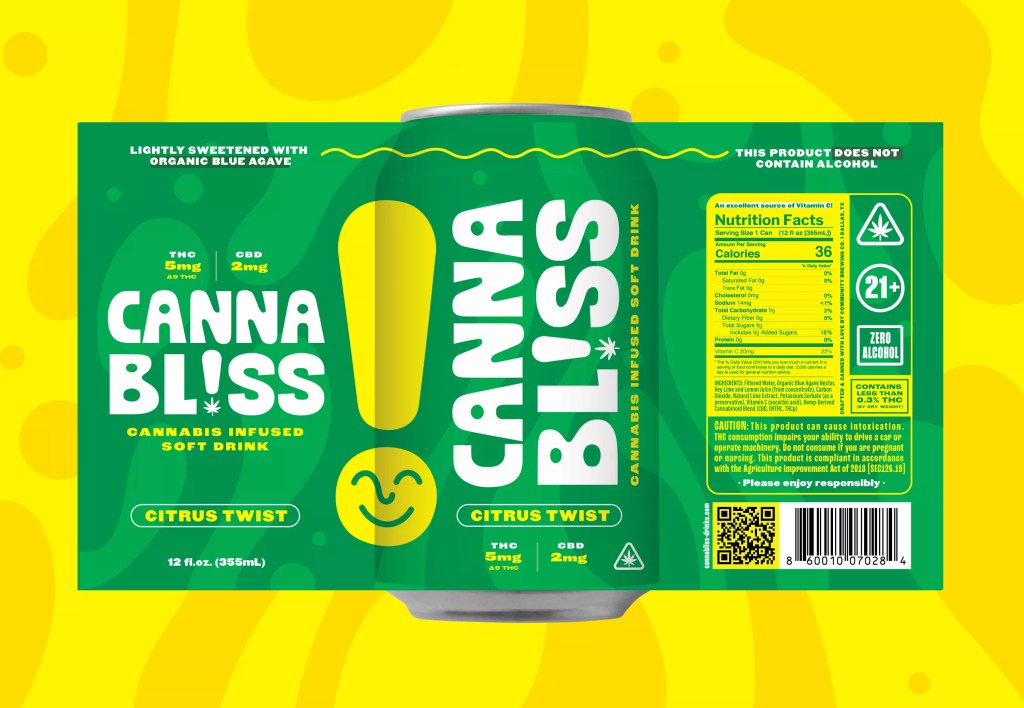
courtesy Community Beer
Community Beer Co. is one of the most notable Dallas–based brewers of THC beverages. The brewery produces two hemp beverages, which are sold at its taproom near the Design District and in dozens of retail locations across North Texas.
Owner and operator Kevin Carr says they began selling the beverages in 2023 as the industry grew exponentially. Since moving to the new facility in 2021, Community has looked to expand its offering with NA beers, and THC drinks offered another opportunity to branch out, he says.
“The research showed that this was going to be a big growing industry, and it was just a good opportunity to add to the diversification of what we were doing and just really lean into it,” Carr says. “Also, in addition to diversification, we recognize the benefits to consumers who are looking for different kinds of products.”
As mentioned, Community brews and sells two carbonated THC drinks:
- Citrus Twists come with 5 milligrams of delta-9 THC.
- Berry Jane has 10 milligrams.
- Both are within the legal standard of no more than 0.3% delta-9 THC by dry weight.
The main difference, aside from flavor, is potency. Think of it as a lager versus a double IPA.
Brewery staff have been trained to encourage first-time consumers to take some to go or make sure they don’t have to drive home after their first foray into the world of THC, Carr says. Customers are also encouraged to limit themselves to one drink, and THC beverages can’t be consumed alongside, before or after alcohol. That’s because, as Carr puts it, there’s “a social responsibility aspect to it.”
“Folks can say, ‘Oh, that’s what I do at home,’” Carr says. “It’s like, ‘Well, respectfully, we understand that, but you’re not at home, and once you’re on the THC train, you got to stay on it with us.’”
What’s next?
A large reason delta-9 THC is still legal is that, frankly, there’s more research on its effects. That’s also why Community’s drinks have not been affected by evolving regulations, Carr says, because his team has brewed their beverages with legally compliant delta-9 THC from the beginning.
“It was a good decision just to stick with delta-9,” he says. “Because had we tried to go down the road with some other variations, it would not have been good.”
Still, business owners like Carr have lingering concerns — with good reason. Texas Lt. Gov. Dan Patrick and State Sen. Charles Perry, who authored the ultimately unsuccessful bill that would have effectively banned intoxicating hemp, have both said they intend to support similar legislation in January, when the state legislature convenes. Recently, Katharine Neill Harris, a fellow with Rice University’s Institute for Drug Policy, told the Observer that a ban bill will almost certainly be filed next session, which would likely affect THC drinks like the ones Community makes.
“Of course we’re worried,” Carr says. “Just like any political process, at the end of the day, we can’t control the motivations of those who want their wins that are against it.”
And then there’s the impending federal hemp ban. Signed into law by President Donald Trump in Nov. 2025, the law could make 95% of existing consumable hemp-derived products illegal under federal law, according to estimates by the U.S. Hemp Roundtable. The bill will take effect in November, although the Senate has passed pending legislation to push the deadline to December.
States are not necessarily required to amend their hemp laws with the impending federal changes – much in the same way that marijuana is a banned substance federally, but still legal in states like Colorado. But Texas officials have used past federal changes to influence hemp legislation, and appetite for a near-ban remains strong in Austin.
Carr says he’s not opposed to regulation. In fact, he supports milligram caps and further enforcement to root out bad actors. But a ban, he says, doesn’t make sense for a state where demand has grown so large, and the potential for economic growth is considerable.
“It should be big enough industry that you shouldn’t shut it down,” Carr says. “And instead, that really kind of goes back to what we’ve been pushing: regulation. Look at the volume of revenue that’s out there, and if you just do the math on taxing it, then this interest rate can really lean into supporting our communities.”