
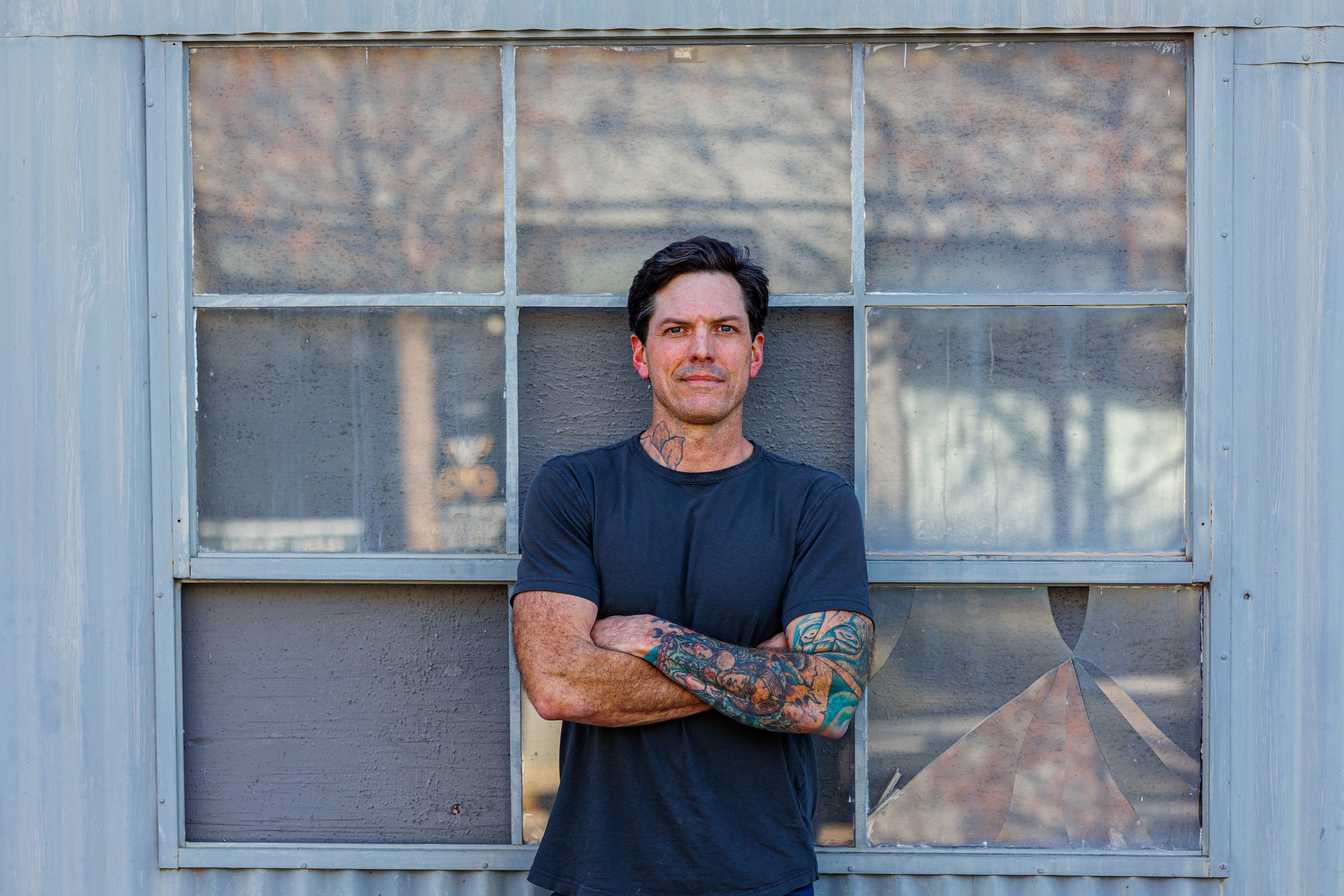
Photo by Nathan Hunsinger

Audio By Carbonatix
Matt McCallister’s story, for the purposes of this article, begins long before he started cooking professionally. It starts many years prior to his multiple James Beard Award nominations, before his critically acclaimed Dallas restaurants FT33 and Homewood opened and closed, and before he stepped into his current role as food and beverage director of Local Favorite Restaurant Group.
We’re going back to the days before he came to Dallas, before a 20-something McCallister applied for a pantry gig at Stephan Pyles’ acclaimed Arts District restaurant (fudging just a little on the question about prior felonies). We’re not starting the story, as many have done in the past, when he was tapped by Pyles as executive chef in 2009 and, thus, shoved into our city’s glaring, food-obsessed spotlight. Today, with no new restaurant opening, special event, or culinary accolade, this celebrated chef’s story will be laser-focused on addiction.
Followers of his career may note that McCallister has spoken selectively on the topics of drugs and alcohol in the past, but when you’re sitting across from him on a warm, patio-perfect day, it’s hard to believe anything could go wrong for the guy. He’s tall and fit and leading-man handsome, and he’s also been through hell.
“My addiction story is very long,” McCallister says. He opens with the fact that he “started smoking weed when I was 9 years old” in his home state of Arizona. He then quickly heads off any assumptions about early trauma or family dysfunction. “My parents were super normal. … I wasn’t, like, abused as a child, but I had a really hard time in school and really bad emotional regulation issues. Back then, they thought I was just, like, a fucking bad kid.”
April Murray-Bravo is a licensed marriage and family therapist based in Dallas. She routinely works with individuals in all stages of substance use disorder and alcohol use disorder (the clinical terms), including those within high-risk environments such as the food and beverage industry.
“The word ‘normal’ is subjective,” says Murray-Bravo in regard to common misconceptions about those who develop addictions. “In theory, if someone had a normal family life, they would not develop a substance or alcohol use disorder. By that same logic, everyone who came from a dysfunctional family or experienced a traumatic event would develop a use disorder, and we know that is not true. I say, no, use disorder does not discriminate. It can happen to anyone.”
As the preteen puffing continued, McCallister leaned into his “problem child” rep. “If you were to talk to me when I was a sophomore in high school about what I wanted to do with my life, I would’ve shown you the cover of High Times,” he says. “I’d have said, ‘I want to be the next best cannabis breeder.’”
In short order, McCallister blew through the marijuana and into the main event. “It started when I was like 17, using heroin,” he says. “In Arizona, back then, it was black tar, and it was pretty prevalent. We smoked it.” Soon enough, his folks were checking him into a treatment program for teens and young adults in Minnesota.
It didn’t work. In fact, shortly after his release from rehab, McCallister met his perfect “partner in crime.”
“We did a lot of cool stuff together. He was a super cool dude,” McCallister says of the new best friend he met in Minneapolis. It turns out that they shared a career goal and spent the next couple of years pursuing it. “We were kind of crazy hippie kids. We would essentially grow [cannabis] all year, and then we would take the summer off and go follow Phish. We’d start in Oregon, and we would just travel around and follow the band. We would take three or four months and just kind of party, and then reset and start over.”
Again, the party grew to include more than marijuana. “We were doing lots of oxys. Oxy was big back in the early 2000s.” McCallister realized he was losing control. Again. “I was getting fucked up again. I needed to get clean, so, after we harvested and finished the next time, I decided to go check myself into a rehab.”
Two weeks later, his partner was dead.
“I’ll probably always blame myself,” he says, referring to the overdose that occurred when he wasn’t around to keep watch over his less-experienced running buddy. “I mean, I’ve forgiven myself. I’ve written him a note, and I’ve even read it at the house that he died in, but I’ll never fully get over that.”
At this point in the story, McCallister’s eyes and demeanor shift. His muscles tense. He clearly takes on a lot of blame for this situation that isn’t his to bear. One has to wonder, even as the pop-psych adage about how “hurt people hurt people” has become a common refrain, why do we find it so much harder to muster compassion for those who mostly just keep hurting themselves?
Murray-Bravo gives a perspective on how death affects those with substance use disorder. “It is difficult to function under normal circumstances when trying to manage a use disorder, so the loss of a loved one can be more intense and increases the risk of relapse,” she says. “Emotions get flooded and dysregulate the rest of the system, such as routine and sleep. During this time, impulse control may be limited.”
After the loss of his Minneapolis friend, McCallister returned home to Arizona and was “kind of trying to be sober.” There, he connected with another old pal in a similar situation. “My old best friend and I meet up. We’re going to some AA meetings, but we’re fucking idiots, and we wind up getting back into doing some stupid shit again.”
The problem child and carefree hippie days behind him, McCallister describes young adulthood at this time like riding a roller coaster. One week, he’s clicking up the slow, steady incline of getting sober, only to plunge down fast into the hard stuff again. Up and down he went, collecting arrests and experiencing periods of homelessness in the process.
It was then, however, that he also returned to the kitchen.
“I started cooking in restaurant kitchens when I was like 16, in little Italian places or wherever, just because it’s the only thing I really know how to do,” he says. “The kitchen was always a safe place for me.”
It was gigs like this in neighborhood restaurants that planted the seeds for what would become the chef’s signature style, hitting somewhere between fancy and down-to-earth. Handmade breads and pasta? Yes, as well as pressed lamb with charred eggplant and saffron-tomato jam.
As the roller coaster continued, McCallister’s closest friendship devolved into scoring and shooting up. Recognizing a disaster waiting to happen, he cut ties after an explosive falling-out.
“The last time we ever had an interaction was me essentially calling him a piece of shit,” McCallister recalls of the fight, which was also the last time he used heroin. But cocaine was still in play.
“I continued using cocaine, with a couple failed attempts at abstinence,” he says of the period leading up to the final plunge on this particular ride. “[One day] I proceeded to use the rest of my stuff. And then I overdosed. I blacked out and crashed through a set of bookshelves. My girlfriend came home and found me lying face-down in a huge pool of blood.”
The girlfriend called 911, and McCallister snapped back from the brink of death at the approaching sound of jangling handcuffs on an officer’s belt. He was rushed to the hospital, then sent straight back to rehab (at least it wasn’t prison). Then, as McCallister’s family prayed that this time would at last be the charm, he worked through a year-long program for chronic relapsing patients in Kaufman, Texas.
About a month into his stay, he learned that his Arizona bestie had overdosed and died.
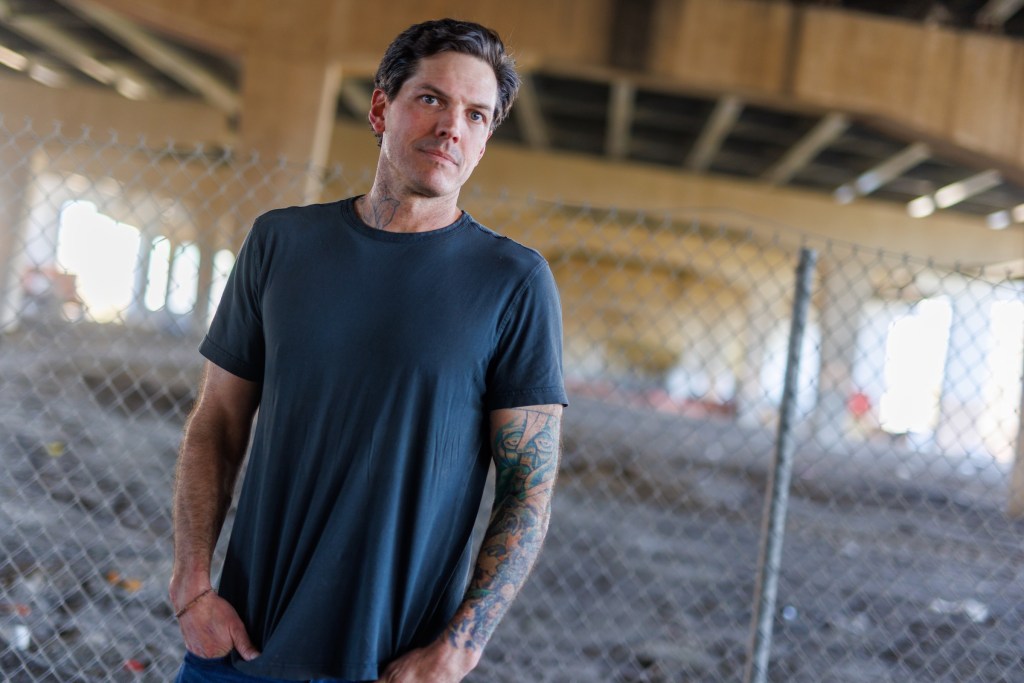
Nathan Hunsinger
At the age of 24, he’d already experienced more death and destruction in his first quarter-century than most people do in a lifetime. So, after completing the program, McCallister headed to Dallas for a fresh start. Initially, he didn’t think that going back to cooking, his trusted refuge, would be the best idea.
“I had a counselor in rehab who pretty much told me flat out that I could probably never cook in a high-stress professional kitchen, just because of my past,” McCallister says. Fate stepped in, however, and a chance meeting with a fellow chef led to the invitation to apply at Stephan Pyles.
He had no formal training, unlike his would-be colleagues who had attended some of the most prestigious culinary programs in the country. And then there was the question mark McCallister put on the part about prior felonies. (But he really wasn’t sure what was going on with a certain charge at the time anyway.) Signing his name, he crossed his fingers, and he got the job.
“He is someone that I adore,” says Katherine Clapner of her former coworker. Now a celebrated chef and founder of Dude, Sweet Chocolate in the Bishop Arts District, back then, she was the pastry chef at Stephan Pyles. When Clapner met McCallister, whom she immediately recognized as both “brilliant” and “incredibly socially awkward,” the two hit it off right away.
Clapner had already been immersed for over a decade inside what she refers to as the “excess” of the restaurant industry: excessive hours, excessive hard work, excessive critics, excessive quests for recognition and excessive fatigue. When her own alcohol use plummeted to a new low during her time at Stephan Pyles, McCallister played a pivotal role in her turning point.
“The last day that I drank, I didn’t show up to make dessert at the restaurant,” she says. “Matt was the one that came to find me, trying to get into my building. I was at a meeting the next day.” Now sober for 13 years, what Clapner didn’t know — couldn’t have known — at the time was that her friend was soon to fall down the same pit.
In 2009, McCallister was promoted to executive chef at Stephan Pyles. The decision was a natural for Pyles, who knew of McCallister’s struggles with addiction but approached the subject with compassion and a sense of duty. Sober himself for many years at that point, Pyles is adamant that “part of the process of recovery is that you are there to help. That’s your mission, and you would be remiss if someone were in recovery and you didn’t reach out and say, ‘I’m there for you.’”
And then there’s Pyles’ legendary eye for emerging talent. Having mentored some of the most well-known names in the business, including Clapner, Marc Cassel, Graham Dodds, Bobby Flay and Jose Garces, Pyles recognized great potential in McCallister from the start.
“Matt had an impact on me that no other chef has had,” he says. “He changed the way I looked at food. I thought he was the most talented chef I’d worked with up to that time.”
The Observer covered McCallister’s rise to the top spot at one of the most well-respected restaurants in one of the most competitive culinary cities in the country. Concurrently, the young executive chef became part of a “heady time,” as Pyles puts it. The concentration of local talent during the first decade of this century turned dining out into performance art, and Pyles recalls “history being made” on the Dallas restaurant scene. No pressure, right?

Allison McLean
McCallister started drinking again, but it was only “a little bit,” and that particular substance had never been his major problem. The subsequent story of his 2016 relapse, this time, into alcohol, has been shared in the local media before. “I was doing a dinner with Tony Maws from Boston. He is a chef I look up to in a lot of ways,” he says. “It was also my birthday, and I had gotten so shitfaced that day. It was a shit show. [It was] not a good showing at all.”
Having recognized the signs leading up to that disastrous birthday, his wife, Dedre, along with the help of his mother, was already planning an intervention. McCallister was more than ready. “I was so tired. I was miserable inside, you know, I didn’t like what I was doing, but I just didn’t know any other way,” he says of his state of mind as fellow chefs and family members confronted him that day.
Today, minus a “couple of issues,” McCallister has been sober for eight years. Though he’s been in and out of 12-step programs since the age of 13, McCallister has found that following his own regimen is the best way to maintain his sobriety. He sticks to a routine, including a daily trip to the gym, often in addition to a long run, and even when it comes to coffee, he is keenly aware of the fact that he’s “not wired for moderation.”
Thriving as he guides menu development for concepts including El Fenix, Snuffer’s and Taqueria La Ventana, among many other popular brands, he has also maintained a tight ship at all of his restaurants since getting sober.
“I never let people drink,” he says of the complimentary shift drinks that are frequent perks for servers, chefs and hosts. He also frowns on post-shift partying. “Nothing good has ever happened in my life when I’ve allowed that. I mean, anytime weird stuff happens in a restaurant, alcohol’s usually involved.”
Additionally, he keeps an eye out for those who may need a check-in. Whether it’s taking a colleague to a meeting or just sending them a text or inviting them to join him at the gym, he’s there as “someone to talk to.”
Murray-Bravo agrees with setting clear boundaries and offering support as a winning combination.
“A responsible bar or restaurant can support employees in recovery by creating a culture that includes clear policies around alcohol access, and leadership trained to understand stress and addiction,” Murray-Bravo says. “Employees should never be forced to disclose their recovery status, but workplaces can make it clear that support exists. Ultimately, structure, respect and realistic expectations help create safer environments for everyone, not just those in recovery.”
As our conversation draws to a close, McCallister recites his personal motto. Tapping a finger on the table, he emphasizes each syllable: “Good, better, best. Never rest until good is better and better is best.”
“It’s kind of a fucked-up saying,” he says. “It essentially never ends, right? You’re just always chasing perfection, essentially, which can grind you down. That being said, life can be so beautiful if you can just choose to live it.”