Photo by Courtney Smith

Audio By Carbonatix
Keep Dallas Observer Free
We’re aiming to raise $10,000 by April 26. Your support ensures Dallas Observer can continue watching out for you and our community. No paywall. Always accessible. Daily online and weekly in print.
That former Dallas Cowboys head coach, Jason Garrett, is a co-owner of Caffe Lucca has garnered it a lot of attention, but I don’t like sports and don’t care about that. I’m here because the other owner, Julian Barsotti, has two Michelin-recognized Italian restaurants in the city, the eponymous Barsotti’s and Nonna, the latter of which earned a Bib Gourmand distinction. By any measure, Barsotti knows Italian food.
Caffe Lucca does something different than Barsotti’s other ventures by focusing on Sicilian food, and drawing on the island’s exposure to the Mediterranean. There are North African, Greek, French and Turkish influences, even stretching as far as Lebanon for wine and the Spanish phenomenon Picasso for its artistic influence. That tracks not just for its southerly location, but because every clan in Europe conquered Sicily at least twice before Italy finally drew it into the fold for good.
Meanwhile, in Dallas, I was trying to conquer the host stand at this restaurant. The small dining room was packed out when I arrived at around 7:30 on a Wednesday night, with a couple of parties waiting to be seated. I checked for reservations earlier in the evening and saw that several bar seats were open, so despite this being a hot spot after its relatively recent opening, I opted to go in cold. This seemed to stump one of the hosts, who simply shrugged as she told me the bar was full.
Another host swooped in quickly to give me a much fuller update on the seating situation and an estimate of how long the wait would be. It gave me a chance to watch the dichotomy of how these two worked, one running around the room, assisting the staff, juggling reservations — all while the other stood unmoving behind the computer, frozen.
The Cocktails
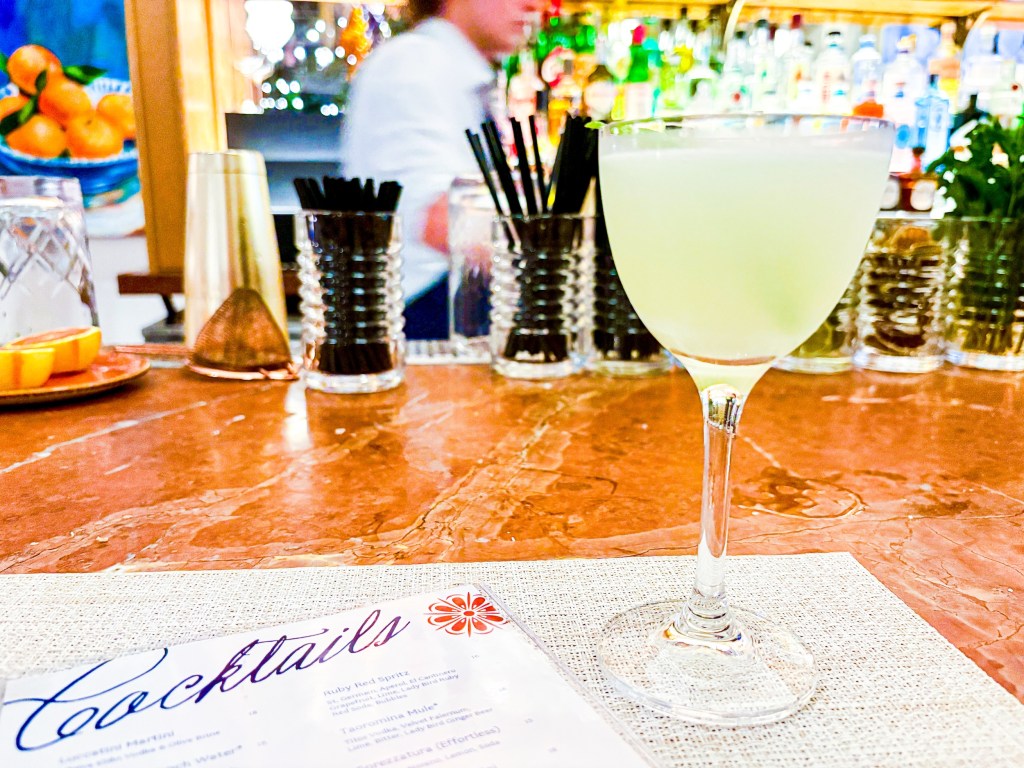
Photo by Courtney Smith
The bar staff was happily more engaging and informative, working in lockstep together to tell the story of the menu, proffering drinks and avidly checking on guests. I started with a White Lotus ($16), a refreshing gin cocktail with hints of laurel leaves. In Sicily, it’s typically served as a digestive after meals rather than as a cocktail mix, but it works beautifully in either situation.
Insalate
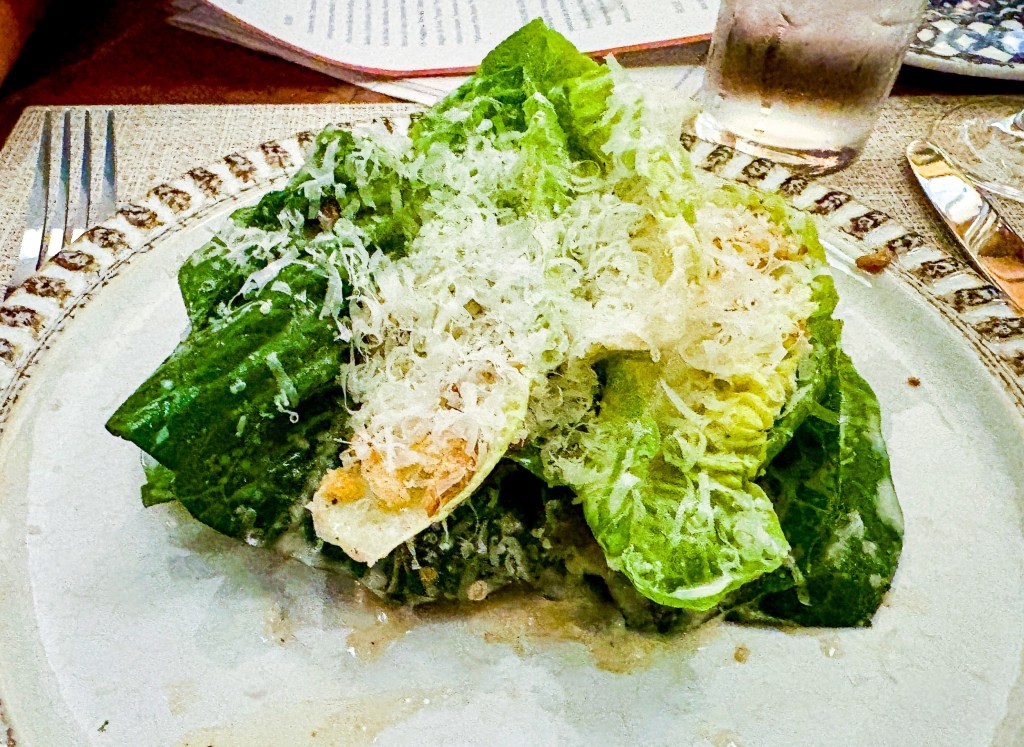
Photo by Courtney Smith
I started with a Sicilian Caesar salad ($18), made Italian by virtue of its inclusion of Colatura di alici, an ancient fish sauce from the Amalfi Coast, which is mixed with tahini. This type of salad is often mistaken for Italian, but it was created in Tijuana, Mexico — safe to assume it’s on the menu to satisfy the expectations of Highland Park diners who flock to the Knox Street district.
From the Fried Section
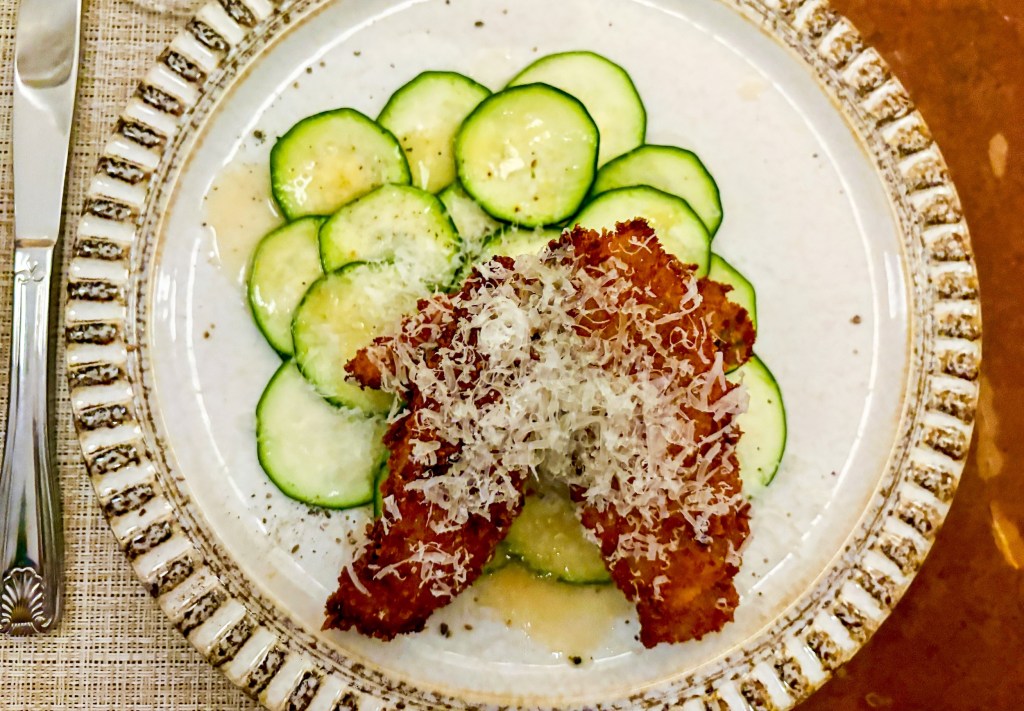
Photo by Courtney Smith
Along with that, I tried a dish from what was described to me as the “fried” section of the menu: seasonal fiori di zucca (fried squash blossoms with ricotta) for $22. Whatever fryer they bought is paying for itself by turning out perfectly browned crusts, but there seems to be an issue with the actual vegetable. It’s squished into one end of the fried stick, giving a big bite of squash blossom, followed by three bites of cheese stick. Not that I’ve ever had a problem with fried cheese, simply that the frying technique for making these needs to be ironed out. At the same time, the bread course appeared with saffron butter. It was excellent, though try as I might, I could detect no saffron.
Origins of Busiate
The menu makes a great show of highlighting busiate, the durum-wheat-and-water pasta invented in Sicily, which is one of the region’s oldest pasta styles. Though the menu tells diners that this pasta dates back to the 11th century, it doesn’t acknowledge that the country was under Arab rule at the time. No mention that the name of this pasta is thought to derive from the Arabic word bus, and no acknowledgment that it was all happening as the capital city of Palermo became a central Islamic center. All of this because the menu gives space to debunking the myth that Marco Polo brought pasta to Italy from China. Especially given the current political climate, it feels worth the time to share, even if only through the servers, that this pasta is the result of the intermingling and peaceful co-existence of two vastly different cultures.
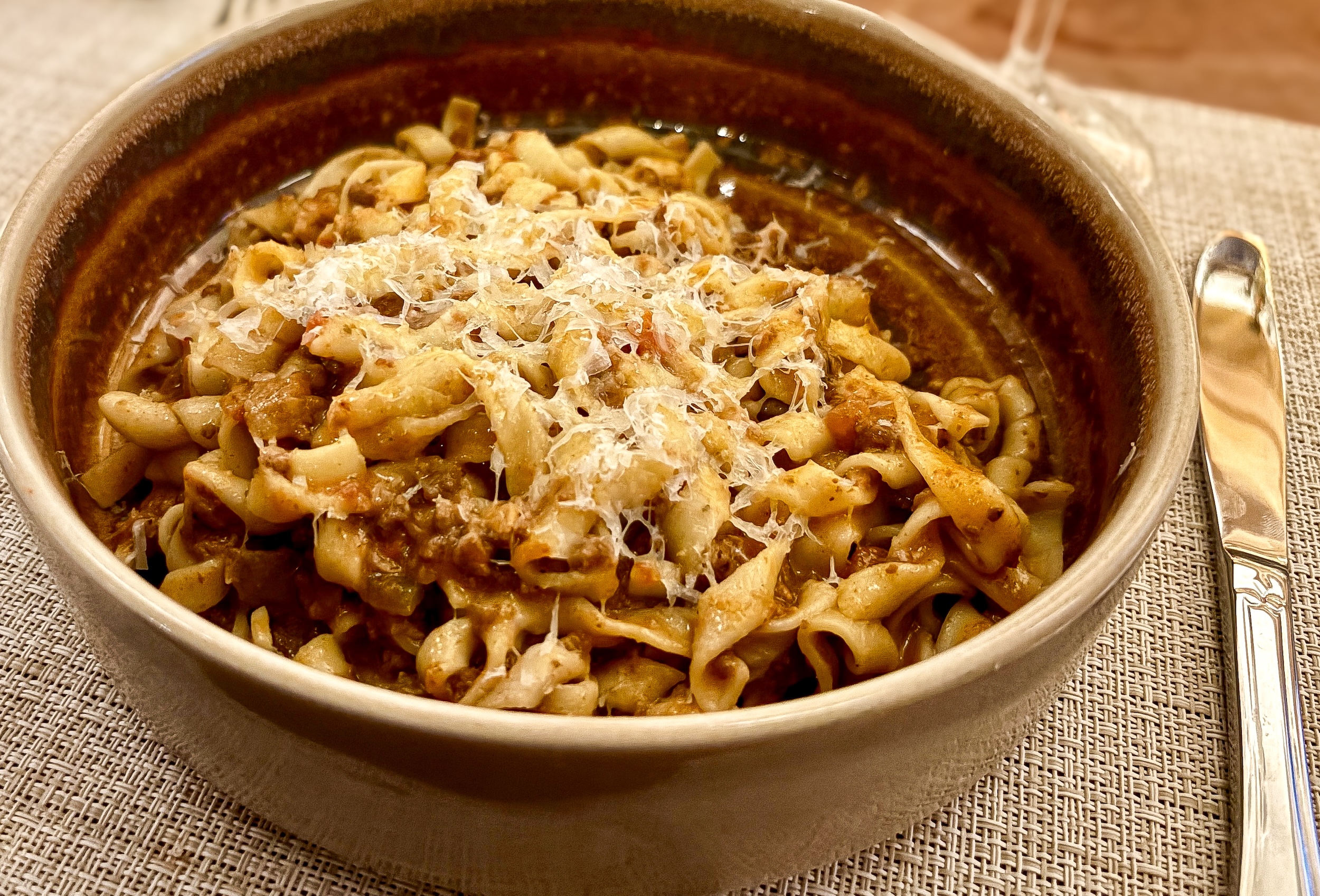
The pasta is meant to be thick and chewy, and the shape comes from wrapping it around a skewer to create a twirl that makes it particularly good at capturing thick sauces. I had the al ragu della nonna Siciliane ($30), a version served with slow-cooked Berkshire pork and plum tomatoes for a Roman-style dish.
Eating the shredded meat and fresh pasta took me back to the experience of eating wild game slow-cooked in a tomato sauce in Italy, in some small restaurant buried in the countryside. It’s rustic, and this treatment of the meat leans into that. The pasta is cooked a bit beyond al dente, which is proper to give it a chewier texture.
Unfortunately, my trip down memory lane was marred when I bit down on a bone with some cartilage just a bit smaller than the tip of my pinkie finger. In rustic cooking, I can forgive a lot. But when being charged $30 for a plate of rustic pasta sized to fit one person, I cannot forgive a bone that is the perfect size to choke on. I paired the otherwise enjoyable dish with a Lebanese red wine ($15), at the suggestion of the bartender, that was precisely the medium-bodied, floral wine I requested.
Gelato
The trio of gelatos ($10) was the best value of the evening. Sicilian pistachio was the best of them, with the light-as-air quality gelato demands. Vanilla is deep and heady with flavor, offering a nice complement. There was, inexplicably, Mexican chocolate, which was too vibrantly flavored in comparison. It’s too bad that a $10 dessert had to do all the heavy lifting to save a $30 entree.
Caffe Lucca, 4445 Travis St., Sunday – Wednesday 5 – 9:30 p.m.; Thursday 5 – 10 p.m.; Friday – Saturday 5 – 10:30 p.m.