
Lauren Drewes Daniels

Audio By Carbonatix
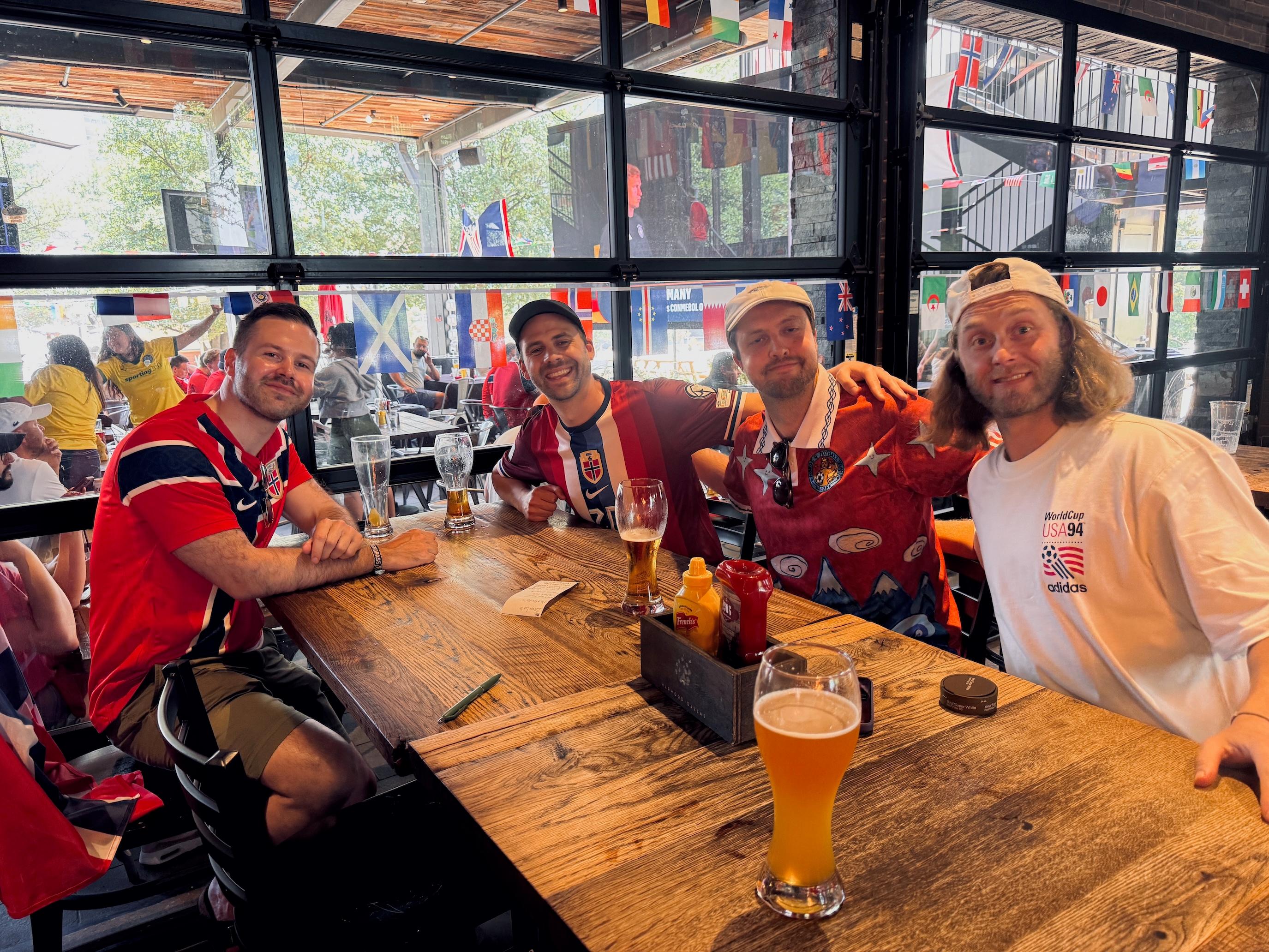
We went to Happiest Hour earlier this week, hoping to see one of those fun row things Norwegian soccer fans do. We were too early for that, but we took the opportunity to approach a group of guys decked in soccer jerseys to talk about tipping. Turns out, it’s an easy icebreaker. They were good sports and jumped right into it.
It’s a topic we’ve been talking about a lot lately: America’s tipping culture is a bit unique. Other countries pay a living wage and tip only on special occasions. So, how would this play out during the World Cup with an industry that relies on tips to pay bills? Some restaurants are slapping auto grat on everything, while most restaurateurs we talked to just shrugged: They didn’t know what to expect.
Let’s just say we’ve all learned a lot. Us and the four Norwegians.
1. 20% is standard, but the rules are blurry
We asked Vagare from Norway what he knew about tipping before coming to America. He said he knew that tipping 20% is expected at restaurants, but was surprised that it’s also expected at bars and cafes.
2. Even locals can’t agree on the proper protocol
There were two of us from the Observer at this impromptu interview. One of us is a wee bit older than the other. We had different reactions to this statement on coffee shops. I’ll leave a dollar at a local cafe mostly but not always, but never at a Starbucks. My coworker always tips. This confused Vagare even more; he didn’t realize not tipping was an option.
3. Acceptance is the first step to enjoying your tipping trip in America
“I learned that I have to tip there [cafes and bars] as well,” he says, and adds with a shrug. “I’ve come to the conclusion that I have a few weeks of vacation in America and I accept that I’m going to tip everywhere.” Dang, Vagare, hope you have that in the budget.
4. The tip screen isn’t just an option, it’s a mandate
Truls from Norway had an interesting take on the tip screen, saying that when you tap your card at a bar or restaurant, it’s “mandatory” to go through the prompts. He’s right, it is mandatory. They make you pick a side every time. The tip prompt has always been framed as “you have the option to tip.” Actually, you have to go through the prompts every time. It’s a mandate.
5. Norway pays living wages to all
In Norway, servers are part of a union, and pay starts around $20 per hour and increases with age and tenure. Tipping is only expected at high-end dinners. Alexander Riis, one of the guys we spoke to, said diners might tip on meals costing $100 or more, but only if the service was really good.
6. Tech-driven tipping culture is on the rise everywhere
Truls added that tipping has become more prominent in Norway as digital payment systems become more popular.
7. Service is better in America
Vagare added that service in America is much better than in Norway. “In Norway it’s a little more distant and cold — that’s how we like it in Norway — it’s really nice that they [servers in the U.S.] follow up with you more. I kind of appreciate that,” he said.
“Is that because they rely on the tip, though?” his friend Truls added, which is one of the system’s benefits.
8. The $2.13 tipped minimum wage is shocking. As it should be.
One thing they didn’t know — and couldn’t quite believe — is that servers make just $2.13 an hour. They almost spit their beer out. We felt a weird pride; like showing them a shiny trophy for winning at being the worst. This is a fuzzy topic because, under federal law, servers have to be paid at least the minimum wage at the end of the day, either way. But it’s why tipping is so important.
9. Taxation without representation
The Norwegians have also been surprised by taxes on everything. In Norway, taxes are baked into prices, so the number you see on the tag or menu at a restaurant is what you pay. Here, they’re paying more in tips and taxes.
10. Auto-grat complicates bad food, which trumps even the best service
We ended our chat with a story from Alexander about a bad experience at a restaurant in Boston. The group has been traveling around and, while he loved Boston, dinner at a restaurant took “ages,” and the steaks weren’t cooked medium-rare as requested. He said the service was great, but aside from that, the meal wasn’t very good, particularly the wait. So they complained, and the manager comped their beers but left the auto-gratuity added to their bill.
Alexander thought they should take away the tip because, “that’s the whole point.”
Yes, Alexander from Norway, you’d think it is.
Which brings us to the point of great service here versus cold, distant service in Norway. Then we could get into a discussion about the performative expectations: Should service be a performance? What if a server wants to hide in a shell and not dote? Would cold, distant service be OK if everything else was as expected? And dinner was 20% less? Probably so.