Emma Ruby

Audio By Carbonatix
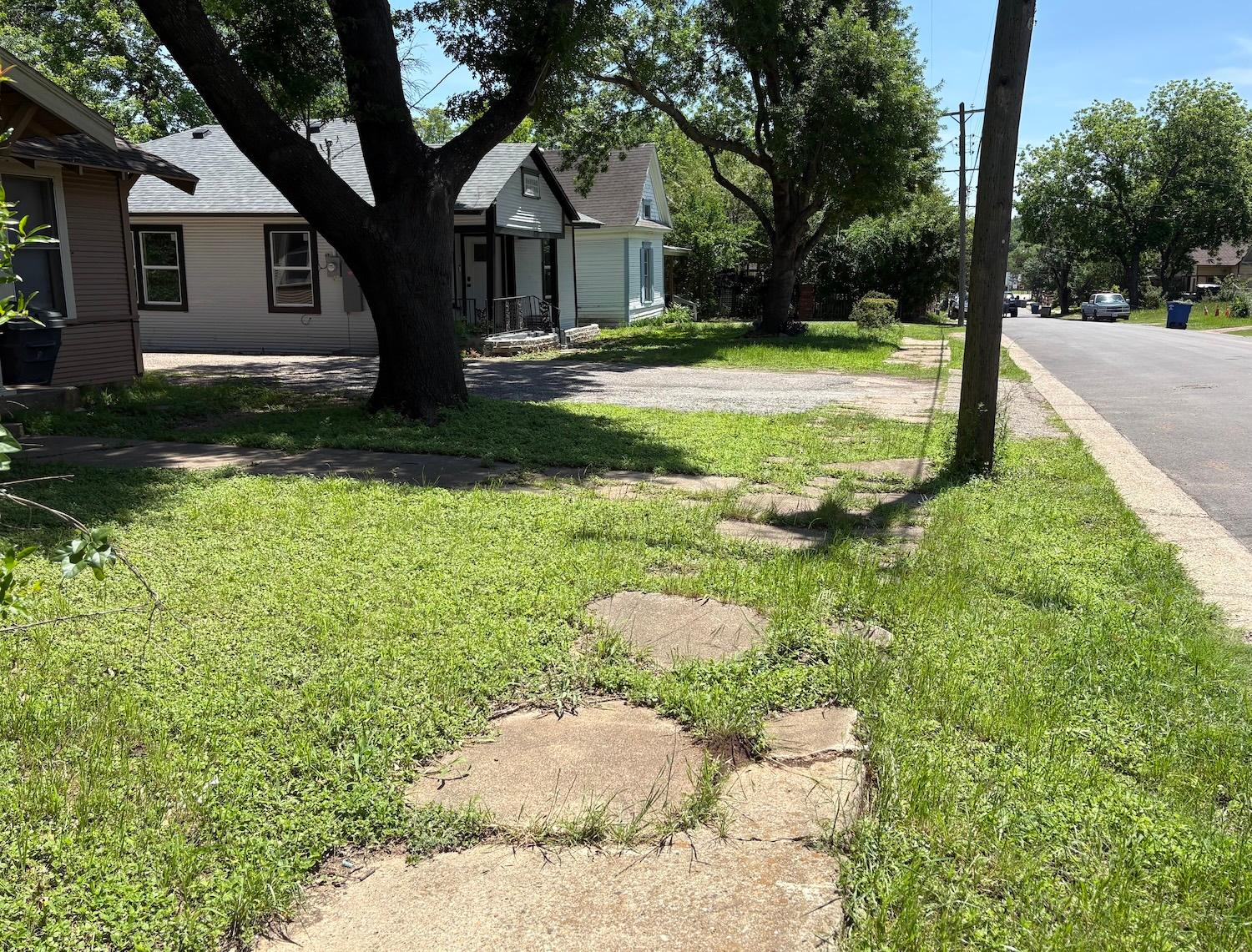
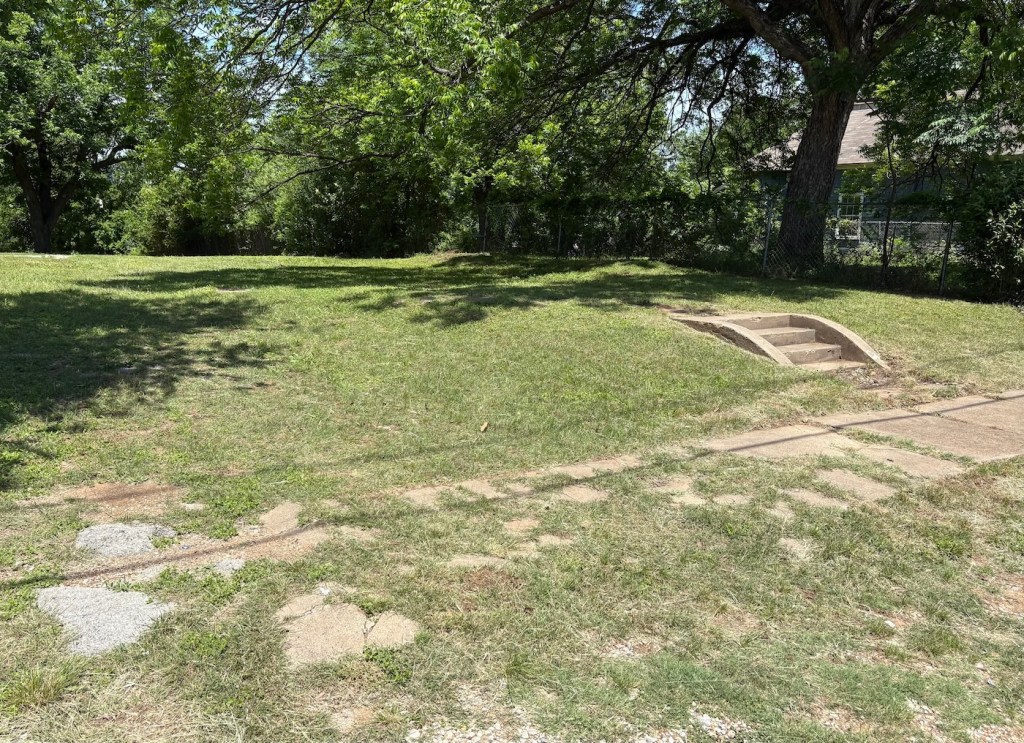
On any given road in the Tenth Street Historic District, the place where emancipated slaves found sanctuary in Dallas following the Civil War, you can now find the place where the sidewalk ends.
Craggy concrete coalesces with nature, and on some streets, if a person needs to use a sidewalk for a stroller, a wheelchair, or even footing, they have to zigzag across the main road to piece together sections of paving.
In 2017, this issue was addressed in Dallas’ $1.05 billion capital bond program, which included nearly $534,000,000 for street and transportation infrastructure projects. Of the 1,039 projects outlined in that bond proposition, 902 have been completed and 120 remain in progress. Seventeen projects, one of which is the promised upgrades to Tenth Street’s sidewalks, remain uncompleted.
“We’re almost begging [the city] to complete what they said they were going to do, which should be an easy win,” said James McGee, president of the Southern Dallas Progress Community Development Corporation. “The community deserves it … and the city of Dallas should do their jobs.”
McGee does not live in Tenth Street, but as part of his overall advocacy for southern Dallas, he has been involved with the historic neighborhood for years. In January 2024, he began an email chain with city officials asking why progress had not been made on the bond program project.
That email chain, which he shared with the Observer, spans dozens of emails and reveals multiple leadership turnovers on the project, anticipated construction start dates that have long passed, and multiple instances of city officials failing to respond to correspondence for weeks or months at a time.
(In August 2025, more than a year after this email chain began, McGee’s company filed an unrelated lawsuit against the city of Dallas that remains pending.)
In one instance, in January 2024, a city employee with the bond office told McGee that the project requires “additional direction and guidance” from the district’s former council person to “refine project scope and limits,” although the city bond dashboard indicates that the project’s design phase was completed at the end of 2020. In July 2025, an employee with Transportation and Public Works warned that while six areas have been identified as the highest priority for sidewalk upgrades, several factors exist “that may impact City budget.” McGee responded by asking how a project included in a bond program relates to the city’s annual budget, but his question was not answered.
Emma Ruby
On Oct. 21, 2025, frustrated by the lack of response to a Sept. 2 email asking whether a contract had been awarded for the project, McGee informed the city staffers that the email thread had been shared with the district’s new representative, Maxie Johnson. Eight minutes later, he received a response from one of the four city employees on the email chain.
“I got sick and will be out for the rest of the week. Will contact you next week,” the response says. That city employee did not respond to McGee’s emails again until Dec. 11, 2025.
The city of Dallas did not respond to a detailed list of questions sent by the Observer about the Tenth Street project’s timeline or the unclear messages McGee has received. In one instance, McGee was told that construction on the neighborhood’s new sidewalks was expected to begin by January of this year. It has not.
In March, after construction failed to start and McGee found himself unable to reach city staff through January and February, he got City Manager Kimberly Tolbert involved, telling her, “As of today, I have spent more than 797 days — over two years — attempting to move this project forward.”
“I’m asking staff for a response. I apologize if we have not given you the proper follow up. Thank you for your patience,” Tolbert responded.
Two weeks later, a response from city staff told McGee, “There is not currently a schedule for construction.” The latest communications state that progress may start in late summer, but that is “subject to change.”
On the city bond dashboard, the project is labeled “on hold,” and a construction start date is “TBD.”
“They never know where they’re at and who’s in charge. They have no accountability,” said McGee. “In most normal worlds, when your boss gets on an email chain, you think you would [do something]. Not in Dallas.”
A History of Negligence
What pisses McGee off more than the lackadaisical communication is the fact that residents of the Tenth Street Historic District are used to being disappointed by the city, so the overdue sidewalks haven’t caused the stir they would in nearly any other neighborhood in Dallas.
The construction of Interstate 35E in the late 1950s cut the neighborhood off from the rest of Oak Cliff, bleeding Black-owned businesses dry and ruining walkability. In more recent times, local leaders have endorsed ordinances that disproportionately harm the neighborhood, such as the 2010 decree that cleared the way for demolition of structures smaller than 3,000 square feet, even if they stand within a historically protected area.
Demolitions within Tenth Street “at least doubled” following the ordinance’s passing, a study by the Dallas Office of Equity and Inclusion found. The zoning rule was singlehandedly responsible for the demolition of at least 35 homes in the neighborhood. Protected neighborhoods that have been historically white, such as Munger Place, Swiss Avenue and Winnetka Heights, did not see anywhere near the same level of teardowns and, unlike Tenth Street, were composed of many structures large enough to avoid the ordinance entirely.
Keeping squatters out of the neighborhood has become a lost cause, McGee said. In January, two people were hospitalized after a vacant home in the neighborhood went up in flames. City code enforcement has “not been as helpful as they could be” when it comes to responding to illegal dumping and unkempt plots of land.
New sidewalks would be a step in the right direction for the neighborhood, McGee said. But even if the city starts the work tomorrow, it likely won’t be what it could have been nine years ago.
In 2017, $689,857 was approved for the sidewalk upgrades. That money today will likely pave “half” of what it would have then, said Floyd Bonner, a local developer who has been involved on several home projects in the Tenth Street neighborhood.
“You’ve got tariffs, you’ve got transportation costs. Most construction equipment runs on diesel, so look at the cost of diesel in comparison between 2017 and now,” Bonner said. “[The money] is definitely not going to do what it could have done in 2017.”
(The war between the United States and Iran has shot diesel prices up more than twice what they were through most of 2017.)
The district’s council member, Maxie Johnson, has been in office for less than a year. He’s spoken with McGee about the delays, but told the Observer that he’s unable to comment on what the holdup may have been in the eight years before his tenure.
“I am fully engaged in serving District 4 and advocating to ensure that long-standing commitments to this community are fulfilled,” he said. “While I cannot speak to prior leadership, I remain focused on the work and progress we are making now.”
It is easy for the average Dallasite to not know what’s going on in Tenth Street. The neighborhood is tucked below a freeway and behind the zoo, and “if you live in a neighborhood with good streets,” you’re less likely to realize that others are living without, McGee said.
But the taxpayers voted for these sidewalks. And he thinks everybody should be just a little bit more outraged that they have yet to be made a reality.
“This isn’t fucking rocket science,” said McGee. “This is going on 10 years. Is that acceptable? No.”