
Getty Images

Audio By Carbonatix
Independent Journalism in Dallas Needs You
We need to raise $12,500 by August 9 to support the reporting our community depends on. Reader support keeps us independent and is playing a larger role in funding local journalism and shaping what comes next. If you believe independent local journalism matters, make a contribution today.
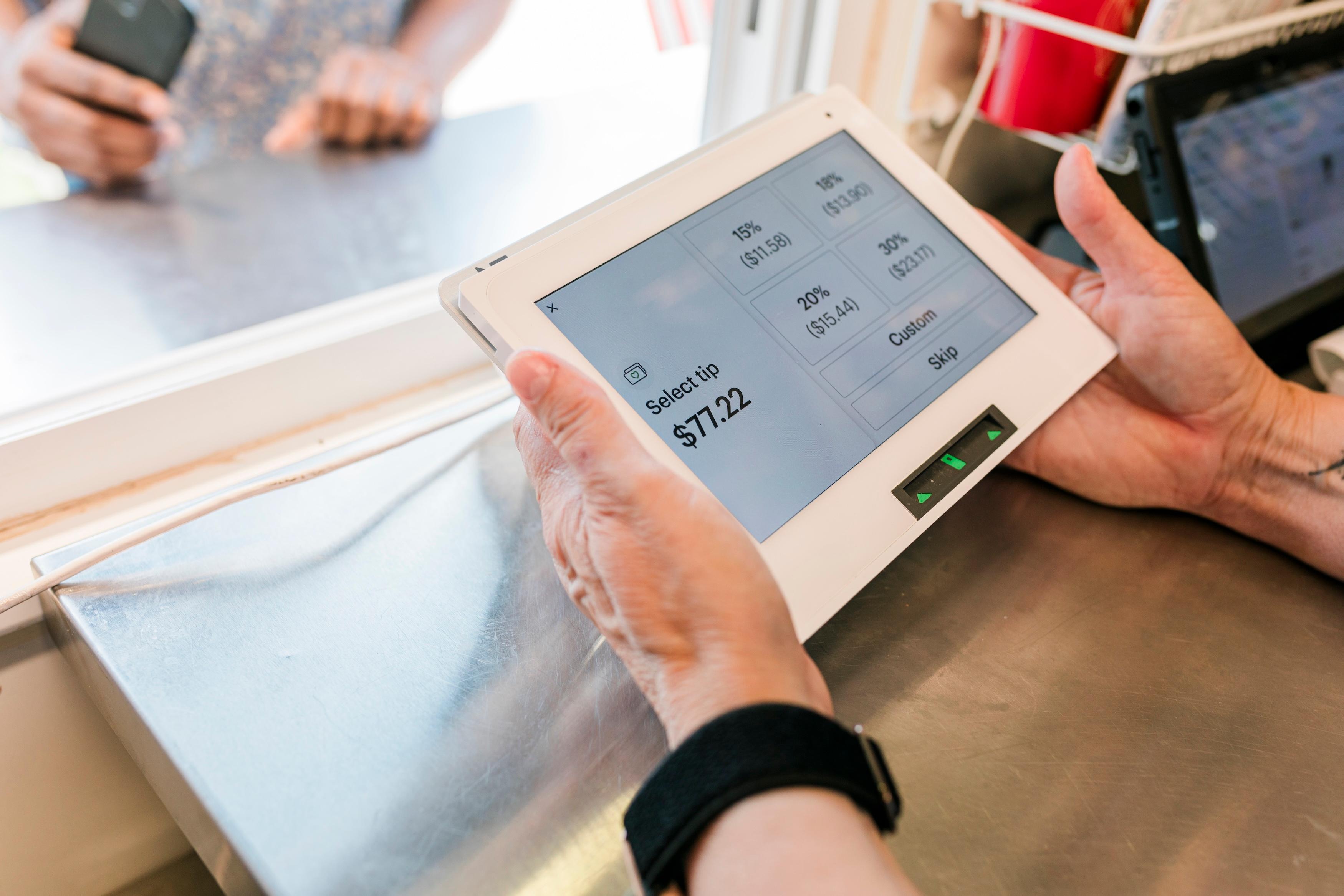
Americans are confused about tipping. We all have questions. Where? When? Are you fucking kidding me right now, flipping that screen around? So, how are we supposed to explain this complicated situationship to international visitors who will soon (hopefully) pack our bars and order lots of Fernet?
The thing is, tipping culture is largely unique to America.
In France, for example, servers earn a living wage, sans tips, and enjoy full health coverage. Since 1985, French law has required restaurants to bake 15% into menu prices to ensure servers are salaried employees. Here, we prefer to leave an entire industry’s ability to pay their bills to the whims of the often overserved.
In America, servers make $2.13 an hour with the broad expectation that guests will bump that up to something decent after a 20% tip. And yes, that goes across the board from Texas Roadhouse to Nuri Steakhouse. A $200 bill or $20, slap 20% on that. (They’re actually guaranteed to get the full federal minimum wage of $7.25 an hour if they don’t get enough tips, and states can set their own minimum wages. Just know that it’s complicated, servers rely on tips, and this isn’t France. Health insurance? Hah. As if.)
To be clear, it’s murky
Things get murkier depending on perspective. Like a cafe worker who hands you a $7 muffin, then flips a screen around for a tip. What’s that about? Or a counter-service restaurant where the kitchen in the back is doing all the work — who would get the tip? My kids have taken jobs in the service industry where an advertised wage was — to find out later — based on the assumption of tips. If that feels like a bait-and-switch on young, inexperienced workers, that’s because it is.
In some parts of the world, 10% is the gold standard for exceptional service. Here, service almost doesn’t matter. Even if your server was MIA for most of the meal, in American culture, this isn’t a gratuity but rather a responsibility we, as diners at full-service restaurants, accept to cover wages. And largely, Americans don’t have a problem with it — we’re conditioned.
How could things change during the World Cup?
So what happens at a restaurant when a group of non-conditioned visitors from Asia or Europe sits down? We’ve spoken to a few Dallas restaurants and bars about changes they’ll make during the World Cup. Most shrug. Autograt? No one knows. Phil Honoré is the executive director of the West End Association, an area with many restaurants and tourists. He hasn’t heard of anyone doing an autogratuity. He understands how complicated it could get, since tipping is different around the world, and adds, “It’s going to be a dance.”
Adding an automatic 20% gratuity to all bills for a month could ruffle locals’ feathers, but saying you won’t demand a tip worries servers who might work the busiest shift of their lives and walk away with little to show for it.
Iain Roberts is the general manager at Soy Cowboy at the Loews hotel in Arlington (across from Globe Life Field). He’s adding an autogratuity to all checks during the World Cup. He ran a restaurant in London during the Olympics; he seems at peace with the decision. Feels like he knows something we don’t.
When and how much to tip in Dallas?
- Sit-down restaurant and bars: 20% (ish)
When you sit at a table and have a dedicated server throughout your meal, you should tip around 20%, a little more or less depending on the service. The same goes for a bar where someone is taking your order, making you drinks and making sure your water stays full. - Fast food, counter service, cafes, kiosks and venues: not common
Tipping at counter-service spots (where you stand to place your order, retrieve your food, and clean your table after a meal) and at small grocery stores is a carryover from the pandemic. Customers felt generous towards all service industry workers at the time, so we tipped everyone everywhere. Many businesses and workers adopted the practice for the long run. But this now bleeds into covering a shop’s payroll, which can feel like a squeeze when everything already costs so much. - Cafes and coffee shops: follow your heart
Cafes are a gray area. Starbucks needs to pay its employees well and not rely on customers. But with a small local cafe, we might feel differently about leaving a dollar in the tip jar. But also, after a $1 upcharge for oat milk in a $7 latte, you might feel like wages are … baked in. - Every other random place: consider why
Really, everyone everywhere is asking for tips now. Like at the American Airlines Center, the screen will ask whether you want to leave a tip after you spend $14 on a bad beer and $100 on a decent ticket. A Reddit user dined at a conveyor belt sushi restaurant. Robots brought his drink, and he paid via a tablet. No human interaction. But at the end of the meal, he was prompted to tip. Reddit reports that optometrists, ballpark locker attendants, HVAC technicians and a guy selling merch at a concert are all in on it. Even kiosks. If you’re for some reason compelled to tip, go ahead, but it’s not common. - Just say no*
Know this: you can always just say no. *Unless you’re at a sit-down restaurant or a bar. At a cafe, follow your heart. - Read every line of your receipt
I’ve adopted the practice of reading every line of my receipt. And I’m a local. Don’t just sign. See what’s happening. Don’t be afraid to ask questions.
Advice for restaurants: clear communication
The Texas Restaurant Association says that employers need to understand the laws. And when asked, they said they’re not recommending restaurants adhere to any one model (like an autograt) because of the diversity of restaurants across the state.
Dr. Brian King of Texas A&M University is a hospitality expert. He says each restaurant needs to do what works best for them, but cautions that an automatic gratuity can “sometimes feel unexpected to guests.”
“Clear communication and transparency will be important,” he says, “as visitors are already likely to be paying close attention to pricing during a major international event such as the FIFA World Cup. Thoughtful implementation can help avoid confusion and ensure the focus remains on a positive dining experience.”
He advises restaurants to communicate any gratuity policies to guests before they order, so no one is caught off guard.