Brandon Harer, CC BY 2.0, via Wikimedia Commons

Audio By Carbonatix
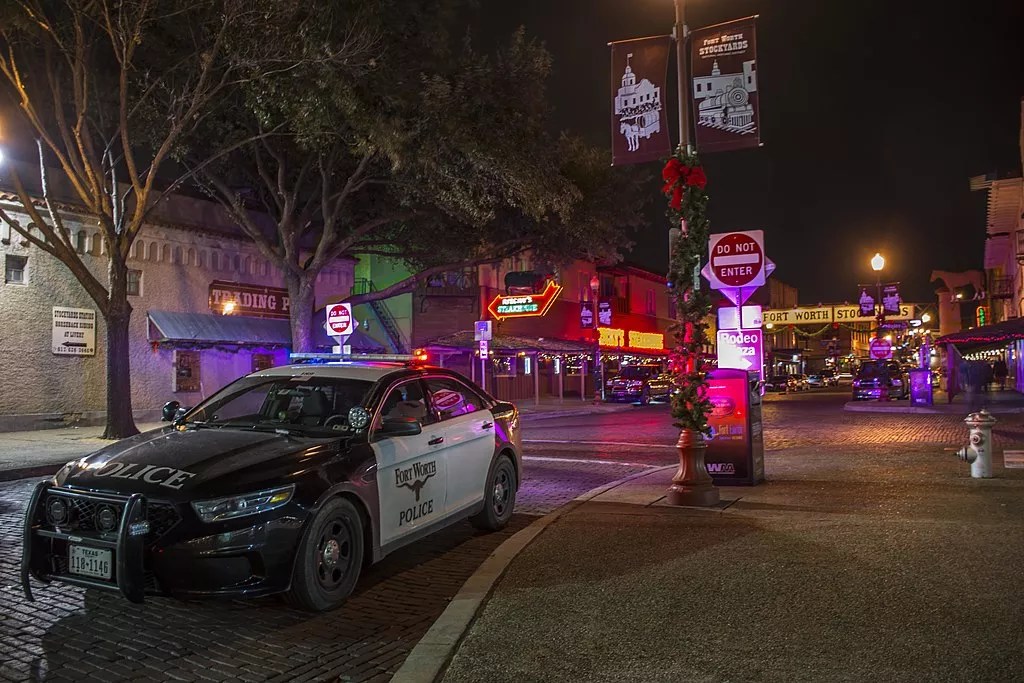
A Pride festival, street preachers and questions on First Amendment rights have Fort Worth police facing federal scrutiny following an incident in late June.
On June 27, Fort Worth residents gathered in the Near Southside for the annual Trinity Pride Festival. There was a march, live music, drag performances and resource tents. Mixed in among a flurry of rainbow flags and attire, two Amarillo-based street preachers used bullhorns and T-shirts to, as one of the preachers wrote in an X post describing the event, “pressure Jesus and rebuke evil.”
One of those men, David Grisham, is described as the “Grinch who hates Christmas” by the Southern Poverty Law Center (SPLC). He visits malls to tell children Santa Claus isn’t real and has previously displayed a sign that read “Homo sex is a sin” at Texas State University in 2024. Richard Penkowski is the leader of the Warriors for Christ, which has been designated an anti-LGBTQ hate group by the SPLC, and is currently facing criminal charges in Florida for disrupting a group of Muslim men praying on top of a parking garage.
At Trinity Pride, both men were approached by several Fort Worth police officers in interactions captured on multiple videos. One, reposted on X by the right-wing Libs of TikTok account, shows an officer telling the two men they could be cited for disorderly conduct on the grounds of “offensive speech.” The video currently has over 83,000 likes and 13 million views on X.
DOJ investigates
The backlash was swift. After considerable conservative social media uproar, U.S. Assistant Attorney General Harmeet Dhillion, who heads the Justice Department’s civil rights division, called the incident “Troubling” in an X post last week and said her office would look into the matter. On July 13, she sent an open letter to Fort Worth City Attorney Leann Guzman requesting policy information from FWPD within 30 days to determine whether the department should launch a formal investigation.
“The Civil Rights Division (Division) is committed to ensuring that all Americans — regardless of the content or viewpoint of their speech are protected from unlawful restrictions on expressive activity,” the letter reads. “Government actors may not engage in viewpoint discrimination or restrict peaceful expressive conduct simply because the speech may be unpopular, offensive, or controversial.”
In a statement, a spokesperson for FWPD said that while the department “acknowledges that an officer involved in the incident made certain statements that were not accurate,” that “at no time did officers prevent any individuals from expressing their views.”
“Officers told the individuals they could continue exercising their rights without using an amplification device,” the statement reads. “However, the individuals willingly ceased protesting after the bullhorn was seized as part of the enforcement action.”
One of the preachers was issued a citation for disorderly conduct for violating the city’s noise ordinance with the bullhorn, according to the statement. The spokesperson also said the department is working with the city’s legal department to cooperate with the DOJ request.
Dhillon questioned FWPD training standards in her letter. In a recent interview with WFAA, FWPD Chief Eddie Garcia said the officers were “wrong” in how they described the law, and told the station that all officers would receive First Amendment training as a result.
“The biggest issue that I have is just the conversations and the way that we were describing what is lawful, what is not lawful,” Garcia said.
Offensive Speech
In the video reposted by Libs of TikTok, FWPD Sgt. Sarah Stogner is recorded telling the preachers that “if someone is offended by your talking, then we have a problem.” In another video, the preachers ask whether calling someone “sir” would be considered offensive speech, to which an officer responded that it’s a gray area.
Mark Streiff, a Fort Worth attorney who has dealt with free speech issues and FWPD, said offensive speech can be cited by police, but only in rare instances.
“In some contexts, offensive speech can be cited for disorderly conduct,” Streiff said. “But it’s very, very, very limited in scope.”
The government can restrict speech based on very narrow time, place and manner criteria. If speech is considered offensive, it must be proven that it intends to incite an immediate breach of the peace under the “fighting words” doctrine.
Streiff said that, from what he had seen, the preacher’s actions did not meet that criteria.
“I would argue that it was on a public sidewalk, and a lot of these events, especially when you start talking about pride parades,” he said. “An organization gets the permit, but very often they’re open to the public.”
Trinity Pride is open to the public, and organizers have reported an attendance of roughly 12,500 people at this year’s event.
‘What about the First Amendment all the other times?’
Concerns with Fort Worth PD’s policing of free speech issues have been ongoing, Strieff said. A large number of his clientele is what he describes as left-leaning, and have dealt with similar issues, although those cases didn’t attract DOJ attention, Strieff said.
“It took them having an issue with somebody who is more conservative… to trigger a response by the Department of Justice Civil Rights Division,” he said. “So, when I saw that, I kind of scratched my head like, ‘Well, what about the First Amendment all the other times?”
One of his clients, a self-described citizen journalist who Strieff called a “First Amendment auditor,” was recently arrested for disorderly conduct while filming a demonstration outside of the Fort Worth Club.
Still, there have also been other past free speech issues with street evangelization in Fort Worth. In 2016, Fort Worth finalized a settlement in a similar case against Grisham, who has said he could sue the city again over the latest incident. In 2014, a Fort Worth police officer approached Grisham at another Pride event and told him to leave under threat of arrest. The case was later settled in his favor to the tune of $65,000, according to prior reporting by the Fort Worth Star Telegram.
Streiff said he is unsure whether further training will help with the problem, as many officers already take a constitutional law class, including the officer filmed in the Libs of TikTok video, Texas Commission on Law Enforcement records show.
“It just seems like poor leadership within the Fort Worth Police Department, whether it be their training division or however they’re set up,” he said.