
Emma Ruby

Audio By Carbonatix
Independent Journalism in Dallas Needs You
We need to raise $12,500 by August 9 to support the reporting our community depends on. Reader support keeps us independent and is playing a larger role in funding local journalism and shaping what comes next. If you believe independent local journalism matters, make a contribution today.
Defense attorneys for Karmelo Anthony are setting up for an appeal after the 19-year-old was convicted of murdering another student at a track meet last year.
Less than a day after Anthony was sentenced to 35 years in prison for the fatal stabbing of Austin Metcalf, another Frisco ISD student, his lawyers filed a notice of appeal Wednesday morning. Anthony was convicted of first-degree murder after seven days of trial and three hours of deliberation by a Collin County jury. The jurors also took nearly three hours to hand down a sentence, which was being considered within a range of 5 to 99 years based on the first-degree murder conviction.
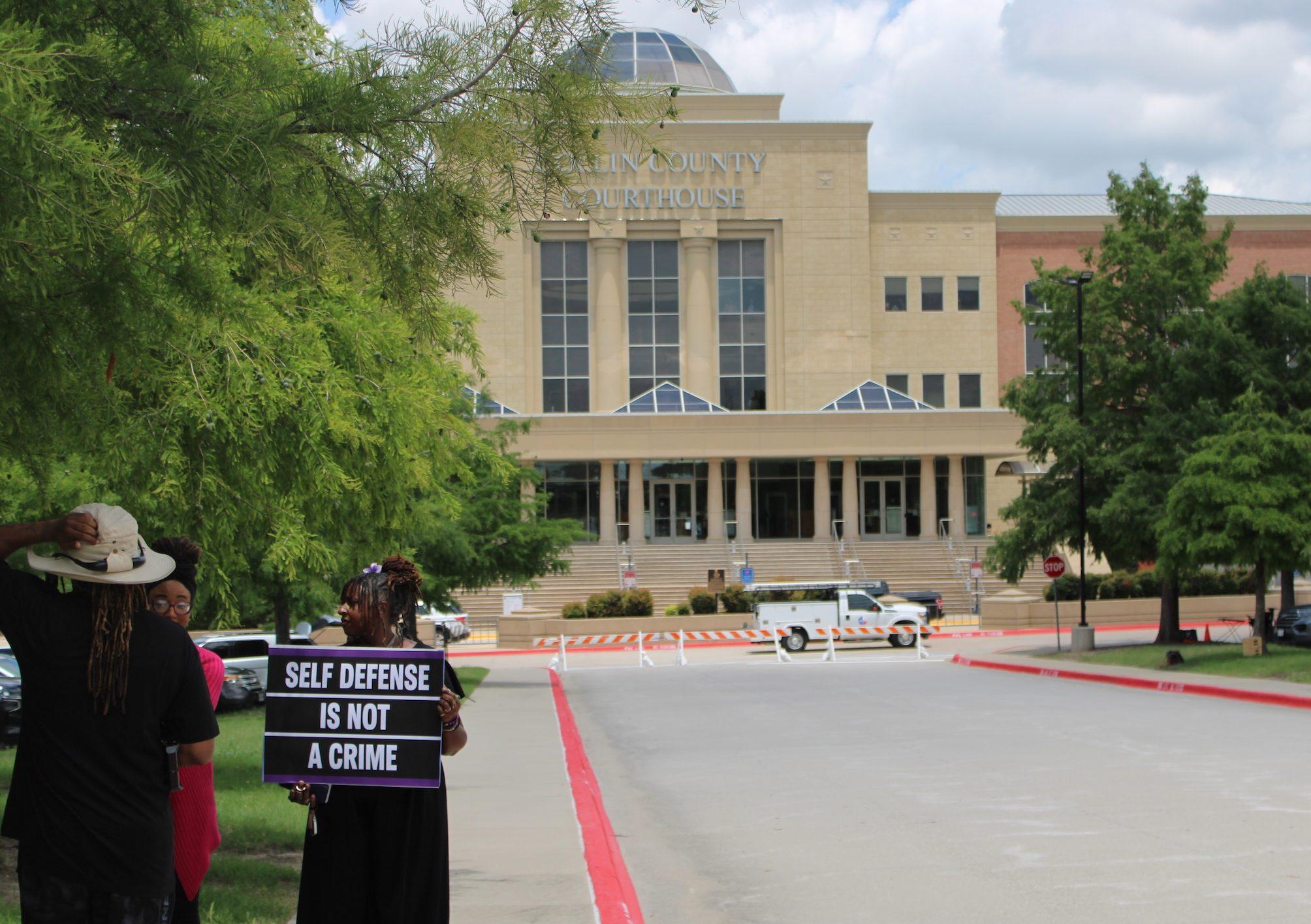
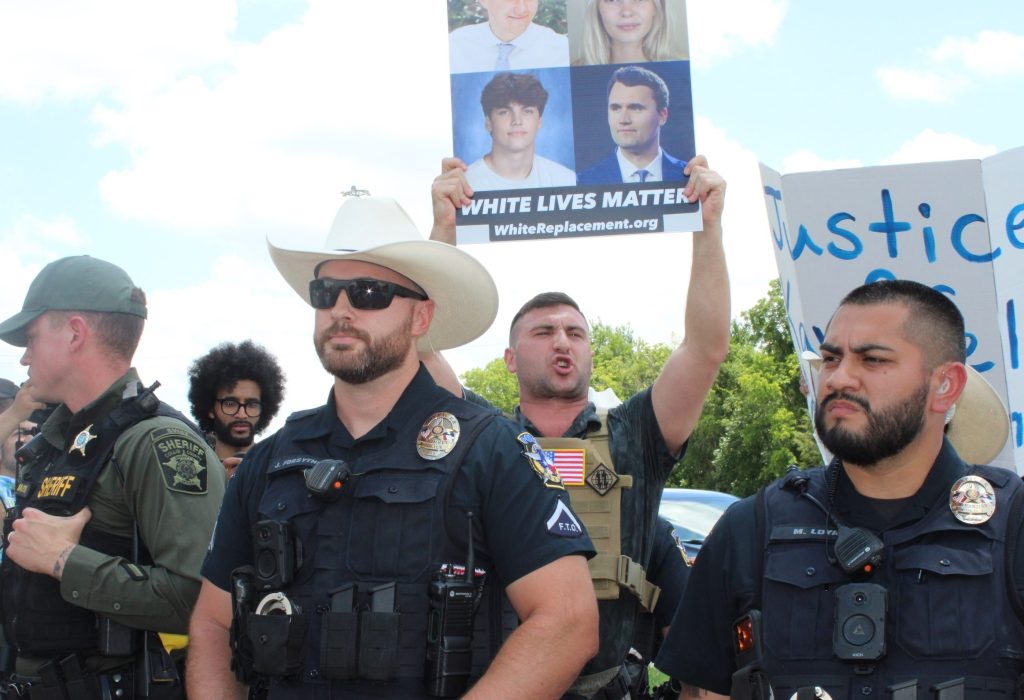
The well-publicized case was fraught with rhetoric fueled by racial divisions both online and outside the Collin County Courthouse, where Judge John Roach Jr. presided over the trial. Pardoned Jan. 6 rioter Jake Lang, who has propagated race-based division across the U.S. and in Collin County, was arrested in Dallas County Tuesday after spending most of the preceding week agitating Anthony’s supporters outside the trial. He is charged with terroristic threat to place the public in fear of serious bodily injury, interrupting public services or influencing a government.
Anthony’s lawyers have also filed an indigent packet, indicating his eligibility for state-appointed legal representation due to financial hardship. The attorneys did not return a request for comment, but his lead attorney, Mike Howard, spoke to WFAA about the appeal.
“We believe there are several important issues for the appellate courts to consider,” Howard said. “An appeal is the next part of the legal process and a right afforded every American.”
The verdict
John Teakell is a Dallas-based attorney and former federal prosecutor who has tried cases involving violent crime. He said the verdict wasn’t surprising, based on the evidence presented by the prosecution.
“Frankly, I was a little surprised that the sentence was only 35 years, because for a murder charge and the strength of the evidence, I thought it might be even more,” Teakell said. “I’m not saying it should have been; I’m saying I was a little surprised it wasn’t. But I think my guess as to the reason why is maybe because of the age of the defendant.”
Jurors had been asked to consider a lesser charge of manslaughter, but opted to convict on the first-degree charge. Anthony had chosen to hand control of sentencing to the jury rather than to Roach.
The composition of the 12-person jury, which did not include a single Black juror from a prospective pool of 600 people, could present an issue on appeal, Teakell said.
“The state had cut several witnesses who are African American,” Teakell said. “That in itself doesn’t mean that it was improper, but it could be, and there’s got to be a justification. You have to show as to why you’re doing that.”
What’s a notice of appeal?
Niles Illich, a Dallas appellate lawyer specializing in criminal cases, including murder convictions, said the notice of appeal is simply the beginning of the process and will be accepted by the higher court.
“It’s just a two-line document that says on this date, appellant defendant appeals this case that was sentenced on this date to the 5th Court of Appeals in Dallas,” Illich said. “The court will accept that automatically once they’ve accepted it.”
Once the notice is accepted, he said, lawyers will begin thoroughly reviewing the trial record before presenting arguments.
“Even when I’ve worked on the case before trial, I really don’t know what the appellate issues are until I get the record, and so the record is every word that was said at trial, every document that was filed in the case.”
How is the appeals process different?
After examining the trial record, defense lawyers will file an appeal brief, which Illich described as a 50- to 60-page document detailing perceived legal errors made by Roach or the prosecution during the trial. The state will then file its own written argument, and in turn, defense lawyers will file another brief in response.
Appeals cases can also include oral arguments, which he said are likely based on the Fifth Court of Appeals’ prior case record. Illich said the judges will likely give each side 15 minutes to argue their case, with defense attorneys finishing with a five-minute rebuttal.
The appeals process is distinct from regular trials, he said, due to what’s being considered by the court.
“When you think about an appeal, what you’re talking about in general terms is moving away from arguments about the facts — did he or didn’t he do it? And moving into weird little legal questions,” Illich said. The issues that are often very successful on appeal are often procedural questions; they are legal questions. They’re not the things that make great legal drama.”
What could be challenged?
Emma Ruby
Illich added that there will likely be a good deal of speculation on the jury selection process and whether or not a “Batson error” had been made preceding the trial. In 1986, the United States Supreme Court ruled in Batson v. Kentucky that jurors cannot be struck for their race or ethnicity. Based on the Batson precedent, the Supreme Court ruled in favor of a death row inmate in Mississippi and overturned both his conviction and sentence in late May after determining that the trial judge had allowed prosecutors to strike jurors based on race.
Three Black female prospective jurors were struck by prosecutors before the trial began. Anthony’s attorneys objected, citing racial motivation for the move. Roach, however, sided with the prosecution, who cited the women’s occupations as educators as the motivation for the move.
The lead prosecutor argued that the case had “nothing to do with race” in his opening argument, according to prior reporting by The Dallas Morning News.
New evidence or revelations casting prior evidence’s credibility in doubt could serve as the basis for the defense appeal, Illich said. Anthony’s attorneys could also try to bolster the self-defense argument that jurors ultimately rejected at trial, although proving the sufficiency of the evidence for those arguments is a complex and often unfruitful effort in Texas, he added.
“It is, by design, a difficult thing to do, because the standard is meant to defer to the jury significantly,” he said. “So you don’t reweigh credibility, you don’t say, ‘Hey, there was competing evidence, and this seems more reliable.’”
Sentencing could also come under scrutiny in appeal if defense lawyers argue the jury was improperly instructed or educated on the law before determining punishment, Illich said.
How long could it take?
Illich said the process leading up to the appeals court’s final ruling should take “about 18 months.”
That process could be delayed by up to 45 days or longer if Anthony’s attorneys file a motion for a new trial, which would be considered by Roach, he said.
Anthony currently has a 30-day window following the verdict to file the motion. Unlike the appeals process, his attorneys could bring up other factors not considered in the first trial, such as media attention potentially impacting Anthony’s ability to receive a fair trial at the Collin County venue, Illich said.
Roach barred cameras from the courtroom and set strict media rules for the trial. He also issued a gag order preventing the attorneys, consultants and witnesses for both the prosecution and the defense from speaking until sentencing was handed down.
“That’s pretty strong evidence,” Illich said. “I mean, I would think that would be some evidence that there was a risk of that, there was a risk of prejudice, and the people would be listening to what is being said.”
What will happen to Anthony in the meantime?
Anthony will be unable to post bond to stay out of custody during the appeals process due to his murder conviction.
He has been in custody since the trial’s conclusion and was transferred to the Texas Department of Criminal Justice’s Wallace Pack Unit near College Station Wednesday, where he could remain for the remainder of the appeals process. If the appeals process is unsuccessful for his lawyers and a new trial is not granted, Anthony will remain incarcerated. He is first eligible for parole after serving half of the 35 year sentence.