Courtesy of NEON

Audio By Carbonatix
Imagine the thing hunting you in the dark, looking exactly like the person you most want to kiss. That’s the cruel but brilliant engine at the heart of “Leviticus,” Adrian Chiarella’s debut feature and one of the most quietly devastating films of the year.
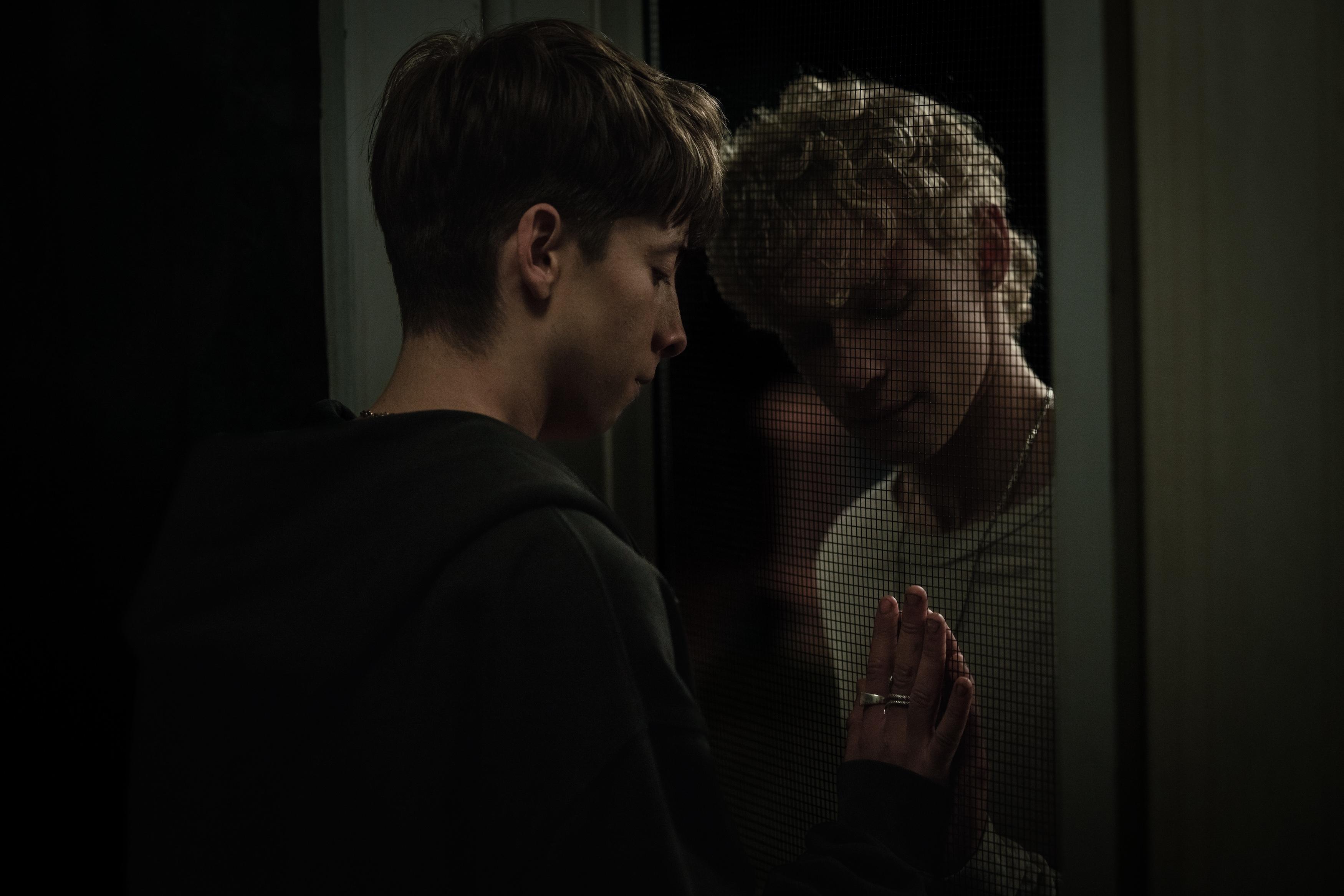
It’s a horror movie, sure. But it’s also a love story, a coming-of-age confession and a slow-burning meditation on where fear actually comes from. The “monster” doesn’t just stalk you; it learns you. As one character warns in the film, “It gets better at looking like you and touching like you.”
We’ll get to the screening logistics in a moment — and yes, there’s good news for Dallas. First, let’s sit with why this film deserves your attention.
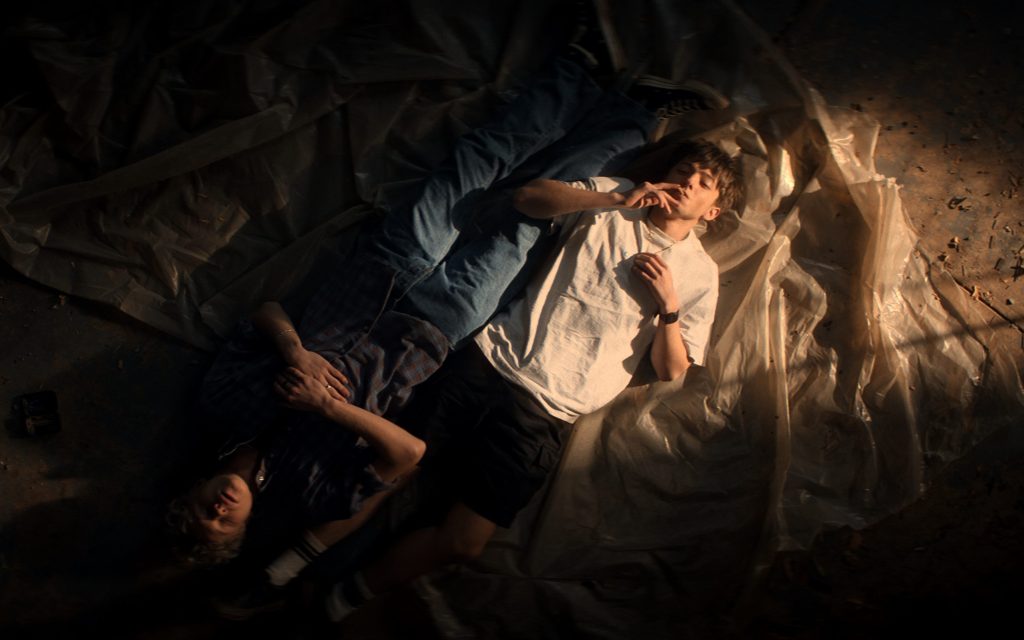
“Leviticus” unfolds in a rusted Australian industrial town gripped by religious conservatism, where two teenage boys, Naim (Joe Bird) and Ryan (Stacy Clausen), fall into a relationship they can’t name out loud. They’re ordinary kids carrying an extraordinary weight: a supernatural force that takes the shape of whoever they desire most. To everyone else, the monster is invisible. To them, it’s a mirror of yearning turned lethal.
When we first caught the film earlier this year, we called it a staggering work of queer horror stitched together with beautiful, aching metaphors — dread in the lineage of “It Follows,” but bruised with a heartbreak that lingers far longer than the scares. Months later, that assessment holds.
Horror as the language of repression
What separates “Leviticus” from a thousand jump-scare machines is its purpose. The horror here isn’t for decoration; it’s the psychic violence of shame.
Chiarella scatters biblical imagery across the film like fallout: animal skulls, a frog vanishing into a snake, the slow grammar of religious ritual. He pairs it with the cold, industrial bones of the town, and the contrast asks a quietly radical question.
“Have they really come from the universe? Or are they things that we’ve imposed on each other,” Chiarella wondered when we spoke with him. “Are they man-made?”
That tension exists underneath every frame. The film’s dread isn’t engineered so much as grown.
“I wish I could say it was a science,” Chiarella tells us. “But it’s kind of more organic than that.”
Coming from an editing background, he trusted the long process of shuffling scenes, testing sounds with the film’s composer, letting the actors improvise and go wild. The result is a steady pulse of unease that knows exactly when to crash the cymbals.
The boy who anchors it all
If Chiarella supplies the film’s aching brain, Joe Bird supplies its heart. The young actor, already a breakout from the horror hit “Talk to Me,” anchors “Leviticus” as the boy through whom we experience everything. He understood the assignment instinctively.
“Being the witness to all the terror is liberating, because [my character] is the perspective of the film,” he says. “The emotions go through him first and then through to the audience.”
That’s a tricky thing to pull off, especially when your scene partner is, for certain stretches, a creature only the camera can see. Bird had to react to terror that wasn’t physically there.
“The monster can be invisible to me, because there are times in the film when I’m seeing Ryan with the monster,” Bird says. “It’s like, ‘okay, so how am I feeling now? And how is the audience gonna feel?'”
That double awareness is the whole engine of the movie, as Bird’s performance becomes a kind of translation, turning the unseen into something we feel in our chests.
Courtesy of NEON
A love line for the books
Every great romance has its one indelible line, and “Leviticus” hides its arguably most romantic moment inside its bleakest premise. Faced with a curse that will potentially haunt him forever in the shape of whoever he desires, Ryan tells Naim he’d rather “that dickhead look like you.” If he has to live with this haunting, he wants the face to be the one he chooses himself.
Chiarella traces the sentiment to a dinner-party conversation among queer friends — the old hypothetical about whether they’d choose to be straight if possible. Someone in his company once answered, “no, because then I wouldn’t be with this person right next to me.” The film is built around that exact ache: what if there were a way to change it, and what if you didn’t want it?
Bird felt the line’s weight the instant he read the script.
“It’s just a simple line, simple delivery, yet it just carries so much weight,” he says. “Less is more.”
The faces we wear in public
“Leviticus” is fascinated by duality — the gap between who we are in the daylight and who we become behind closed doors. In the film, adults play kind in private and cruel at school. A town preaches deliverance while quietly destroying its children. The film’s recurring talk of “the Deliverance Healer,” of being made clean, of fire that defiles and fire that reforms, lands like a wound dressed as mercy.
“As a queer filmmaker, I’m always interested in how people present publicly and then who they are in private,” Chiarella says.
Nowhere is that more devastating than in Naim’s relationship with his mother, played by Mia Wasikowska in a performance of breathtaking economy. In a car scene after something terrible, Naim simply wants her to acknowledge it. Instead, she stares ahead at the wheel, turns her head and flips on the radio. As Chiarella puts it, she “can do it in a way that just says a million things.”
It’s the sound of a child asking to be seen, and a parent choosing silence dressed up as faith.
“Leviticus” opens in theaters across the Dallas area on Friday, June 19.