Courtesy of African American Museum of Dallas

Audio By Carbonatix
The African American Museum of Dallas has been collecting and showcasing cultural artifacts to further the study of Black history for more than 50 years. Now, the museum is embarking on a three-year project to upgrade facilities, services and improve conservation efforts for the next five decades and beyond.
The project will conclude with the establishment of a conservation center at the museum to elevate preservation and conservation efforts and inform new exhibitions. But it all starts with Phase I: examining the bones of the museum’s building and strategy, upgrading security and technology, reviewing items in storage and implementing new preservation and conservation strategies.
Phase I, supported by a $250,000 grant from the Communities Foundation of Texas, concluded May 1 with the unveiling of the Harry Robinson Jr. Research and Conservation Lab. The new facility, named for the museum’s founder, will be outfitted with preservation and conservation tools, such as scanners, UV lighting and work tables.
“This support from Communities Foundation of Texas allows us to move forward with safeguarding our archival documents and related art objects,” Lisa Brown-Ross, president and CEO of the African American Museum, said in a press release. “It’s a powerful reflection of our commitment to protect and celebrate African American heritage through education, research and preservation.”
The lab’s new digitization equipment will allow the museum to establish an online archive — a years-long process key to making the museum’s cultural artifacts and primary source materials more accessible. The new lab will also feature an observation window so visitors can witness the archivists’ conversation work in real time, an effort to increase transparency and interaction.
“How do you research something from a university in the United Kingdom if you’re wanting to learn about the African American culture experience in Dallas, Texas?” says Margie Reese, the museum’s chief programs director. “This gives us a stronger pace for what I call self-authorship. How do we tell our own story and not have it interpreted by people who have not had the lived experience?”
Organizing the Archives
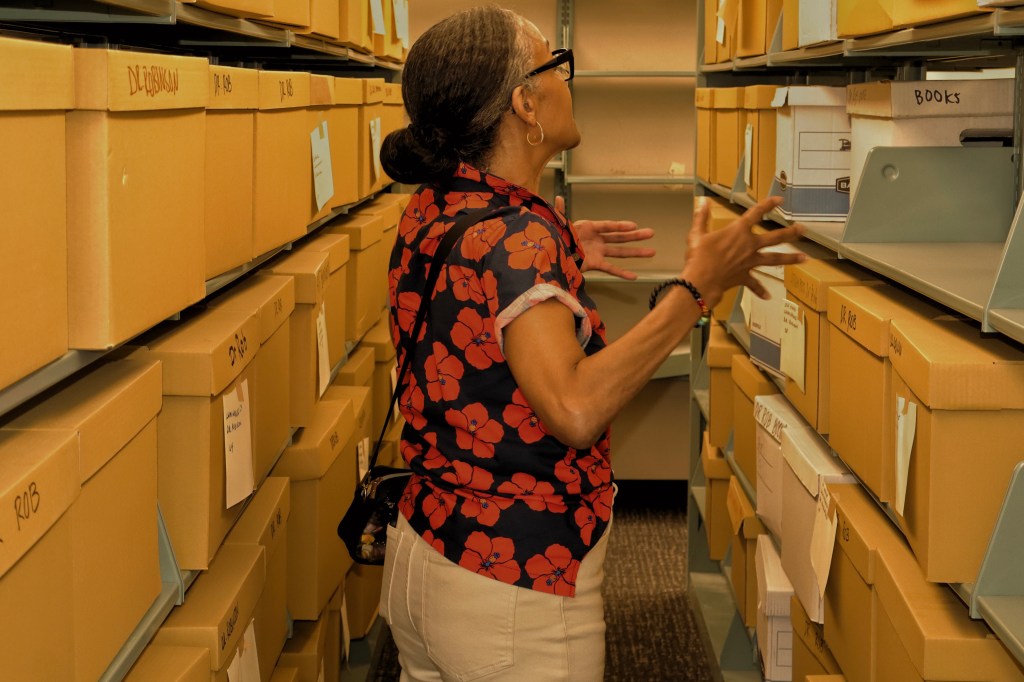
The new Harry Robinson Jr. Research and Conservation lab will replace the existing storage room on the museum’s second floor, which was “already overflowing” and in need of organization, according to Faith Golden, director of archives.
“We had to secure everything. We did lose some stuff that we could not save from the mold, and some of it could be saved [by] just securing it and getting it in the archival boxes,” says Golden, who’d been a volunteer archivist at the museum for eight years before joining full-time in 2025.
Reese says the damage was likely due to unregulated storage conditions and water exposure.
“Damaged material has been isolated and will be assessed further by professional paper conservators,” she says. “[Faith] Golden, our Director of Archives and Conservation has calculated that our efforts have rescued 90% of the vast archival collections, and as part of Phase 2, we will turn damaged material over to outside [professionals] for restoration efforts.”
Rhema Joy Bell
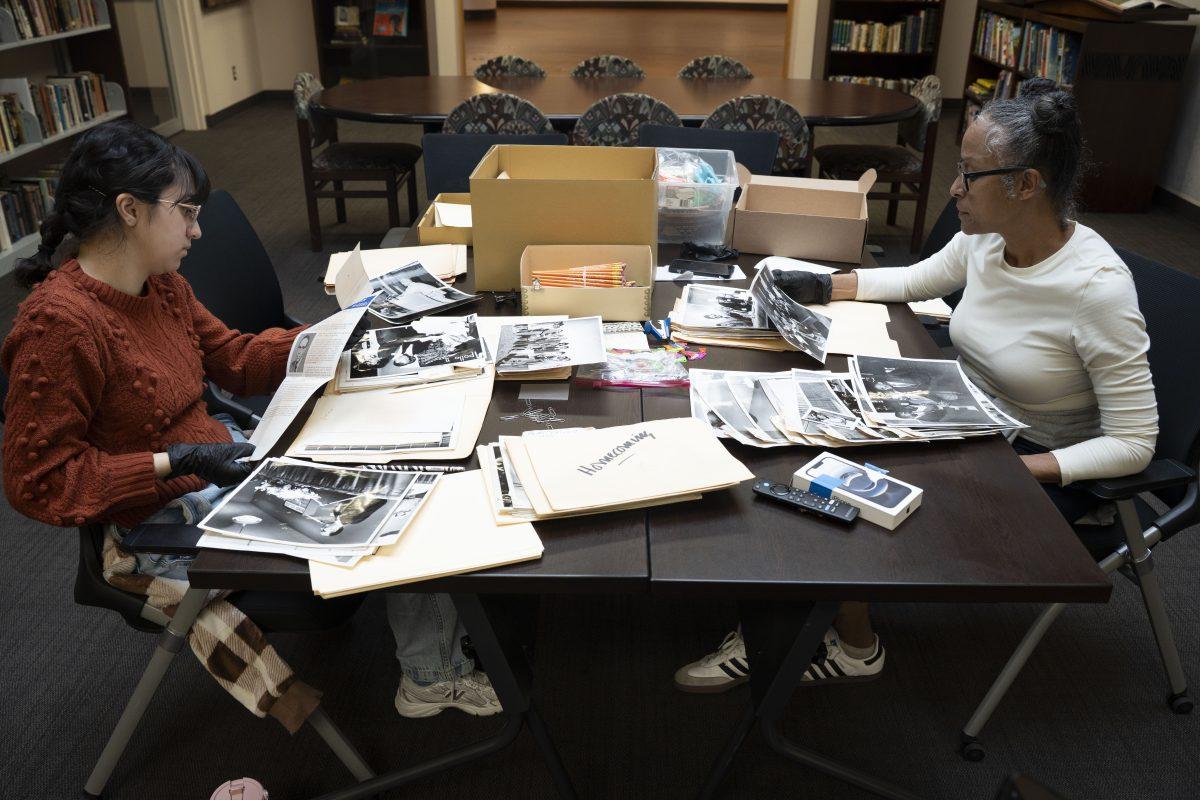
In late April, Golden gave us a peek at the museum’s ongoing organizational efforts. The archives have been temporarily relocated from the storage room to a space in the neighboring Dallas Museum of Natural History. That’s where Golden and other archivists are organizing and assessing the materials. Golden says the work, which includes moving items to boxes and folders designed to preserve delicate items, began in the summer of 2025. Although the new lab opened to the public in May, the process of safely repacking and restocking stocking items will continue throughout the museum revamp plan.
“I’m looking forward to the organization and making sure this delicate stuff is housed in the proper boxes,” Golden says. “I’m excited to bring it back home and say, ‘You guys have a safe home. We rebuilt your home, and you’re safe, and you’re secure now.’”
The collection features contributions from Dallas civic icons, educators and trailblazers, colorful creations by Black quilters — an African American tradition that traces back to enslaved ancestors — and dozens of boxes filled with vinyl records by game-changing musicians such as Billie Holiday and Bessie Smith.
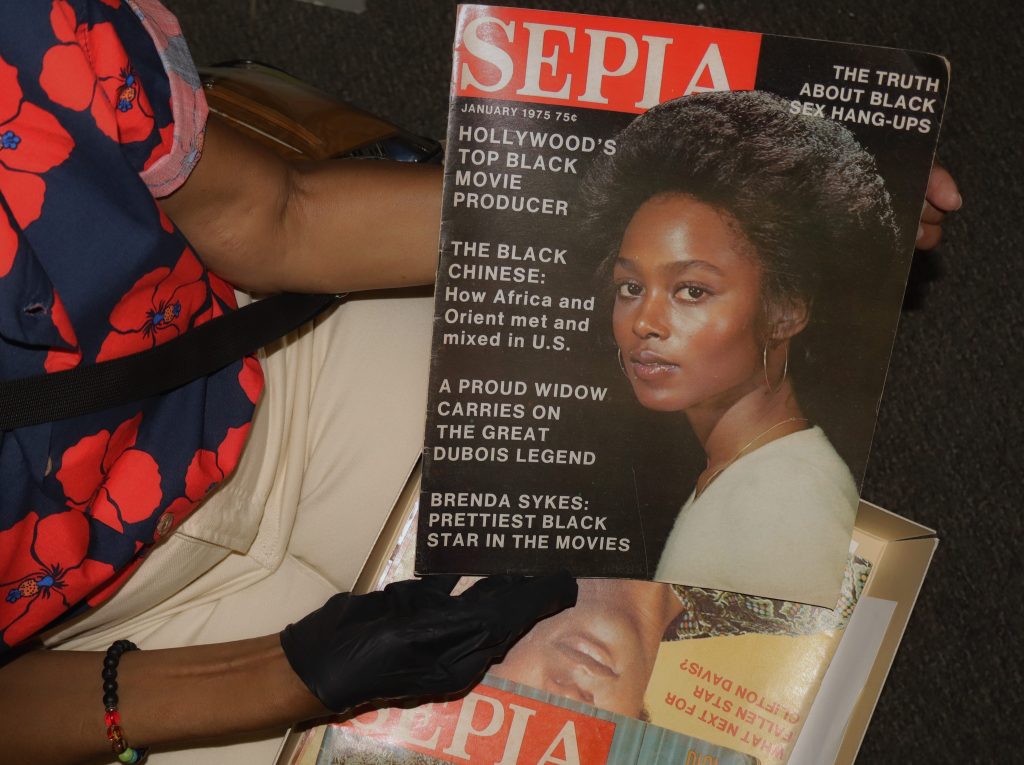
In the museum’s archive of Fort Worth-founded Sepia magazine issues and materials. More than 40,000 photos documenting Black culture and icons, including Thurgood Marshall, Dr. Martin Luther King Jr., Malcolm X, Aretha Franklin and Cicely Tyson. Golden wore gloves to protect the integrity of the materials as she gently flipped through the collection. Each magazine delivered pop culture gems, including a cover story on Muhammad Ali and a feature piece about Nichelle Nichols, one of the first Black women in a major TV series, with her role on the original “Star Trek.”
The museum, which closed in March for facility upgrades, reopened May 1 with the debut of “People Who Make the World Go ‘Round: The Legacy of Sepia Magazine,” an exhibit drawing from the Sepia collection. The display highlighting Black icons will be available through Aug. 11.
Golden, who’s also tasked with bringing in staff and volunteers to organize materials, embraced a surge of optimism and appreciation after attending a recent conference for museum curators, archivists and librarians. It was an opportunity to learn from other professionals and to help put plans for the Dallas museum in perspective.
Rhema Joy Bell
“Everybody had a struggle story. We don’t have a struggle story. We have had one, but we are in such a good position right now,” Golden says. “We have a space story. We have this great preservation story. But I realized how blessed we are that we’re not struggling for resources. We’re spoiled for choice.”
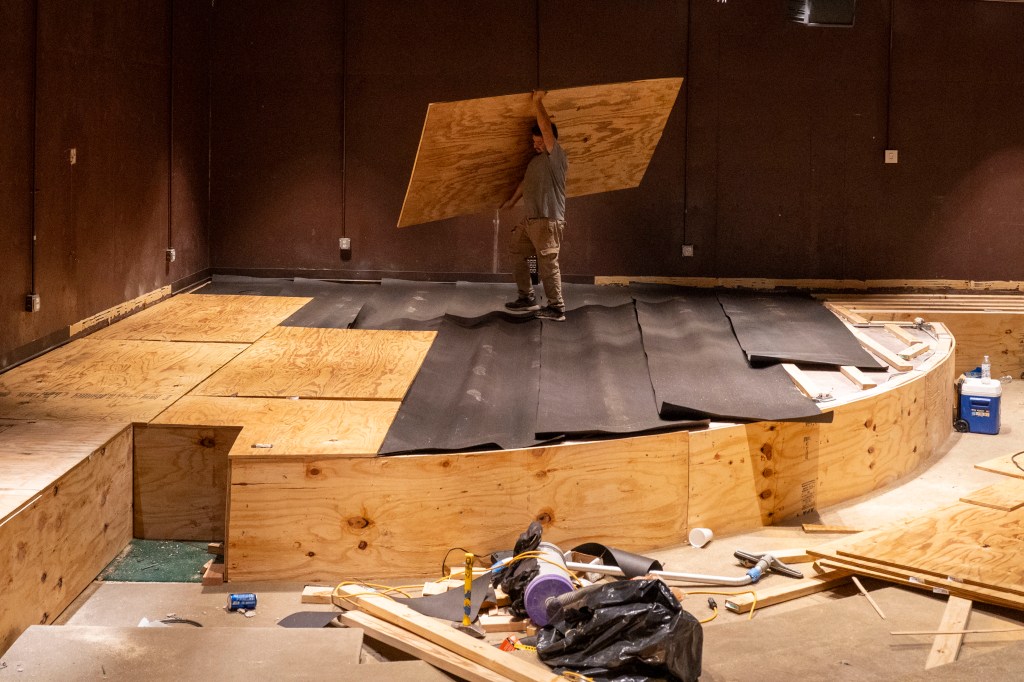
Additionally, Phase I introduced new security and telecommunications systems and a revamped auditorium to the museum, Reese says. The stage was rebuilt, and new curtains and seats were installed, increasing wheelchair-accessible space.
“The future of the museum is to showcase the collections that are here and to think about how [we] bring fresh touring exhibitions to the building,” Reese says. “In order to host those touring exhibitions, we need to be able to say our security system, our lighting system, our humidification system, our storage areas — so all of the guts of the museum up to the highest quality museum standard for showcasing work.”
Reese, whose arts management career spans over 40 years and includes stints at several local organizations, including the Dallas Black Dance Theatre and the Dallas Museum of Natural History, oversees public-facing exhibitions and community initiatives. But that starts with ensuring there is adequate infrastructure and caretaking systems at the museum.
“It’s not the sexiest side of museum work,” Reese says. “But without it, you can’t mount good research programs or offer good, strong exhibitions.”
The Next Phase
Reese referred to Phase I as the “get ready to be ready” foundation of the three-year conservation plan, which is bolstered by a $3 million grant from Texas Historical Commission and ongoing support from the city.
Phase II will see the museum unveiling reimagined exhibitions. This includes improving accessibility and the visitor experience by implementing hearing-assist devices, exhibition pedestals designed for wheelchair access and visibility and bilingual text panels.
“Our job now is to crystallize the visitor experience and to think about diversity in our audience,” Reese says. “[Diversity] may be different than just racial or cultural, right? It’s the diversity of abilities, the way people take in information.”
Courtesy of the African American Museum of Dallas
Phase II of enhancing the museum experience kicks off with a Nelson Mandela exhibition that’ll span four galleries from June 13 to Nov. 1. The exhibition, which will mark its Texas debut at the African American Museum, includes a multimedia experience room tracing Mandela’s activism. The first events slated for the refreshed space are a set of training sessions for the exhibition. There will be multiple two-hour sessions on May 16, 18, and 21 for volunteer docents — an ambassador or tour guide who fosters an interactive visitor experience — to learn tour techniques and engagement strategies.
The museum will also begin redesigning “Facing The Rising Sun: Freedman’s Cemetery,” an exhibition that presents the remnants of a North Dallas Community. Although it’s one of the most-requested tours, Reese says the upgrades will provide a more interactive, modern experience. The complete redesign is estimated to run through 2028 and will include the addition of two rooms near the galleries for post-tour discussion.
The museum’s revamp project will culminate with a new onsite conservation center in the basement. Once complete, the space will be the hub for the museum’s vast 2D and 3D folk and fine art. Construction to install the necessary technology, security and climate-controlled storage solutions is ongoing, but Reese says an estimated completion date still is in progress.
“We’re building a system for caretaking, and that is a step-by-step process,” Reese says.