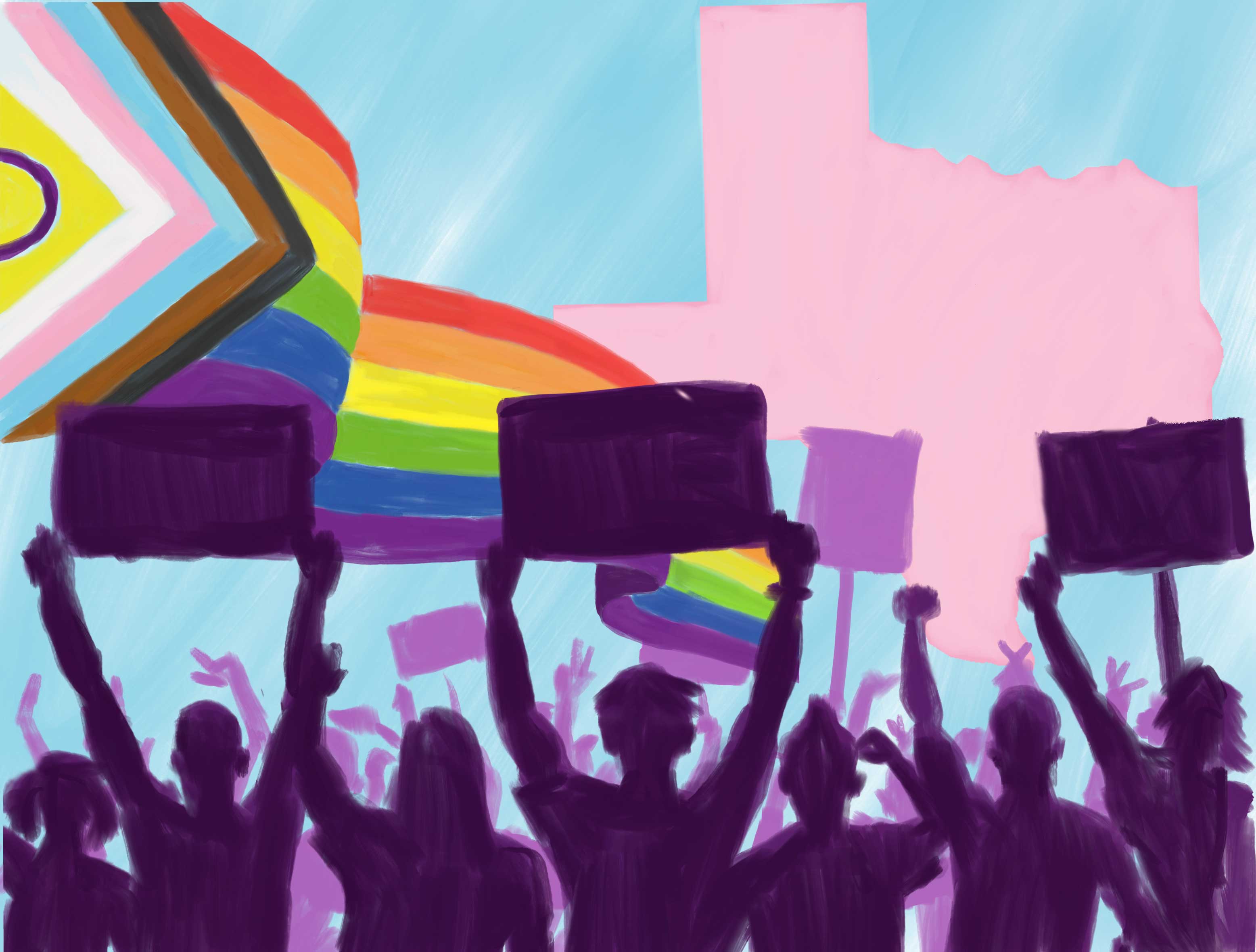
Illustration by Sarah Schumacher

Audio By Carbonatix
Diana Graspo is waiting outside a bar in Oak Lawn. She’s frustrated and drained, but she understands how scary it can be for trans women to leave the house for the first couple of times. It was once scary for her. So, she’ll do whatever she can to make new members of Dallas Feminine Expressions, a social group for trans women and feminine-presenting queer people, feel as safe as possible, even if it means waiting outside forever.
Since she was a child, Graspo has known she was born in the wrong body. In 2020, she began living as Diana in secret, only after work and within the confines of her home. She didn’t know if the world would ever meet her, but she also knew that spending her life living as someone else would be no life at all. She never believed the world could, or would want to, meet Diana. But in 2023, with the support of a strong network, she attended a party and introduced herself to strangers as a woman. And thus her dead name and pre-transition self were laid to rest.
“The reason I want [other trans women] to come out is because I was pushed really hard to come out of my house,” Graspo says. “I did it, and it was the best thing ever. That was a life-changing moment, really.”
So she waits, ready to be the same comfort for more trans women still building their confidence, hoping to change their lives in the same way hers was three years ago. Inside the bar, other members of Dallas Feminine Expressions are chatting among themselves, excited for a girls’ night out. The group has 250 members, but participation in the events is decreasing. Graspo can only assume it’s because of the current administration’s targeting of the LGBTQ+ community, with a laser focus on trans people.
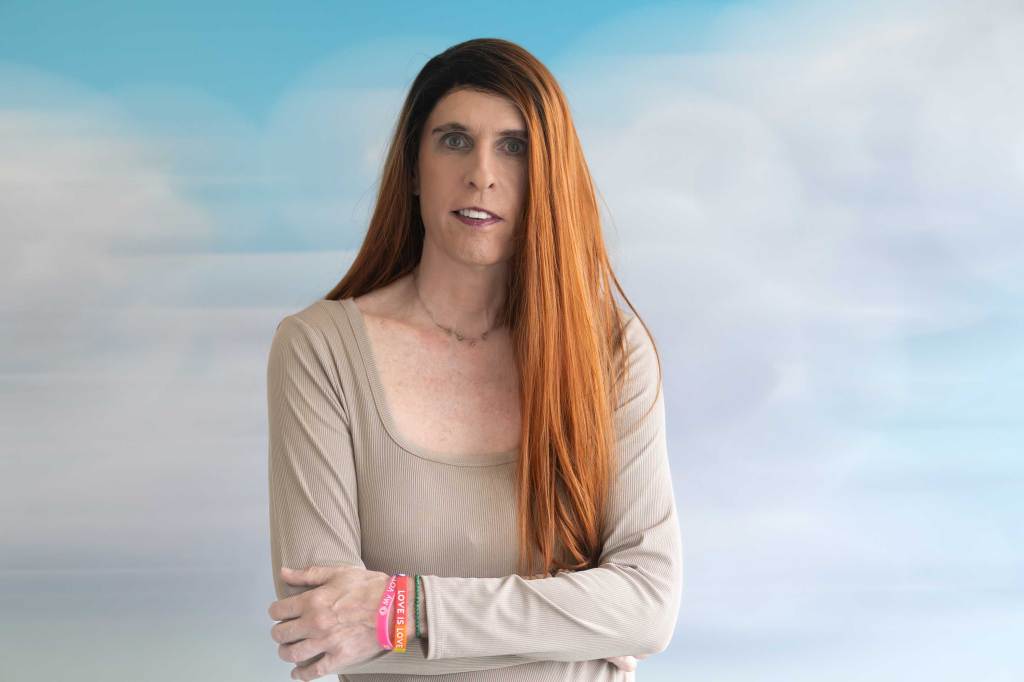
Mike Brooks
On June 4, she’ll be waiting again. This time, along the streets of the city’s Pride Parade that will defiantly march down Main Street, right through the center of the city, for the first time in Dallas history. She hopes some of the other women in Dallas Feminine Expressions will join her in relishing the boisterous, technicolor Pride celebration, but RSVPs are low. Graspo herself has never been to the city’s Pride Parade, finding its previous location at Fair Park unfit and unsafe. Now that the parade has been moved downtown, she’s excited for her initiation. To her, there’s never been a more important time to be openly proud; she hopes the rest of her community agrees.
“When I first found out that it was going to be downtown, I was caught by surprise, and I was really happy to hear it because of its location and the prominence of it. I’m not afraid. I’m excited,” she says.
Celebrating Pride this year comes with an unshakeable sense of fear for most members of the LGBTQ+ community, who have watched Texas, complying with the rhetoric of President Donald Trump’s administration, slowly restrict trans rights through legislation, with alarming success. A looming fear that the Supreme Court might overturn a landmark decision legalizing same-sex marriage has formed as high-powered religious PACs push the agenda. But as the country’s culture changes, so does Dallas Pride, and as the hate and vitriol grow, Dallas’ queer community gets louder, prouder, brighter and unignorable at a new spot in the center of the city.
A look back
In the mid 1900s, nearly every state had laws banning sodomy, intended to target gay people. In enforcing the laws, police regularly raided bars catering to the LGBTQ+ community. Years of nationwide persecution reached a head when a raid in New York City at the Stonewall Inn on June 28, 1969, resulted in a six-day riot. It was a turning point for gay rights. One by one, sodomy laws were slowly struck from penal codes. Every year since, across the country, people have marched in June to commemorate the beginning of the end for queer inequality, except for Dallas.
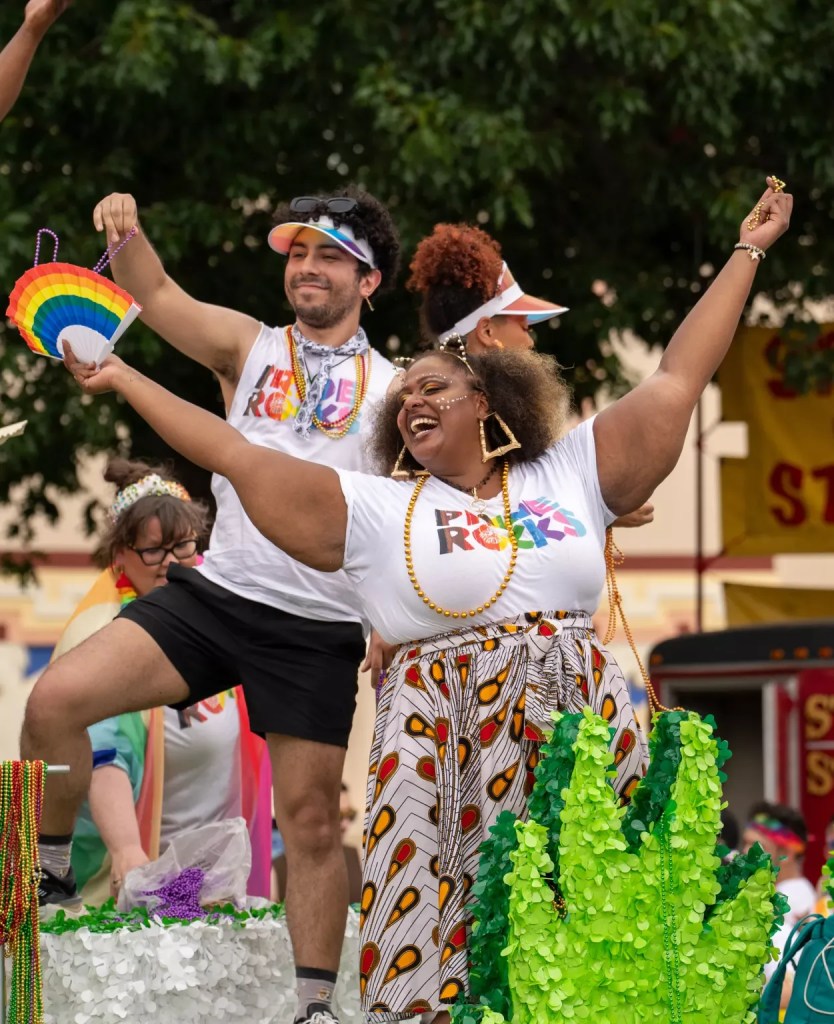
While major cities like New York City and San Francisco herded rainbow-clad crowds in the thousands, Dallas had one modest parade in 1972, composed of a few extremely brave hundreds. It was the city’s first and only attempt at a June Pride Parade for almost 50 years. In September 1983, a U.S. district court judge struck down the state’s sodomy laws. That ruling was overturned on appeal, and sodomy laws were finally struck down by the U.S. Supreme Court in 2003. But the cultural importance of that first ruling shattered the earth for Dallas’ queer community. From that day, for 36 years, the city celebrated Pride on the third Sunday of September. They called it the Texas Freedom Parade, and it stretched through the Gayborhood in Oak Lawn.
Charles Farmer
But the parade expanded beyond the neighborhood’s limits, and a large-scale construction project in Cedar Springs was going to interfere with it. The city told organizers it would refuse to grant a permit for the parade, but offered Fair Park as a venue. To join the rest of the nation and avoid competition with the State Fair for venues, the 2020 Pride Parade was moved to Fair Park in June, though a grassroots parade called Pride in Dallas still marches through Oak Lawn in September. The decision to move the parade was closely scrutinized by the queer community, who felt displaced on the city’s outskirts.
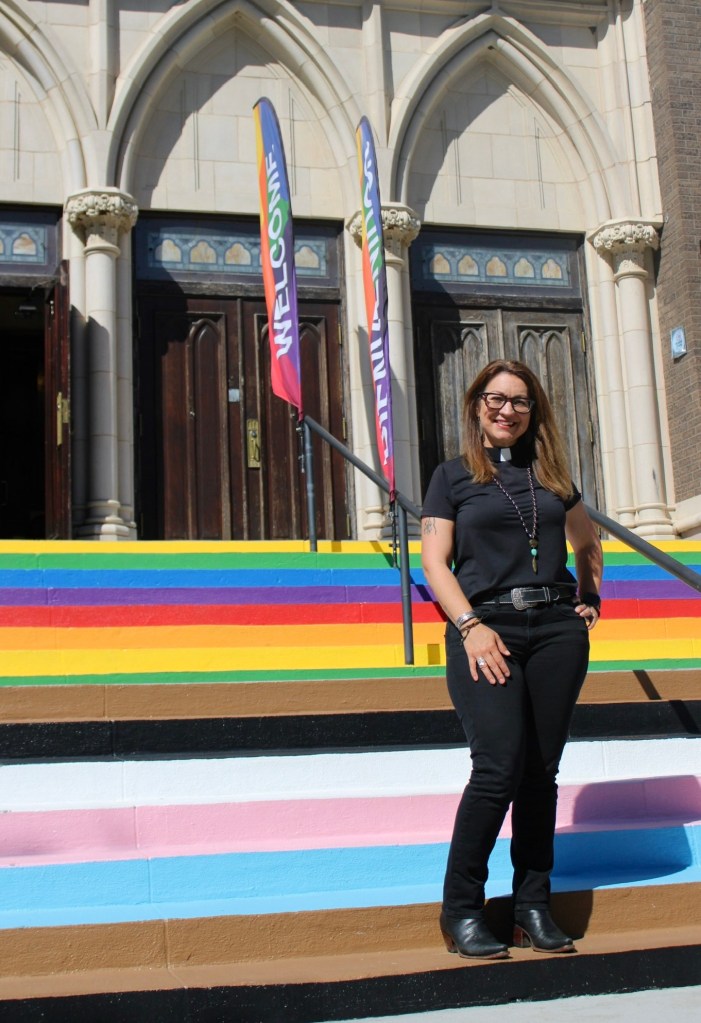
“Being in Fair Park really took us away from the backbone of the Gayborhood here, and that did make it hard,” says the Rev. Rachel Griffin-Allison, senior pastor of Oak Lawn United Methodist, one of the grand marshals of this year’s parade downtown and an openly queer woman.
Griffin-Allison says that in an ideal world, the parade would be in Oak Lawn, but the new downtown venue is important for reasons that are hard to measure.
“There is something different about this year,” she says. “This year Pride feels less like escapism and more like sacred visibility. Visibility itself has become an act of courage because of the situation that we’re in right now in this political moment. We are living through a moment where LGBTQ people, especially trans people, are increasingly being treated as political talking points instead of human beings.”
Looking forward
The parade’s theme, poignantly, is “Rainbows Don’t Wash Away,” a reference to the controversial order from Gov. Greg Abbott requiring cities to remove any signage or road marking “conveying social, political or ideological messages.” The strict enforcement, accompanied by threats of infrastructure funding losses, forced Dallas to remove Oak Lawn’s rainbow crosswalks.
But Abbott cannot strip the city of all its pride, and Griffin-Allison’s church made national headlines with its swift and unanimous decision to paint the stairs leading to its outer doors in a rainbow of colors.
“Removing these visible symbols of belonging has emotional consequences, especially for young people wondering whether their city still sees them,” Griffin-Allison says. “We find there’s so much importance in showing that in a really, really visible way that this is a pivot toward resilience.”
A peaceful protest is exactly what Pride means to the reverend, and she’s excited to be a part of the ceremony this year, feeling energized by its political charge.
“Pride began as a protest. It became a celebration,” she says. “This year, many people are reconnecting with those roots of what Pride is for them.”
More than anything, she says she is excited to march through the city, no longer sequestered in a neighborhood or cast to the city’s fringes.
“I hope that people come to this moment of Pride this year and leave remembering that queer people are not going anywhere,” she says. “We’re part of this city, we’re part of this community, we’re part of this church, this country. Even if difficult moments come, and they will, and they do, in spite of that, joy and truth and love remain powerful things. We’re made of those.”
The next move
The parade’s move to the city center at an unprecedented time is a happy coincidence. Fair Park is being converted to the massive landing pad for World Cup spillover for the entire month of June and well into July. The FIFA Fan Fest, a free watch party on the fairgrounds, requires weeks of preparation. There’s simply no time to convert the grounds from the Pride Parade setup to Fan Fest. So the parade had to move.
“It’s kind of a double-edged sword,” Griffin-Allison says. “You have an opportunity to be much more visible to more people and kind of branch out, being in downtown. So I can see the pluses and minuses.”
The pluses are plentiful, says Jennifer Scripps, president and CEO of Downtown Dallas, a nonprofit organization dedicated to improving and maintaining the city’s center.
“I hope that this can become the permanent home,” Scripps says. “I love Fair Park, but I just see we’re by hotels, and we have such amazing access with public transportation. … It’s great synchronicity. I see it as so exciting.”
Alec Spicer
This year’s parade will make use of five of the city’s public parks, opening the green spaces as activation sites for the festivities. A highlight of this year’s production is the timing of the parade. For the first time ever, the floats will go down the street at night, lighting up the corridor. As part of a massive effort to prepare the city for thousands of international visitors, downtown Dallas has been paid extra attention, with significant improvements and art installations that just so happen to be rainbows.
“In many ways, this parade is just using a lot of the spaces that we’ve been working on already to welcome the world of soccer fans,” Scripps says. “Actually, it gives us kind of an enhanced deadline. Some of [the enhancements] are multi-use. Obviously, FIFA is going to be very colorful. Pride is going to be very colorful. … I see it as glorious.”
Pride preparations
Downtown Dallas is preparing to host an expected 35,000 paraders, and the excitement is palpable within the organizations planning the event and for the people attending, but the number could easily grow.
Following legislative changes to LGBTQ+ rights and protections, the city of Arlington, which has historically hosted one of the state’s largest Pride celebrations, amended a 2021 anti-discrimination ordinance in a narrow vote. The revisions removed “sexual orientation” and “gender identity or expression” as protected terms, arguing the ordinance was redundant, and state discrimination policies sufficed.
In turn, the HELP Center for LGBTQ+ Health, the organization that planned the celebration, canceled its parade, leaving a large portion of North Texas’ queer community searching for a new home. Scripps welcomes them to Dallas.
“Any cultural celebration, anybody that wants to celebrate, bringing people together, is welcome in downtown Dallas,” Scripps says. “What the world needs right now is gathering and humanity in a good way. If anybody in North Texas is looking for a fantastic way to celebrate Pride, welcome to Pride in downtown Dallas. We can’t wait to see you.”
The city’s Pride Parade this year is about more than celebrating queer culture; it’s about protecting it and sharing one important message: The LGBTQ+ community has always existed and always will.
“Dallas has always been more diverse, creative and compassionate than people sometimes give it credit for,” Griffin-Allison says. “The LGBTQ community is not separate from Dallas. We are the fabric of this city and a huge part of it.”