
Scott Fischer

Audio By Carbonatix
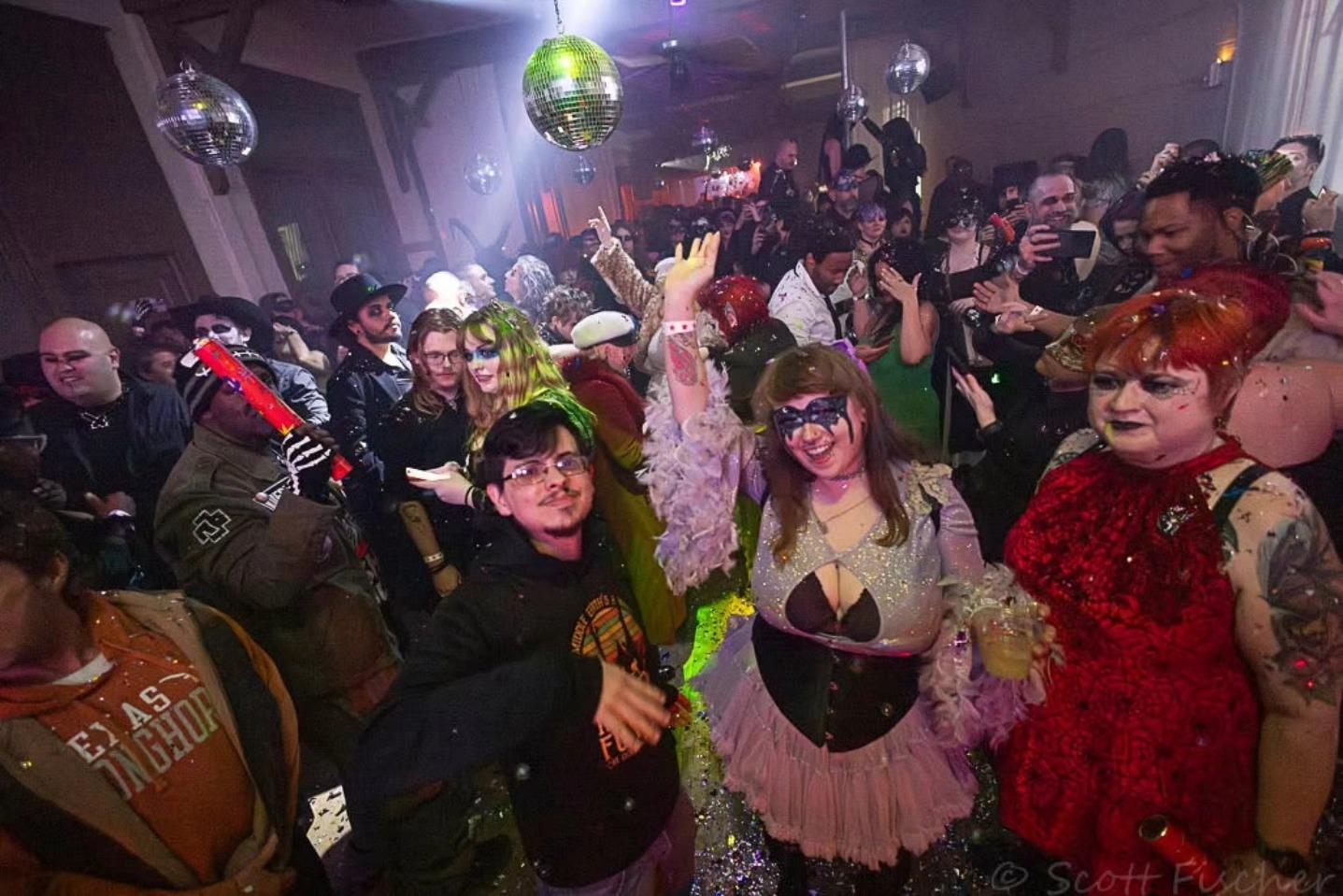
In 2006, one could find a black-clad reveler on the dancefloor at the legendary (and now-closed) Club One, spinning to “This Corrosion” by The Sisters of Mercy. Twenty years later, one just might find that nightlife denizen’s kid dancing to the same beats from the same DJ at one of Dallas’ oldest goth parties, Panoptikon, now hosted at the Sons of Hermann Hall.
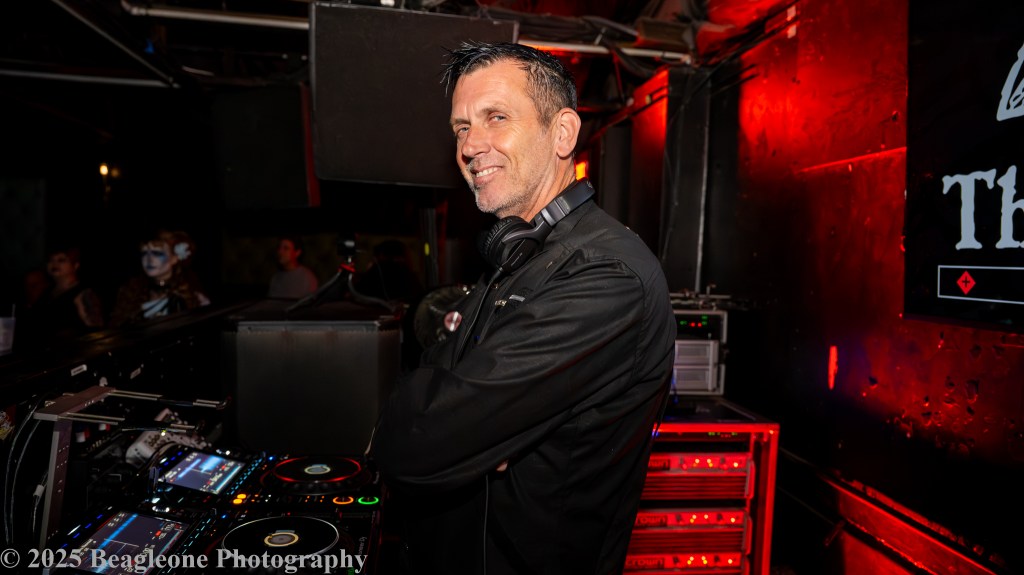
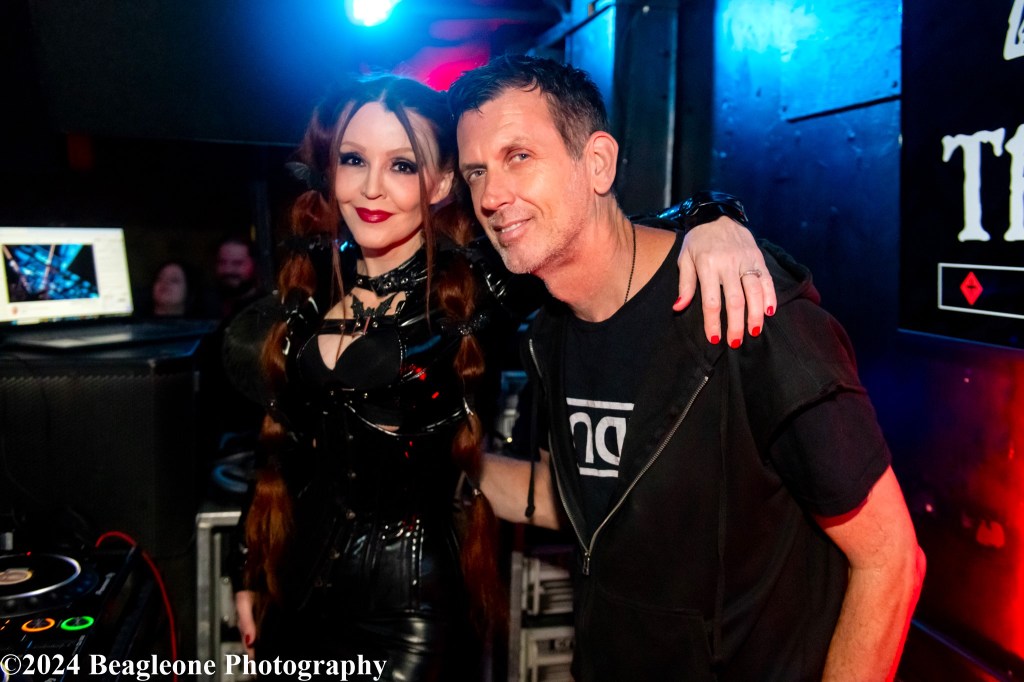
So much has changed over the 20 years that Panoptikon founder Byron Laszlo, aka Lord Byron, has brought electro, industrial, goth and darkwave music to three generations of clubgoers, but what remains the same is the tight-knit community he built over the years.
Beagleone Photography
“I think we all need each other,” he says. “We’re all misfits — myself included — we’re all weirdos, so we find each other in these spaces and protect each other. We console each other, we celebrate each other. It’s different than going into other nightclub environments because we find each other in these spaces.”
This is a philosophy Laszlo learned the hard way, through years of building his business alongside his sobriety journey. Named after the poet Lord Byron, Laszlo seemed destined to spin at the other goth party in Dallas, the still-running 32-year-old The Church. He joined shortly after it opened in 1995.
“I met [Church founder Don Nedler’s] ex-wife, who was also his business partner at the time, and they gave me a chance,” Laszlo says. “I started a little goth industrial night, and I had a Thursday party called [Praise the Lord Club] and I did Sundays. Then I got fired from The Church, which was a horrible date for me. I was in an alcoholic blackout and throwing records from the DJ booth.”
Beagleone Photography
Laszlo, now openly gay, says that despite support from friends and family, at the time, he wasn’t secure enough with his own sexuality to come out, so he drank excessively to compensate. It was a time, he says, that was filled with “an unbelievable amount of turmoil, sadness and depression.” A series of DUIs led him to a short stint in jail, inspiring him to quit cold turkey. By the end of 2005, he was ready to face the music again, approaching Nedler about the possibility of a new party.
“I said, ‘I’m X amount of time in sobriety, I’m in Alcoholics Anonymous, is there any opportunity for discussion?’ He was super kind and said, ‘Maybe we can do one-off parties, but I have so many DJs, I don’t have the room,’” Laszlo recalls. “So I ended up at some little bar on Lower Greenville next to the Arcadia. I was DJing, and some old Church people heard me playing Skinny Puppy, and it drew them in.”
Beagleone Photography
That short-lived spot led to a longer stint at Club One on Main Street, where Laszlo had formerly worked as a cashier. Solidifying his Panoptikon concept, he chose an alternate spelling of a word describing a circular prison from which all can be observed, a title taken from the work of songwriter Diamanda Galás.
“I met her twice; she and Coil are my absolute faves,” Laszlo says. “One of her first records was called “Panoptikon” … and I was so intrigued by the word. I didn’t have to do prison time because of my alcoholism, but I did go to jail for three months and was released on probation. One night in jail, I saw it in lights in my head, ‘Lord Byron’s Panoptikon,’ and decided that’s what [it] was going to be when I got out of there.”
Finding a home
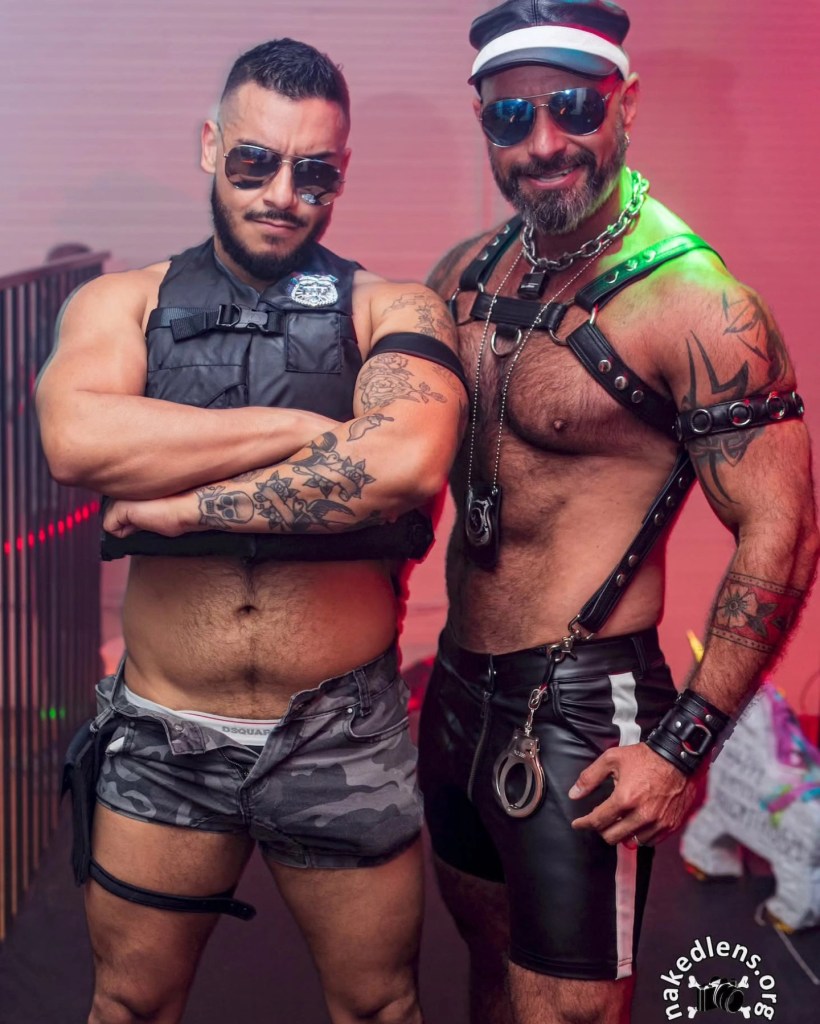
As Deep Ellum was ruled by hip-hop at the time, it took some effort, but Laszlo quickly established Friday nights as his domain, ruling over the goth masses. Changes in venues followed, as the party moved to other neighborhood spots, including a brief stay at the now-shuttered Lizard Lounge. By the time he was celebrating his ten-year anniversary, it seemed as though Panoptikon would have a permanent home at a small back-alley bar, The Lounge on Pearl, where Laszlo kept the party going through 2022, pivoting during the pandemic to stream to goths across the planet.
The Naked Lens Photography
“We were there for a good, solid seven years,” Laszlo says. “During the pandemic, DJ Son of Sam, DJ Red Vamp and I figured out how to do Twitch streams to stay connected to our crowd. It was amazing standing against your wall in a house. I can’t see them, but they can see me, and there’s a chat connecting people from all over the world. We’d have guest DJs from Germany, England, the Bay Area — we created nightclubs in our home, and we got to share it with everybody.”
Problems with mold once The Lounge reopened led Laszlo to do a short-lived pop-up at House of Blues before landing in his next (and hopefully) last space at the Sons of Hermann Hall on Friday nights, a venue about which Laszlo initially had deep reservations.
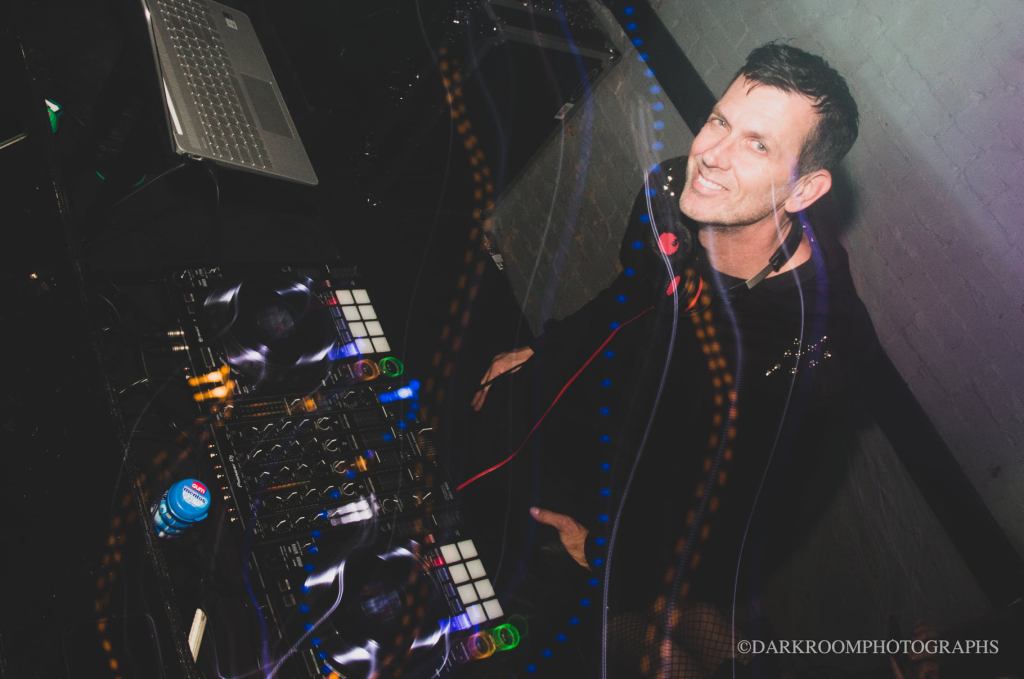
“One of my door girls suggested it, and they were so willing to give me the space, but I could not get my head wrapped around it,” he says. “It didn’t feel underground, gritty or dark enough, so I tested it out upstairs. Next Friday, I had to be downstairs, and it was way better. They said, ‘Byron, it’s your space, so turn it into what you want.’ I started installing lights in the ceiling, and Don Nedler gave me the sound system from the video room at the Lizard Lounge, and we transformed it.”
Dark Room Photographs
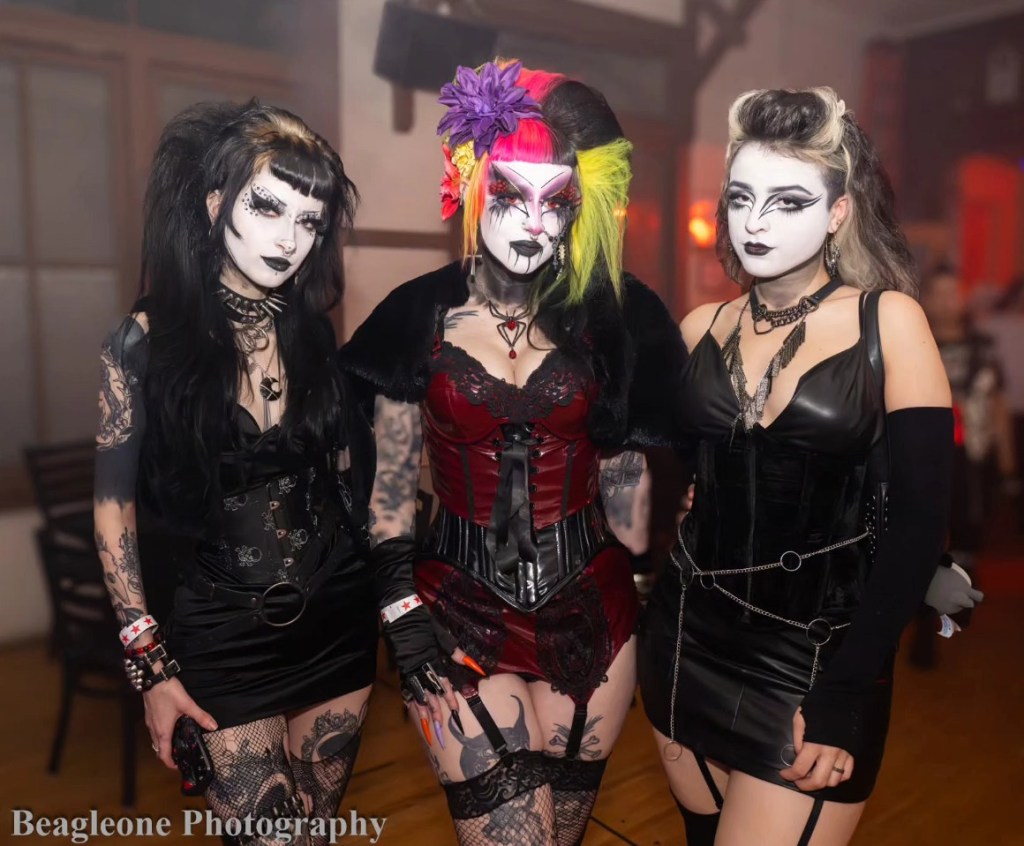
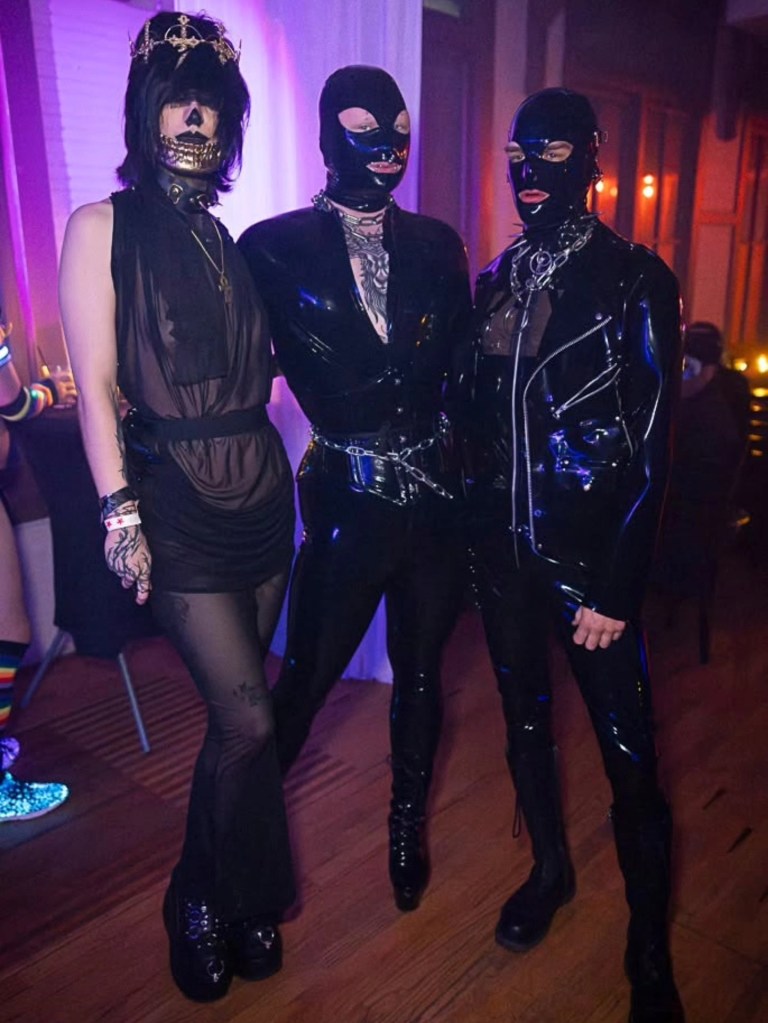
Having already built a moveable scene with his DJs, doorgirls, and latex-clad go-go dancers, he refined the atmosphere, drawing a crowd of baby bats who flock every Friday to hear everything from obscure darkwave to classic alternative.
“As DJs, we have to stay super current; you have to play the old stuff and the new stuff,” Laszlo says. “The beat can get hard and fast with the new music, then you have to play the early favorites, the Sisters of Mercy, the Joy Division. We’re tapping into five decades of music in one night, and it works.”
Panoptikon is not going anywhere
Sam Nicholson, aka DJ Son of Sam, who has been spinning for Panoptikon for 15 years, says the music and the scene may change, but the vibe remains the same.
“Time goes on, some people stay, but the scene always stays young over time,” Nicholson says. “We’ve become a lot more diverse. You can be who you are, and you’re okay. We’ve put together a culture that fosters that. As time wears on, people are a whole lot more open about who they are, regardless of sexual orientation. We’re a complete brushstroke of society.”
Beagleone Photography
Much of that community spirit is due to Laszlo himself, who, through coming to terms with who he is, his strengths and foibles, has built a supportive enclave for weirdos under the spinning disco ball. The entrepreneur, who also has a successful business supplying lush bouquets to clients like the Adolphus Hotel and Hotel Swexan, possesses a seemingly endless energy bank that has kept him going as he shapes a scene that has meant so much to Dallas’ alternative culture.
“He’s always had that shine — I say Byron is part elf,” Nicholson says. “I couldn’t keep up with him to save my life. He’s a natural ball of positive energy. It’s been a long, wild ride, but it’s been totally worth it. The big thing I love about our community is [that] it’s so accepting and full of so many interesting and kind people. Byron is not just an excellent boss, he’s somebody you can rely on and trust.”
Nedler, Laszlo’s friend, once-boss and architect of the city’s goth scene, sees Panoptikon and its founder for what they are: pillars of the community.
“I love Byron. He’s become a really important person in our hierarchy,” Nedler says. “I counsel him, he counsels me and our relationship has evolved. It was necessary for him to find his own way, and we are super-supportive of Panoptikon. They’re like our little sister or brother. We work together for the betterment of our community.”
Panoptikon’s 20th anniversary is May 29 at the Sons of Hermann Hall (3414 Elm St.). The night is headlined by DJs Lord Byron, Son of Sam and Red Vamp with special guest DJs Trpl E, DJ Nova and Jay Sustain. Doors open at 9 p.m., tickets are $10 for those 21 and older and $15 for ages 18 to 20.