
Lauren Drewes Daniels

Audio By Carbonatix
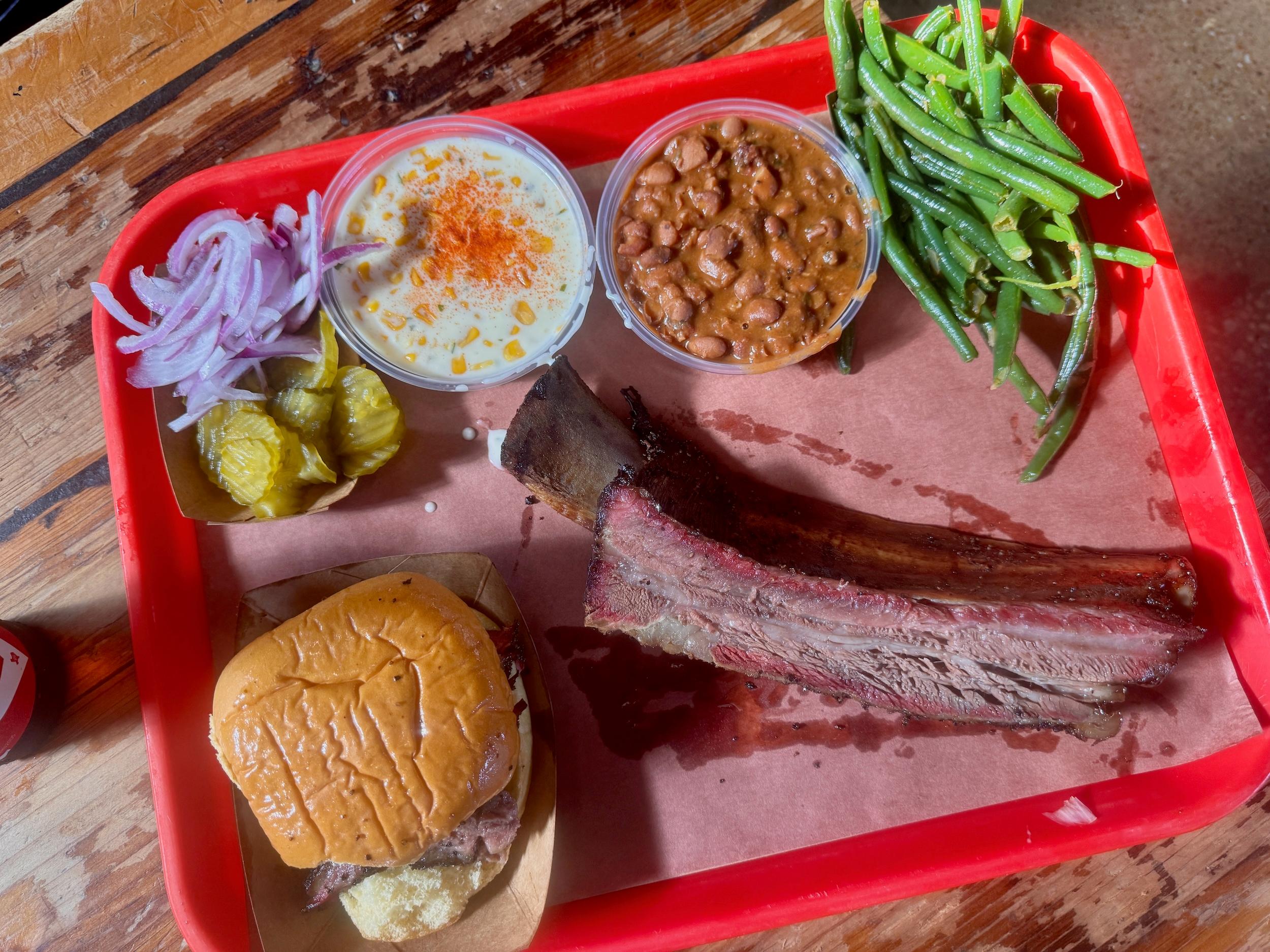
Terry Black’s is one of the clear local winners of the World Cup. Almost every traveler I’ve talked to has mentioned the Deep Ellum barbecue restaurant when asked where they’ve eaten. And that’s good for us all. If slow-cooked Central Texas brisket and beef ribs (with a dry rub) are what everyone remembers when they think of Dallas, then we should see monuments built the world over.
On a recent weeknight, the large dining room was packed, but not overly so. It feels communal, not crowded. Guests share larger tables and pass off bottles of barbecue sauce. Trays are loaded for a feast; no one comes to Terry Black’s for a light meal. This is a roll-your-sleeves-up meal.
The Austin-born concept has been in Deep Ellum since 2019. They smoke meat 24 hours a day, seven days a week.
“The only day we’re not smoking meats is Christmas Day,” says Darien Kapture, senior vice president of food & beverage operations. And since the World Cup landed in North Texas, they’re in overdrive.
Right now, they’re going through 35,000 pounds of brisket a week. A semi truck holds 40,000 pounds. “We’re almost going through one semi-truck of brisket a week,” Kapture says. On a normal week, it’s closer to 25,000 pounds.
For the past few Saturdays, they’ve served between 400 and 500 briskets.
Beef ribs for all
While brisket is king (as it should be), the beef ribs are the star of the show — center stage, tap dancing, throwing its arms in big circles as the crowd roars. Terry Black’s uses the larger rib bones — numbers six, seven and eight — whereas most places use the smaller bones, three, four and five. These are aptly called dinosaur bones.
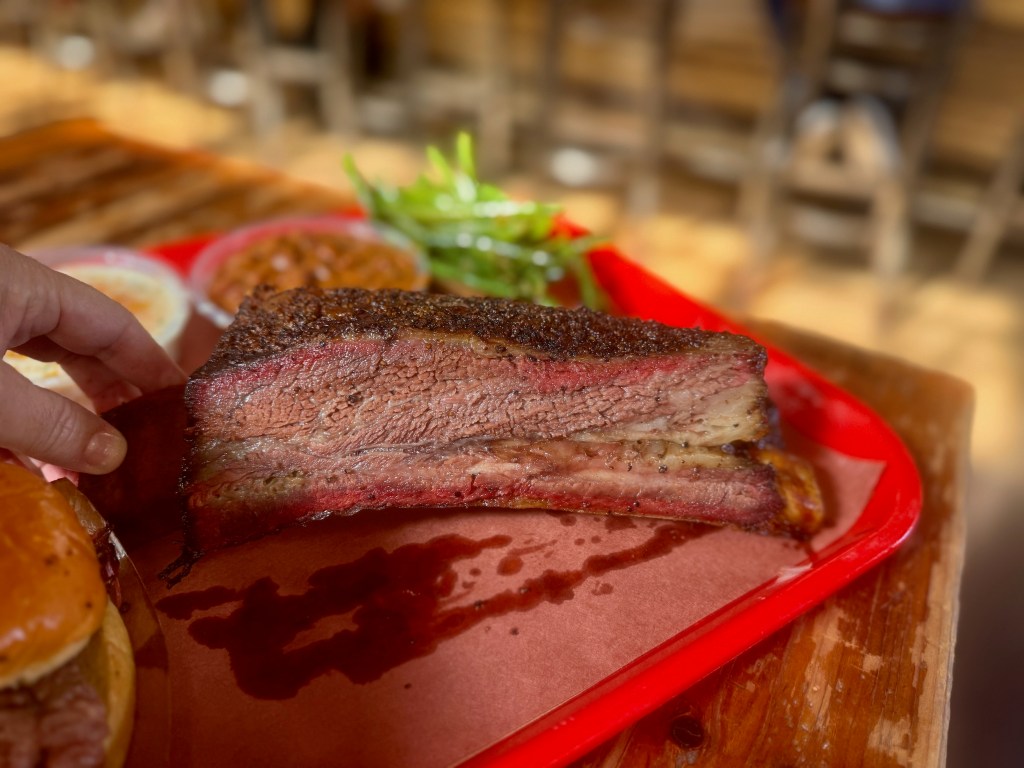
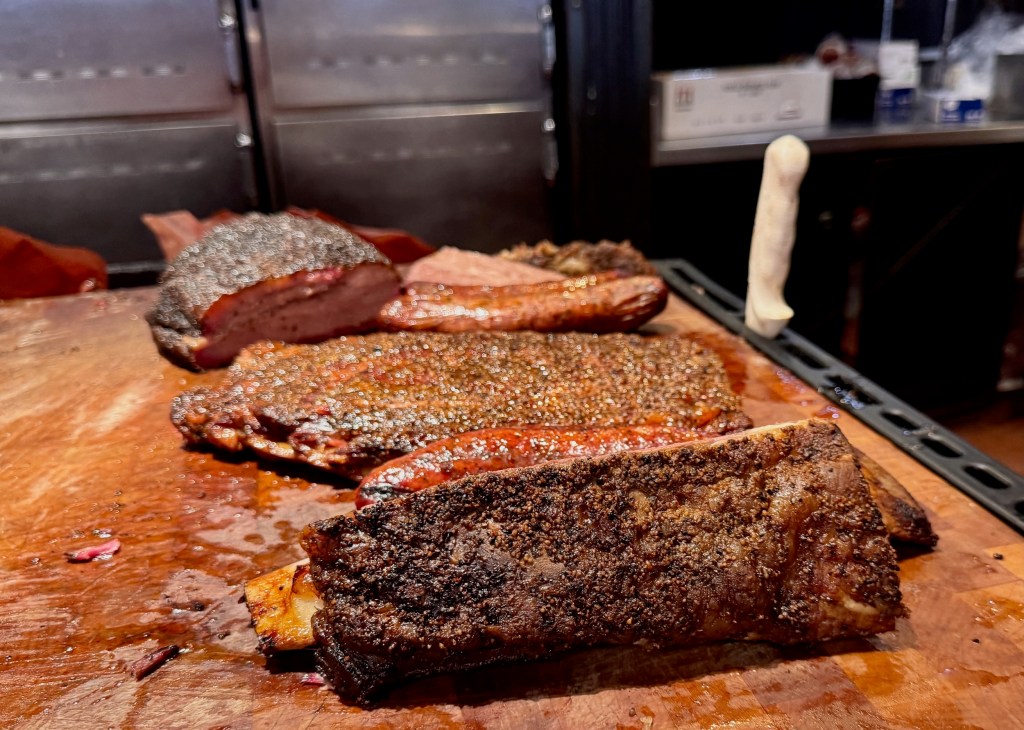
“We’re going through about 200 racks of beef ribs a day right now,” he says. “There are three bones in a rack. So you’re talking about 500 to 600 bones of beef ribs per day.”
Beef ribs are about $40 a pound right now, and one rib is around 1.25 pounds; so around $50 per rib. (Worth every penny, if you got it.)
The endless life cycle of a brisket
Brisket takes 12 hours to smoke. Kapture explains that the slabs hit the smoker around 6 a.m. every morning and come off around 6 p.m. After that, the pork and beef ribs go on, which take 7 to 8 hours. In the middle of the night to early morning, they cook sausage. Turkeys go on at 3 a.m. and are pulled off a few hours later to make room for the briskets again.
Kapture says what sets them apart is ensuring they don’t run out of beef, which is a point of pride for his team. He makes sure they have product for their posted open hours.
“We’ll never run out of brisket,” he says. “We have it so dialed in on our forecasting and our tools … our teams are phenomenal.”
“The fact that guests are coming in from all around the world, they’re jumping into their Ubers, doesn’t matter what time of day or night … We close at 9:30 during the week, 10 o’clock on the weekends,” and they’ll make sure they still have beef ribs and brisket until that time.
Smoker tours
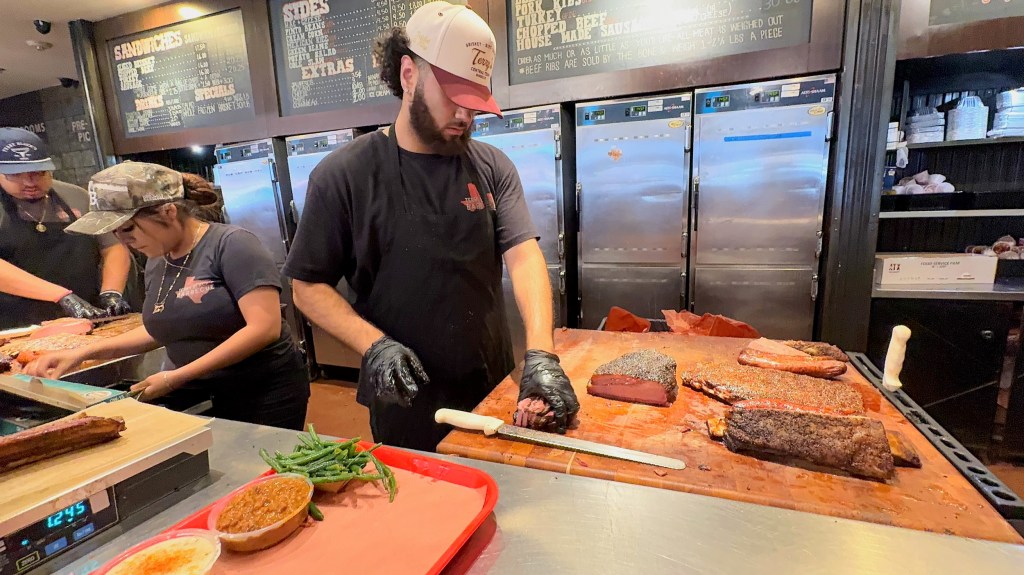
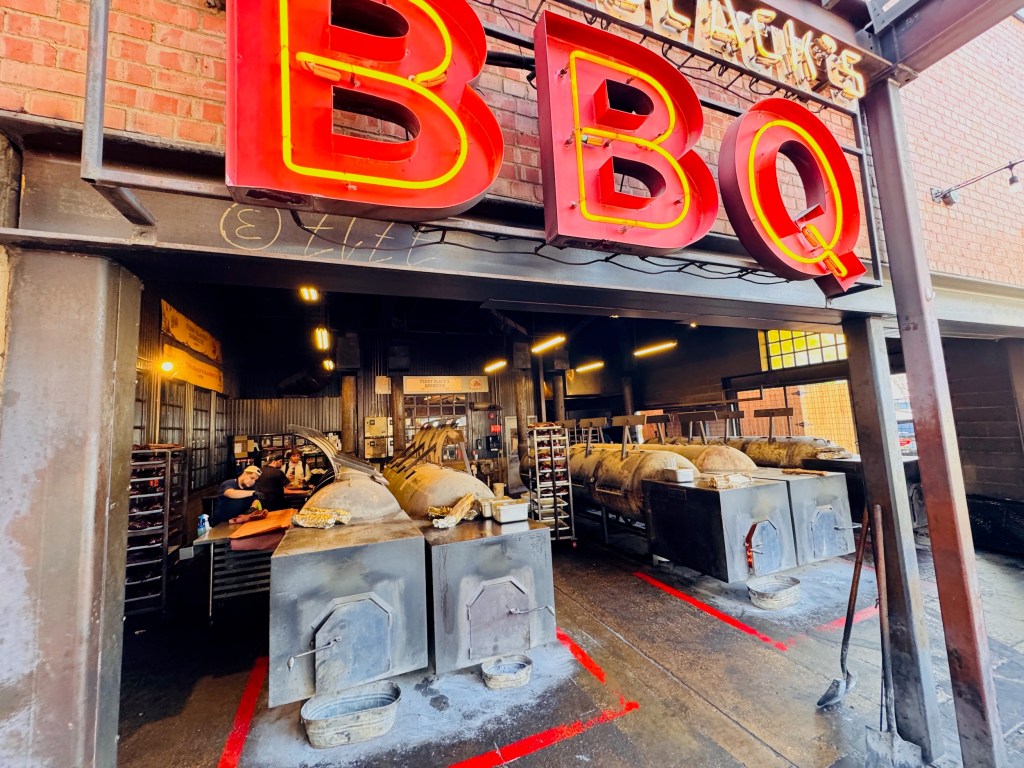
They’re also happy to give visitors a pit tour; at Terry Black’s in Deep Ellum, rows of smokers sit near the entrance, where several employees were wrapping briskets when we were there recently. Signs invite visitors to a pit tour.
“There’s no secrets here,” Kapture says. “We’ve stuck to what Central Texas barbecue has always been known for: low and slow [cooking temperature and time] and just true traditional barbecue.”
He says his teams are putting in a lot of hours right now, but morale is good.