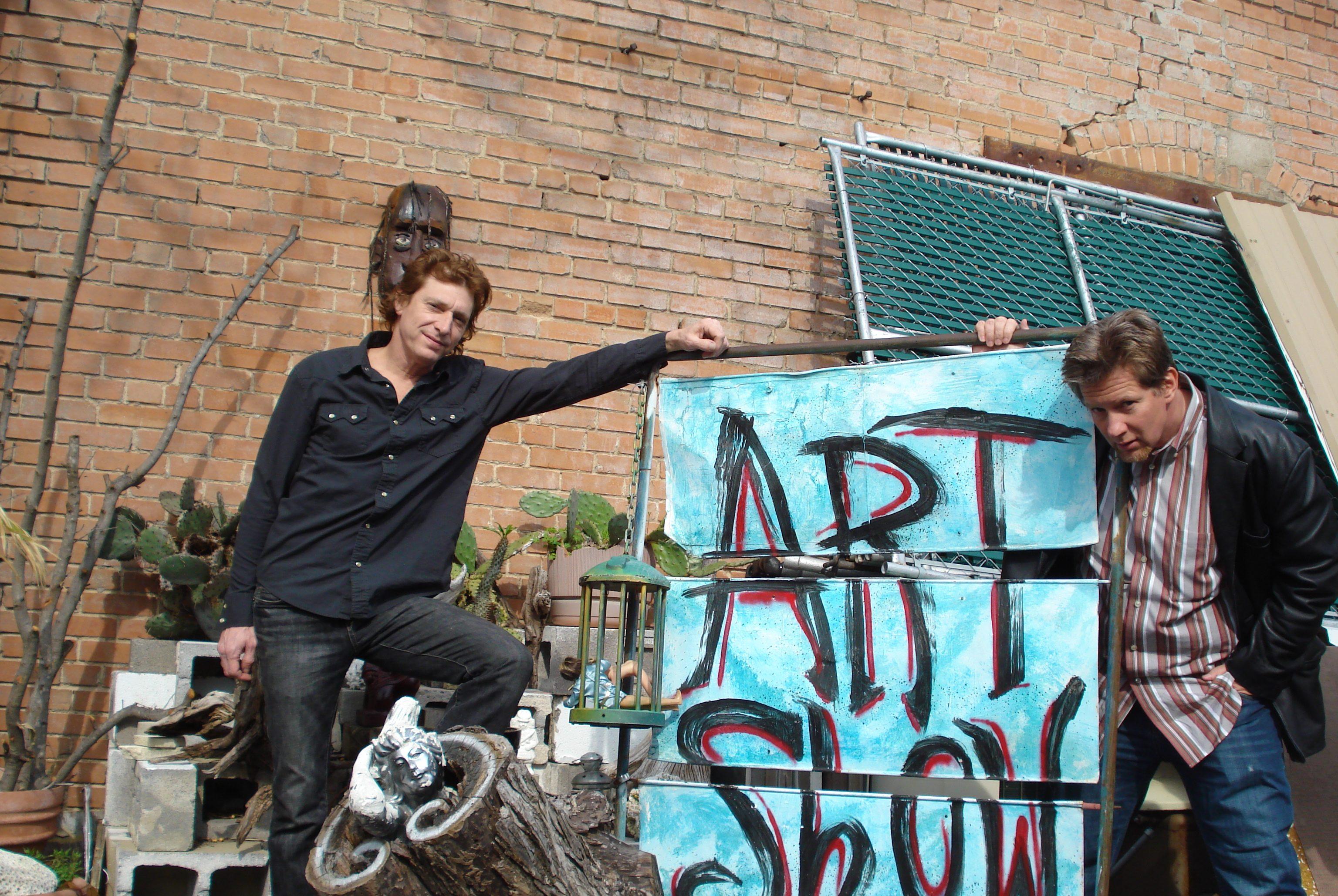
Courtesy of Jeff Swaney

Audio By Carbonatix
Deep Ellum has always been a neighborhood with paint under its fingernails.
Before it became a branded night-out destination, it was a place where artists could still get away with something. A wall could become a dare. A club could become a gallery. A half-empty district east of downtown could be transformed by people with brushes, spray cans, welding rods and the belief that Dallas might actually let them make something weird.
This summer, some of those people are coming back.
“OGs Return to Deep Ellum” opens at Kettle Art Gallery with a reception from 2 to 5 p.m. Saturday, June 6. The exhibition remains on view through August 16, bringing together eight original visual artists who helped define Deep Ellum’s rebirth in the 1980s: Bill Haveron, Brad Ellis, Brad Smith, Clay Austin, Dwayne Carter, Greg “Ozone” Contestabile, Thor Johnson and Kettle Art founder Frank Campagna. The show also includes tributes to the late Albert Scherbarth and David “Mosquito” Hawley, with guidance from longtime Deep Ellum champions Jeff Swaney and Jeffery Yarbrough.
A homecoming, not a victory lap
Deep Ellum’s mythology is usually told through sound: blues ghosts, punk flyers, guitar feedback spilling from doorways, the long afterimage of Trees, shuttered venues like Club Clearview and rooms that seemed to sweat cigarette smoke. But the neighborhood’s visual identity mattered just as much.
The walls did not decorate the scene; they became part of it.
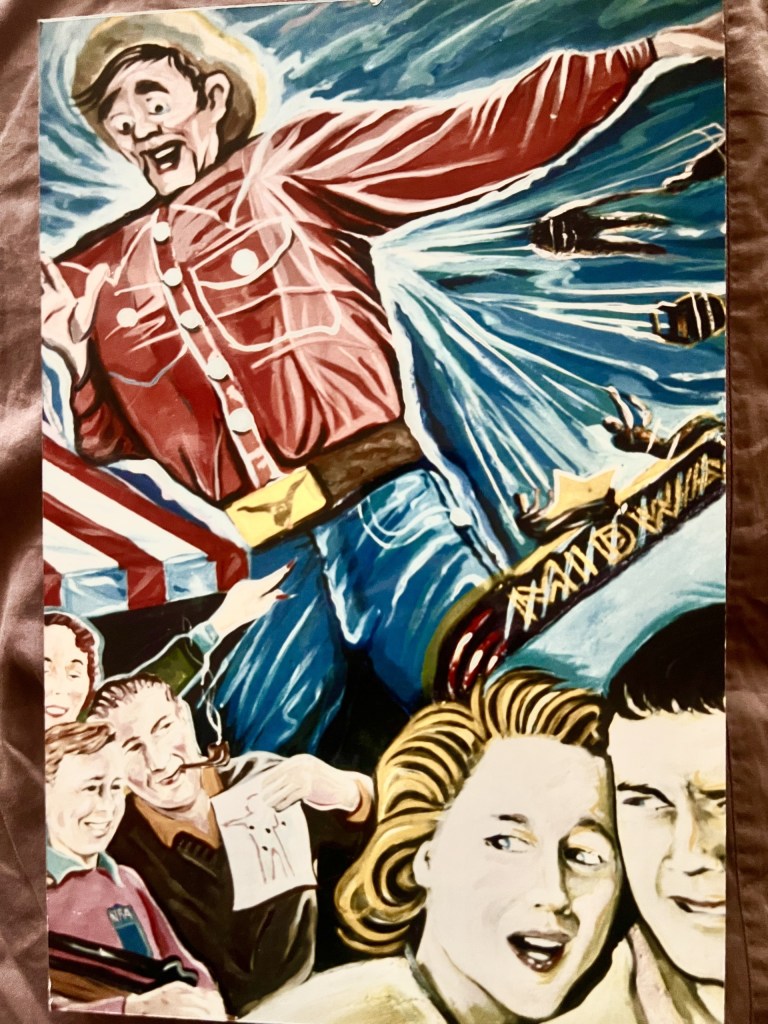
Brad Smith, one of the returning artists and a driving force behind the exhibition, realized early on that murals could do more than fill a blank space. He also had a direct tie to the Observer, contributing illustrations in the early 1990s, work he said he considered an honor because he was given the freedom to do what he wanted.
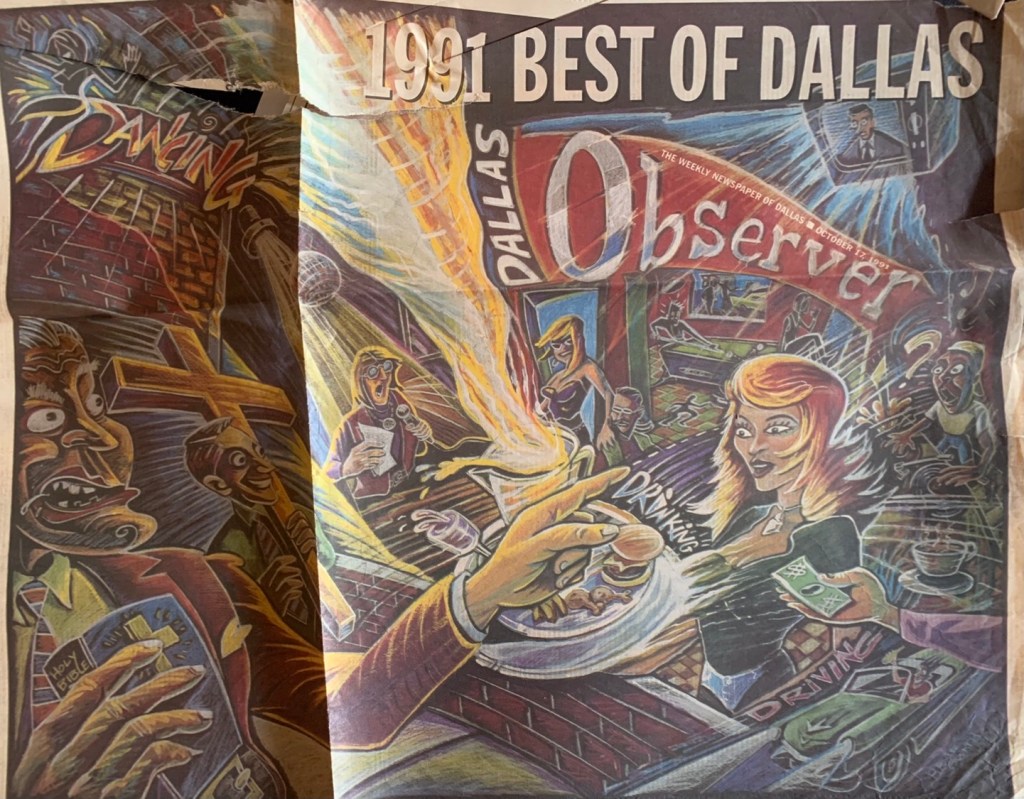
Brad Smith
In Deep Ellum, he saw art become a civic engine. He described the idea as “art-based economic development,” a concept he later carried beyond Dallas. The phrase may sound polished now, the sort of thing that appears in grant proposals and city planning decks, but in ’80s Deep Ellum, it had dirt on its boots.
Smith recalled that artists had backing from the city and the business community, which gave them room to work. The murals helped create the atmosphere that drew people in — money, music, risk and attention came with them. A once-overlooked neighborhood became, in his words, “magical” and “electric.”
The power of paint before Dallas had a name for it
Smith’s Deep Ellum years weren’t about making walls look good. What’s more, he knew art could change how a city evolved. He saw murals as tools for transformation, not accessories. Art, he said, has power in society. It can make people stop, gather, point, argue and remember.
That is the practical argument for public art. The poetic one is simpler: A mural gives a building a pulse.
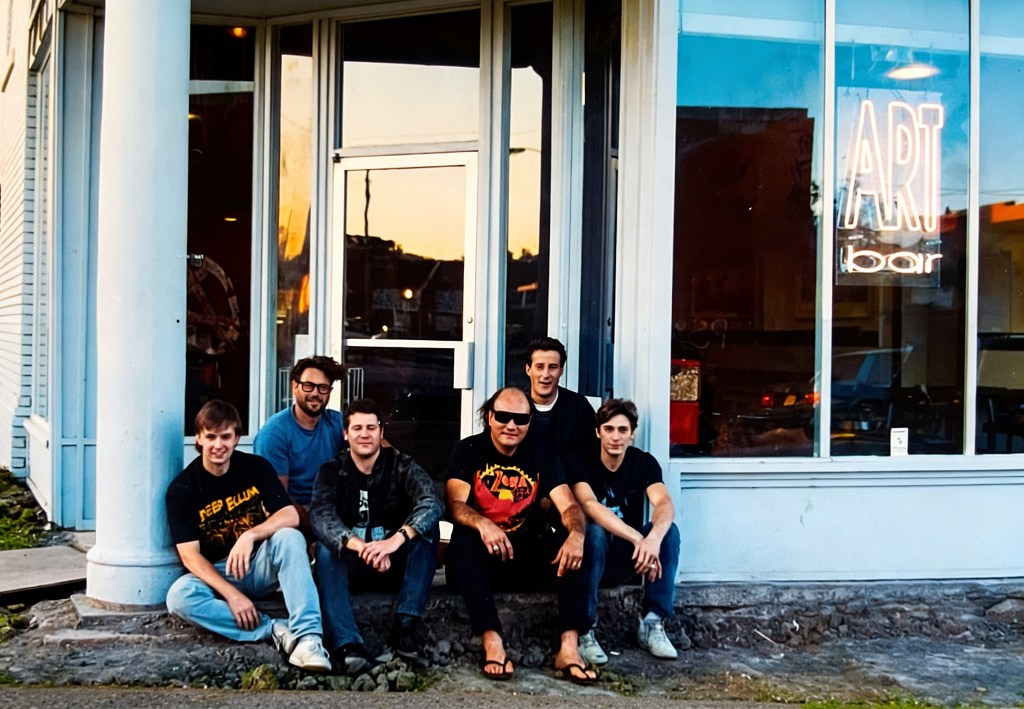
Courtesy of Jeff Swaney
Smith also knows the bargain built into that work. Murals are temporary, and walls get sold. Buildings get scraped and new owners paint beige over someone’s best year. Weather, money and municipal enthusiasm all take their turns with the roller, too. That impermanence gives “OGs Return to Deep Ellum” its edge. The exhibition gathers artists whose public work helped create the neighborhood’s visual memory, even when the original surfaces are gone.
Turning the streets into a gallery
For Greg “Ozone” Contestabile, Deep Ellum offered something rare: space. Not official space or blessed-by-committee space. Real space. The kind that lets an artist learn in public before anyone has figured out how to package it.
“Deep Elm gave me the opportunity to paint without too much worry about getting in trouble or busted,” Contestabile said, using the old spelling that still clings to the place like wheat paste. He described the neighborhood’s walls as “an instant gallery,” a place where he could paint something and know people would see it.
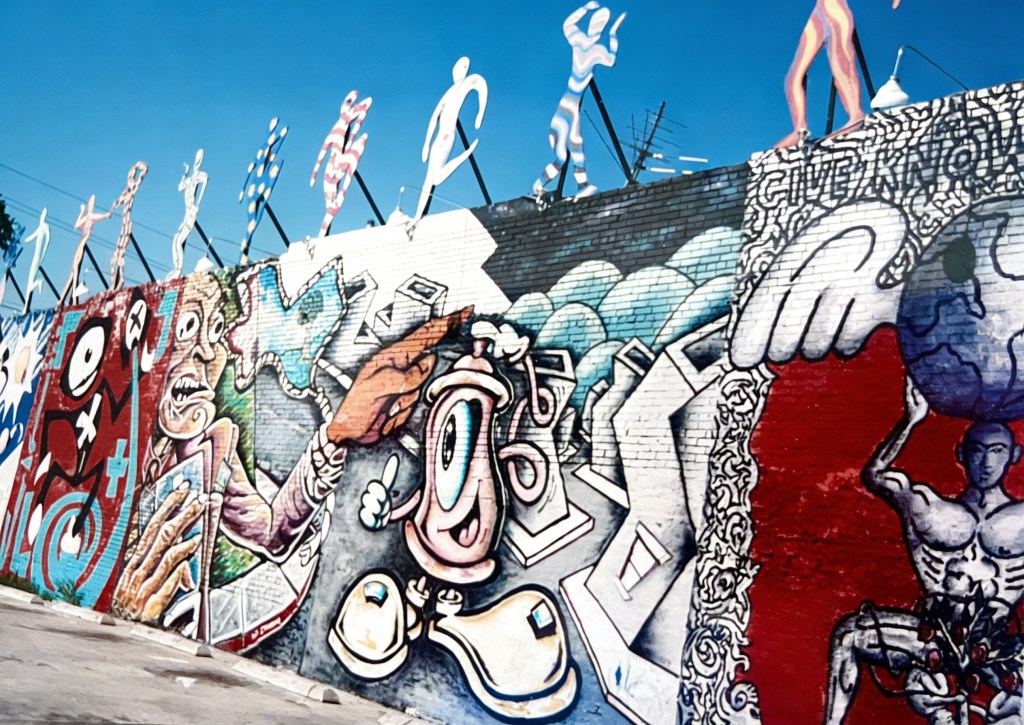
For a graffiti artist in Dallas, visibility was both reward and risk. He started painting in Deep Ellum in 1989, developing characters such as Flip the Frog and working alongside artists including Hawley.
Courtesy of Jeff Swaney
He also helped carve out a legal painting spot in the “Ace parking lot” next to the now-closed Deep Sushi, a small but meaningful act in a city that has often treated street art as a problem until it becomes profitable enough to be rebranded as culture.
For the “OGs Return” exhibition, Contestabile is working on a piece called “Aerosol Anarchy,” which he described as a cockroach with forearms holding spray cans in a fight scene at a crosswalk. It sounds funny, scrappy and slightly unkillable — in other words, very Deep Ellum.
Deep Ellum offered friendship, chance and a rave review
Haveron’s path into the Dallas art world sounds almost too improbable, which is usually how the best Deep Ellum stories begin.
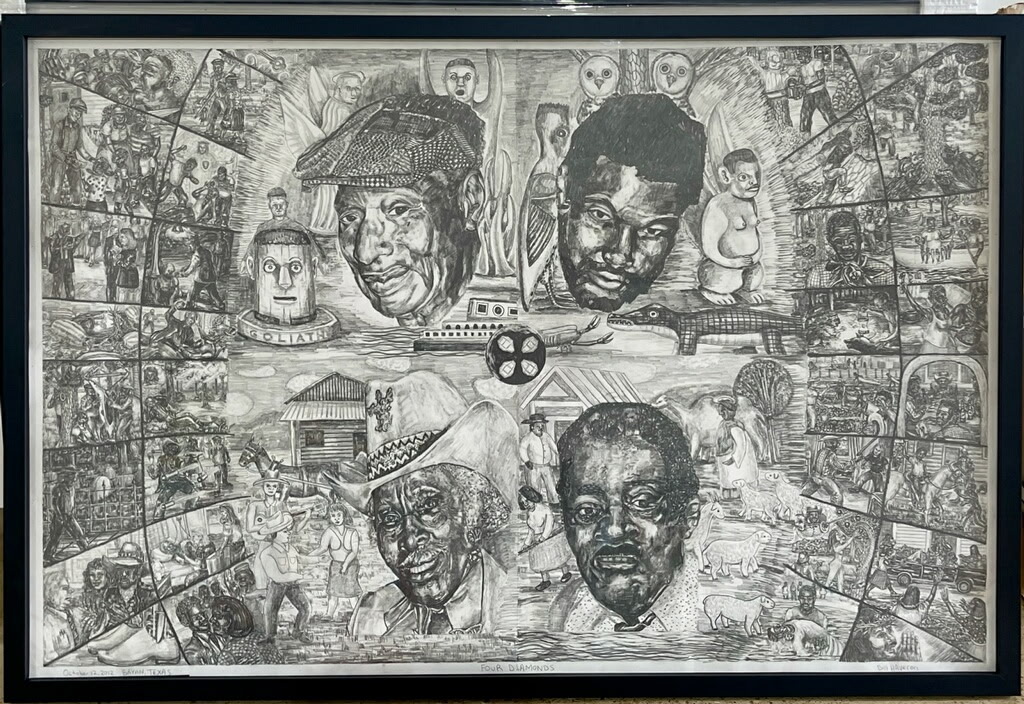
The artist started creating out of anger, after seeing his homeland plowed under for environmental reasons. He was discovered in the Sam Houston National Forest by Murray Smither, whose connection led Haveron to James Surls and Charmaine Locke. Surls and Locke put him in the major exhibition “The House Show” at the Lawndale Annex in Houston, where Haveron met legendary gallerist Gene Binder. When Locke called to ask how much his pieces in the show cost, Haveron barely knew art could be shown or sold.
After meeting Haveron at “The House Show,” Binder bought all of Haveron’s pieces in the exhibition and became a close friend, bringing collectors from Houston and Dallas to see his work. Binder’s gallery became a crucial connection for Haveron, eventually tying him to Deep Ellum, where he had several shows and became part of the neighborhood’s creative bloodstream.
Courtesy of Brad Smith
Another key figure was Russell David Hobbs, who wanted Haveron to show at his rock ’n’ roll Theatre Gallery in Deep Ellum. When critic Janet Kutner gave the show a rave review, Haveron said it helped put the scene on the map and made people want to come to the neighborhood.
From there came the friendships: Hobbs, Jeffrey Liles, Bob Watson and Swaney. Haveron remembered nights at Trees and Club Clearview, where Swaney would give him free drink tickets. Those details mattered because scenes are built by people letting each other in the door.
Haveron’s memories also carry a warning. He left Deep Ellum for Oak Cliff in part because of crime, and he is not sure the old Wild West spirit can be recreated. If the city gets too involved, he said, the result becomes sterile.
When walls disappear, the work still speaks
Dallas recently got a blunt reminder that public art often lives on borrowed time. Downtown, much of Robert Wyland’s “Whaling Wall 82” was painted over ahead of a new World Cup-related mural, leaving only part of the original marine scene intact. The decision sparked anger because murals are never just paint — work of art becomes landmarks, memory devices and emotional shortcuts.
Deep Ellum artists know this story well.
The neighborhood has always been a place where art appeared boldly and vanished suddenly. Murals came down. Clubs closed. The Art Bar, Club Clearview and other spaces that nurtured visual chaos passed into memory. Campagna’s projects, Clay Austin’s immersive work, Smith’s murals, Ozone’s walls and Hawley’s collaborations all belonged to a living environment that never promised permanence.
Courtesy of Bill Haveron
Austin, one of the returning artists, is especially inseparable from that history. His legacy runs through Deep Ellum and Club Clearview, where art was not confined to frames but spread across rooms, floors, bodies and nights. That is why the surviving work matters. Paintings and objects carry the hand, the era and the argument forward.
What Deep Ellum needs now
The exhibition arrives at a complicated moment for Deep Ellum: still beloved, still busy, still capable of surprise, but more managed than the version these artists first entered, when an empty wall could become a public event before anyone formed a committee.
Swaney’s involvement gives the show an important connective thread. As a Club Clearview figure and Deep Ellum advocate, he has long understood that the neighborhood’s real currency was never just nightlife. It was permission — sometimes granted, sometimes stolen — to make something happen.
That spirit runs through this show. Smith talks about art as civic power. Contestabile remembers walls as an instant gallery. Haveron remembers the chain of people, reviews, clubs and friendships that pulled him into the neighborhood and changed his life.
The lesson is not that Dallas should recreate the 1980s. It can’t. It’s that cities need places where artists can act before everything is polished into compliance.
The return to Main Street
“OGs Return to Deep Ellum” is not asking Dallas to clap politely for the past, but asking the city to look at what remains after the walls are painted over, the clubs close and the wild years become stories told in daylight.
The answer is the work, the artists and the proof that a neighborhood’s identity can be shaped by people who did not wait for perfect conditions.
From June 6 through Aug. 16, Kettle Art Gallery (2650 Main St.) will hold a piece of that proof. For those who were there, it may feel like a reunion with ghosts who still know where the good doors are. For those who weren’t, it offers something just as valuable: a look at the artists who helped teach Deep Ellum how to see itself.
And if Dallas is paying attention, maybe it will remember that the next great scene will not arrive fully approved. It will show up with paint on its hands, looking for a wall.