Photo by Nathan Hunsinger

Audio By Carbonatix
On a recent evening, as the sun was setting and the day was winding down, a worker at a local Thai restaurant bounced between cashier, prep cook, server and busser. Only two people were working in the restaurant; the second was back in the kitchen. Things were humming along, though. Green curry and tom kah soup steamed out of the kitchen. A neighborhood is lucky to have this kind of local gem. A mix of couples and college students keeps it busy.
All is well in the restaurant, then a delivery driver swings the door open. His head is down, looking at his phone. A greeting from the server is ignored. His speakerphone is on full blast, and someone on the other end is talking loudly. Or maybe it’s a video. He slices through the dining room, goes to the counter, then walks out one minute later with two white plastic bags stuffed with pork dumplings, pad see ew, and, likely, most of the profit margins from the order.
We’ve already reported on how local, independent restaurants are being affected by the rent cliff — five-year leases ending amid soaring real estate prices. We’ve written about the rising costs of everything, including chocolate, beef and takeout supplies. And since everything costs more — namely, gas — there’s pressure on wages.
Fresh economic reports don’t offer much hope. The inflation rate surged to 3.3% in March. “Inflation was already higher than comfortable, and that discomfort can easily turn to pain as price levels and price growth are stoked in the categories we all feel the most: gas and groceries,” wrote Anna Helhoski of NerdWallet after the new number came out.
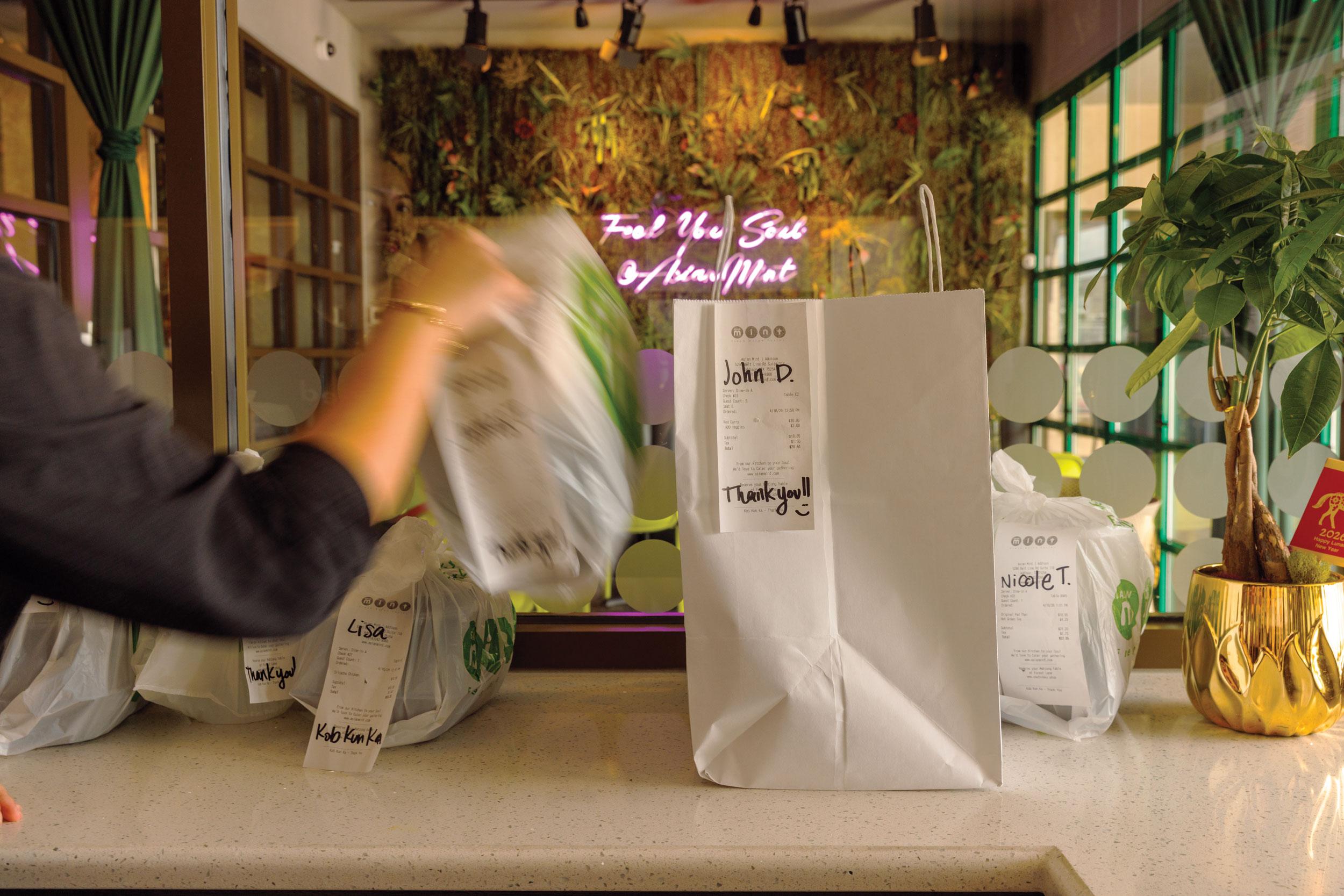
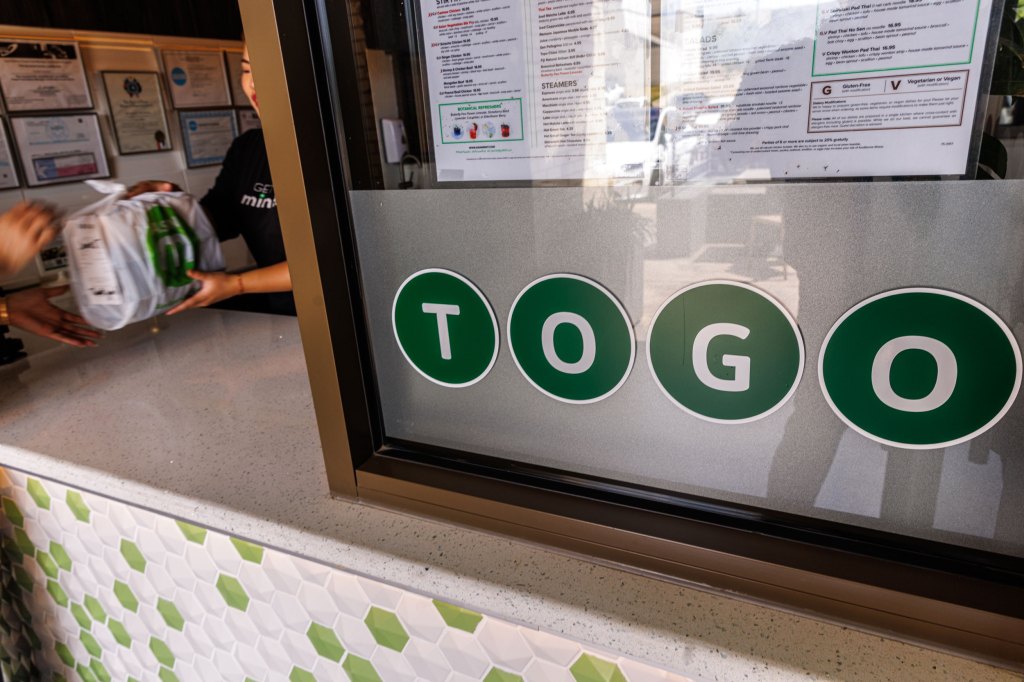
This applies to small restaurants, too. Since the pandemic, many have upped their takeout and delivery game, propped up by platforms like DoorDash and Uber Eats. But takeout and delivery are added expenses: packaging, labor to handle orders, not to mention the bite third-party platforms take out of each meal. For some, it’s a lose-lose situation. Others are taking their bite back.
Delivery Math
A whopping 903 million orders were placed through DoorDash in 2025. The company’s revenue grew 38% year over year in 2025 to $4 billion. DoorDash isn’t the only delivery service on the market, but it holds a slightly higher market share than Uber Eats. Clearly, America is hooked on food delivery.
Almost half of all adults (47%) say they pick up takeout from restaurants at least once a week, according to a report by The National Restaurant Association. More than a third (37%) get delivery once a week. With all those people and all that money flowing through those pipes, being on a delivery platform is essential for restaurants. But it’s not all easy money for those nachos at your door.
Nathan Hunsinger
Case in Point: A Sandwich
New York Sub was a long-standing Park Cities sub shop that originally opened in 1976. Chef Andrew Kelley bought the spot in 2016. He recently closed the original location because he couldn’t agree on a lease with a new landlord (see rent cliff). While working on getting a new space near Love Field, he’s set up shop in a ghost kitchen with no dining room, relying solely on delivery apps.
“It’s been very difficult with DoorDash and Uber Eats,” Kelley says of this new setup. “Everybody wants buy-one-get-one-free offers or the $12 lunchbox, which is very popular on DoorDash. Unfortunately, after DoorDash takes its commission, and I sell an Italian sandwich with a bag of chips and a homemade cookie or a potato salad for $12, my take-home is less than 10. And that doesn’t include the cost of food packaging and labor.”
So just don’t do promos, right? “Then you’re just not as busy, and unfortunately, we’ve had to let all of our staff go and just do it with my wife,” Kelley says.
That tracks. Ninety percent of diners who responded to that National Restaurant Association survey said they used limited-time, app-only offers; that’s how most people choose where to order from. The same number, 90%, said they would order a greater variety of dishes if the packaging were better.
Offers and better packaging: that’s what the people want.
That means that not only do restaurants need to cut prices, but they also need to coddle it for the trip over. Then, after that, the app takes up to 30% of the money. The big chains can absorb these things. That mom-and-pop down the street?
“As long as we’re giving away free stuff, we’re busy, but it just doesn’t make any sense,” Kelley says.
Making It Make Sense, Welcome to Jack Perkins’ Clinic
Jack Perkins is an absolute no-nonsense burger guy. His restaurant, Maple and Motor, is a stalwart in Dallas for great burgers; it was featured on Diners, Drive-Ins and Dives over a decade ago. For folks wanting pickup or delivery, he offers four ordering options on his website: Order for Pickup (which he controls), Order Uber Eats, Order GrubHub or Order Postmates. You can also order through DoorDash.
When dealing with apps and third-party platforms, Perkins says it’s key to negotiate.
“They come to you and say, ‘Hey, we want you to use this for delivery, and it’s 25%.'” Perkins counters with 14%, and they settle somewhere in the middle.
“The second thing is, some of them try to negotiate that you have to have the same prices on their platform that you have in your restaurant. Well, we won’t do that,” he says matter-of-factly.
“So, all we do is if we pay 20% [commission to the platform], we just build 20% into the app. So if my burger is $10 … it’s $12 on DoorDash,” He points out that he actually wins this way because the platform covers his credit card fees, saving him 3.5%.
DoorDash addresses this issue on its website, writing that it doesn’t require restaurants to set the same price. “Restaurants can continue to make their own delivery menu pricing decisions and assess the tradeoffs between volume and unit margins.” In another paragraph, it adds that it “encourages consistent prices.”
Then, a few lines down, it emphasizes that menu pricing is one factor among many in achieving a good ranking.
And therein lies the catch.
So, the apps aren’t explicitly telling restaurants to keep their prices the same, but if they want to rank well, they might want to consider it.
The other option is for restaurants to maintain parity by raising the in-house prices to match the app. But sticking it to the dine-in customers to cover delivery costs isn’t good business.
Then there is the issue of promos, like Kelley’s $12 sandwich deal. An article in Restaurant Business titled “Discounts are reshaping the third-party delivery business” explores how promos are a big business driver for the platforms, but for restaurants, the impact is more complicated. As restaurants get squeezed on every aspect of their budgets, they’re taking a closer look at the bottom line and see that delivery fees and promos are literally eating their lunch.
“It’s one of those things that if you don’t really know what the numbers are about, and you’re paying 25% in fees to Uber Eats, that’s your profit margin,” says Perkins. “Well, you can charge more, and people will pay a premium to have it delivered. They do every day.”
Perkins has an advantage in being a well-established restaurant. Maple and Motor has objectively earned a great customer base through a consistent product, which allows Perkins to set his prices. A new restaurant trying to get established might not have the luxury of that option. But there is still hope.
Smart Pricing
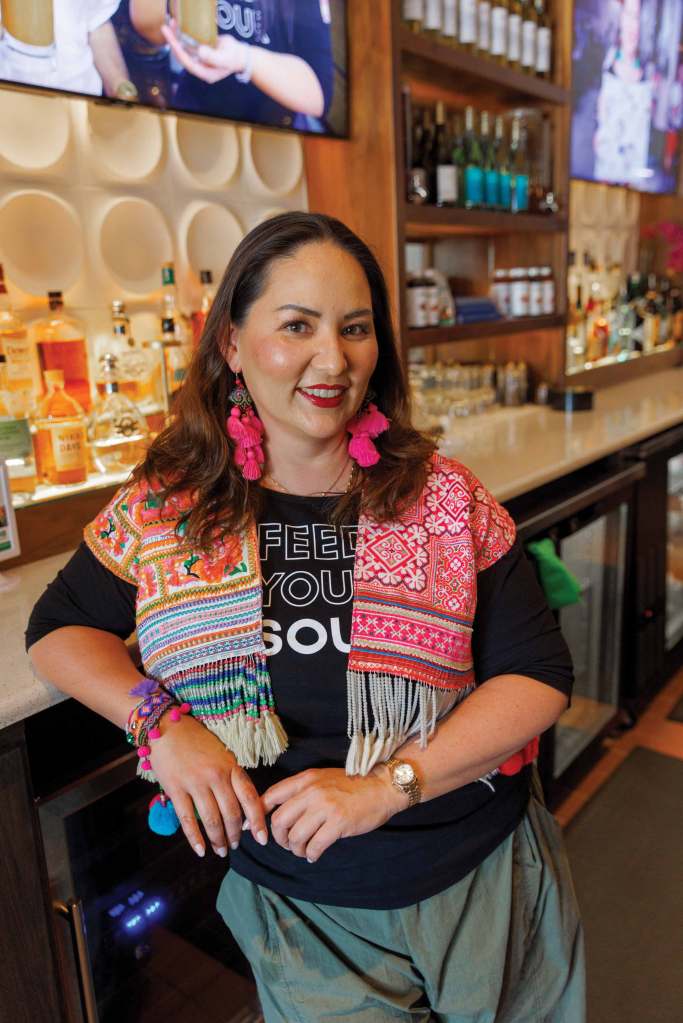
Chef Nikky Phinyawatana founded Asian Mint in 2004 and has expanded to five locations across North Texas. She says you have to be smart about pricing.
“The third-party delivery platforms had a big boom and helped a lot of our restaurants survive, even us, during COVID,” she says. “So I mean, it was a good thing; DoorDash, Uber Eats, Grubhub, we use all of them. They can take anything from 15 to 30% commission. That’s a lot. So you have to, as a restaurant, look at your pricing of what you’re doing online versus for dine-in. You kind of have to be smart and adjust.”
She sees many restaurants charging the same price for dine-in and takeout, but she knows that won’t work in the long run. She also mentions the added costs of packaging and an extra employee to handle takeout. These are good problems to have as a restaurant, but you have to understand and perhaps buck the rules.
“As a restaurant, you use it to your advantage,” she says. “It’s a great way to get your name out there. They have a large platform. They do amazing, but you’ve got to just utilize it correctly.”
Nathan Hunsinger
Keeping Tabs on Customers
Phinyawatana recently invested in a proprietary platform for Asian Mint.
“We’ve always had our own online ordering system, but we kind of took it to another level, really honed in on being innovative in this area because half of our clientele comes from online ordering,” she says.
She’s using the system to help with her profit margins, but more importantly, it’s to communicate with her customers. Perkins does the same thing: You can call his restaurant or use the “order for pick” option on his website to work directly with him.
“When you’re using a third party, you can’t communicate with customers because all of the guest information is with the app. I get a direct communication line to say, ‘How is your order?’ Things like that. I want to be able to continue to give that service level in our voice,” she says.
Taking control over this aspect of delivery is catching on. According to a Market Leader survey of 450 restaurant operators, 53% plan to ditch apps. Fifteen percent are on the fence and only a third (32%) are sticking with platforms.
To reduce their third-party dependence, 34% of restaurants in the survey are investing in a direct online ordering platform, and 38% in a proprietary app. Almost 60% are linking loyalty rewards to direct orders.
We reached out to DoorDash about the challenges restaurants are facing. A company spokesperson told us they know operators are looking closely at every part of their business to protect margins and drive sustainable growth.
“That’s why DoorDash offers flexible ways to partner — including tiered commission plans, [and] flat-fee delivery fulfillment for first-party orders,” a DoorDash spokesperson wrote us. They listed several other tools merchants can choose from that “makes the most sense for their digital business.”
But, restaurants are ready to take back half their customers, who have seemingly been hijacked by third-party platforms. Because it’s about people: Restaurants bring people together. Breaking bread face-to-face is a cornerstone of who we are.
Not to be disrupted by loud speakerphones and some company far off taking a bite out of our pad see ew.